For tiny stitches, beads or embellishments that need to fill the frame, a compatible macro lens is the better choice. If you mainly take portraits and only occasionally want to capture a larger detail, a portrait lens with close-up capability may be enough. Check your camera’s mount, the maximum magnification and the working distance in front of the lens. Greater magnification makes small details appear larger, but also makes precise focusing and sufficient depth of field more important.
Who is this choice relevant to?
Photographers capturing fine costume details
If you want to capture embroidery, beads or fastenings individually and at a large size, it helps to understand the difference between close-up photography and 1:1 macro. For example, Canon specifies 1.4× magnification for the RF 100mm F2.8L Macro IS USM, while Nikon lists 1:1 for the NIKKOR Z MC 105mm f/2.8 VR S.
Costume portrait photographers
If you mainly photograph the wearer or the whole costume, but sometimes want to capture a larger detail on its own, weigh up the portrait capability against the maximum magnification. Canon specifies 0.5× for the RF 85mm F2 Macro IS STM.
Photographers using a fixed tripod setup
When photographing stationary details, you need room to position your lighting and focus precisely. The distance from the camera to the subject is not the same as the clear space between the front of the lens and the costume.
What should you look for when choosing?
First, decide how small the detail is that you want to photograph and whether you’ll also use the same lens for portraits. Then check the mount and how much room your setup leaves in front of the lens.
| What to consider |
What should you check? |
Who is this important for? |
| Magnification for small details |
Compare the maximum magnification of the exact lens model. Don’t confuse 0.5× with 1:1. |
If I want stitches, beads or embellishments to fill the frame, maximum magnification is my first consideration. Around 33% of consumers prioritise capturing small details. |
| Mount and version |
Check the exact camera model and the mount of the lens on offer. |
I want to keep using my existing camera body, so I need a lens that fits it. For around 27% of consumers, compatibility with their current camera comes first. |
| Portraits and larger details |
Decide how small the details are, then compare the maximum magnification with the portrait framing you want. |
If I mainly photograph the wearer or the whole costume, but sometimes want to capture a larger detail on its own, I’m looking for a useful combination of both. Around 20% of consumers prioritise portrait photography with close-up capability. |
| Working distance and focusing |
Check the working distance at the magnification you want and allow for lighting and depth of field. |
I want to leave enough room to light the costume and focus precisely when shooting on a tripod. For around 20% of consumers, this setup is the main consideration. |
Minimum focus distance is measured from the camera; working distance is the clear space in front of the lens. Sony makes the same distinction for macro photography. If an embossed detail or embellishment spans several depths, a single shot may not provide enough depth of field. Nikon describes focus stacking, where several shots taken at different focus points are combined. This requires extra post-processing.
Common buying mistakes
-
Assuming ‘macro’ in the name means 1:1 magnification
Maximum magnification varies by lens. Canon specifies 0.5× for the RF 85mm F2 Macro IS STM and 1.4× for the RF 100mm F2.8L Macro IS USM.
Compare the maximum magnification of the exact model with the size of the details you want to show.
-
Assuming the same focal length means the lens is compatible with your camera
Lenses around 90–105 mm are available for different mounts. A similar focal length doesn’t mean a lens will fit the same camera.
Before ordering, check your camera model, its mount and the version of the lens on offer.
If the mount is wrong, you may need to exchange the lens or choose a different one.
-
Comparing only the minimum focus distance
Minimum focus distance and the clear space in front of the lens are measured from different points. The former alone won’t tell you how much room you’ll have to light the costume.
If possible, check the working distance at the magnification you want to use and work out how much room your setup needs.
If there’s little room in front of the lens, you may need to position the lighting differently.
Brands to consider
Canon
For EOS R cameras, there are macro lenses as well as a more portrait-focused close-up option.
- Canon specifies maximum magnification of 1.4× for the RF 100mm F2.8L Macro IS USM.
- For the RF 85mm F2 Macro IS STM, Canon specifies 0.5×, so this lens doesn’t offer the same maximum magnification for very small details.
Nikon
The NIKKOR Z MC 105mm f/2.8 VR S is designed for close-up work and portraits with Nikon Z cameras.
- Nikon lists 1:1 magnification for this lens.
- Nikon says that 105 mm requires more distance from the subject for portraits than a classic 85mm portrait lens.
Sony
The FE 90mm F2.8 Macro G OSS is a Sony E-mount lens for macro photography and portrait-style compositions.
- Sony specifies 1.0× maximum magnification and a minimum focus distance of 0.28 m.
- For the macro setting discussed, Sony lists a working distance of around 13 cm. This is not the same as the minimum focus distance.
Tamron
The 90mm F/2.8 Di III MACRO VXD is available for Sony E and Nikon Z; check which mount the version on offer has.
- Tamron specifies 1:1 magnification and a minimum focus distance of 0.23 m.
Sigma
The 105mm F2.8 DG DN MACRO | Art is a 1:1 option for Sony E and L-Mount.
- Sigma lists a working distance of 141 mm at 1:1 and notes that the lens length doesn’t change while focusing.
Joybuy lenses for this use
The selection below includes Sony E-mount lenses with a range of focal lengths. For costume details, pay particular attention to maximum magnification and the lens mount.
 No image available
Sony E 50mm f/1.8 OSS Black
The product description mentions portrait, product and close-up photography; check whether the magnification suits the size of your costume details.
Maximum magnification: 0.16×. Weight: 202 g.
Joybuy
 No image available
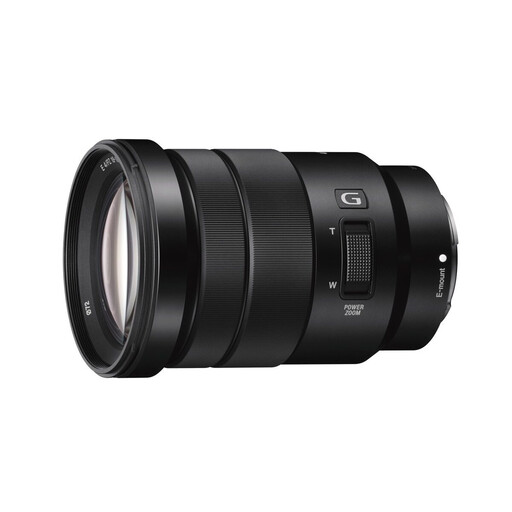
Sony E PZ 18-105mm f/4 G OSS
The zoom range gives you different framing options from a fixed setup; the stated magnification is limited for very small details.
Zoom range: 18–105 mm. Maximum magnification: 0.11×. The description mentions manual focusing.
Joybuy
 No image available
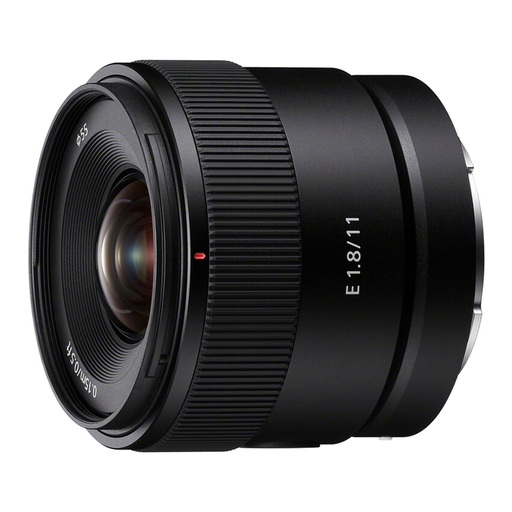
Sony E 11mm F1.8 APS-C (SEL11F18)
This is an ultra-wide-angle lens, not a portrait-focused option. Carefully consider whether its angle of view and magnification are right for your detail shots.
Minimum focus distance: 0.15 m. Maximum magnification: 0.13× with AF and 0.20× with MF. The description mentions manual focusing.
Joybuy
Frequently asked questions
Is the minimum focus distance the clear space in front of the lens?
No. Minimum focus distance is measured from the camera; working distance is the space between the front of the lens and the subject. Sony makes this distinction for macro photography. When planning your lighting and positioning, pay particular attention to the working distance.
How can I keep an embossed detail or embellishment sharp across more depth when shooting on a tripod?
First, focus precisely on the most important part. If one shot doesn’t provide enough depth of field, you can combine several images taken at different focus points when the subject is stationary. Nikon describes this technique as focus stacking; it requires extra post-processing.
Do I have a cooling-off period when buying online in the Netherlands?
According to ACM ConsuWijzer, when you buy a product online, you generally have a statutory 14-day cooling-off period from the date of delivery. Check which exceptions apply and read the seller’s information.
Is the manufacturer’s warranty my only option if a lens is faulty?
No. Your statutory rights apply alongside any manufacturer’s or seller’s warranty. ACM explains that the seller is responsible for providing an appropriate solution if a product is faulty.


