First, check that the lens mount is compatible with your camera. Then decide whether you want to photograph an entire chess piece or focus on a small detail. A compatible 1:1 macro lens is a good starting point for capturing details; for wider compositions, lower magnification may be enough, while higher magnification demands more from your focusing and lighting setup. For stationary pieces, a stable setup and manageable lighting are just as important as your choice of lens.
Who is this buying guide for?
Photographers with an existing camera
First, check that the lens version fits your camera’s mount; lenses from the same brand can use different mounts. Sony Netherlands, Nikon Netherlands and Sigma list specific camera systems for their relevant models.
Chess piece and product photographers
When photographing a single piece or a group, your framing, background and the space available for lights all matter. Canon Europe recommends using a tripod to keep the framing consistent across product shots.
Photographers capturing small details
If you want to show engravings or material textures at a larger scale, you’ll need to balance the magnification you want against the shallow depth of field and the need for precise focusing. Canon Europe describes this shallow depth of field in macro photography.
What should you look for when choosing?
Close-ups at less than 1:1 magnification
Choose this option: if you mainly want to frame a whole chess piece or a small group with some of the surroundings, and the image fills the frame sufficiently.
Bear in mind: very small details are less likely to fill the frame; the word ‘macro’ alone doesn’t mean a lens offers 1:1 magnification. Canon positions the RF 85mm F2 MACRO IS STM for portraits and close-ups, so check the magnification and RF mount of the exact version.
90–105 mm macro lens with 1:1 magnification
Choose this option: if you want to capture carvings or textures at a larger scale and the mount is compatible with your camera.
Bear in mind: you may need to move further back to photograph a whole piece; depth of field remains shallow at high magnification. Image stabilisation is no substitute for suitable lighting or a stable setup.
Specialist magnification above 1:1
Choose this option: if you specifically want very small details to fill the frame and the mount and controls of that version suit the way you work. Laowa specifies a maximum magnification of 2:1 for the 90mm f/2.8 2x Ultra Macro APO.
Bear in mind: such high magnification is rarely needed for an entire chess piece, and calls for extra care with focusing and light placement.
When photographing chess pieces under artificial light, your main buying priorities are closely linked: check the mount first, then decide on your framing and assess whether your lighting setup is suitable.
| What to consider |
What should you check? |
Who is this important for? |
| Compatible mount |
Check your camera model and the exact lens mount; don’t assume compatibility based on the brand or focal length alone. |
If I want to make sure the lens connects to my existing camera, I check the full lens model. Around 28% of consumers put mount compatibility first. |
| Framing and space |
Decide on your desired framing and check that the camera, background and lights fit at the required distance. The focusing distance is not the same as the clear working space in front of the lens. |
If I want to photograph a whole piece or a group, I balance the framing against the space available for my setup. Around 22% of consumers prioritise this combination. |
| Artificial light and reflections |
Test the light, its direction and any diffusion with a few test shots; check your camera settings if flickering light causes banding or colour shifts. |
If reflections or changing artificial light could spoil my photos, I want to assess the lighting setup first. Around 22% of consumers put lighting and reflections first. |
| Depth of field and consistency |
Decide which parts of the piece should be in focus. For repeatable shots, use a fixed setup; focus stacking is an option when the pieces are stationary. |
If I want the chess piece to be sharp from front to back, I pay attention to precise focusing and consistent framing. Around 17% of consumers prioritise this. |
| Magnification for details |
Compare the maximum magnification of the exact models and choose one to suit your desired framing; the highest figure isn’t automatically necessary for an entire piece. |
If small engravings or material textures need to fill the frame, I look for magnification that suits the job. Around 11% of consumers prioritise capturing these tiny details. |
Common buying mistakes
-
Choosing based only on brand or focal length
A lens may be available with different mounts. So a suitable focal length doesn’t automatically mean the lens will fit your camera.
Check the mount on the product page and compare it with your camera’s full model number.
-
Assuming ‘macro’ guarantees the framing you want
Maximum magnification varies by model. Photographing a whole chess piece calls for different framing from capturing a tiny engraving.
First decide what you want to photograph, then compare the stated reproduction ratio of the exact lens.
-
Choosing a faster or higher-magnification lens to solve artificial lighting problems
Macro photography has a shallow depth of field, and some flickering lights can cause banding or colour shifts. Choosing a lens won’t automatically fix lighting or camera-setting problems.
Take test shots with the light and camera settings you plan to use; assess magnification and lighting as separate considerations.
-
Confusing a manufacturer’s warranty with your statutory rights
According to the Dutch government, there is no fixed general statutory warranty period in the Netherlands; the retailer is your point of contact if there’s a problem.
Keep your purchase details and read any additional warranty terms, without treating them as a replacement for your statutory rights.
Relevant brands to consider
Sony
According to Sony Netherlands, the FE 90 mm F2.8 Macro G OSS (SEL90M28G) is a Sony E-mount lens with a stated magnification of 1.0×.
- Sony specifies a focal length of 90 mm, 1.0× magnification and Optical SteadyShot for this model.
- Image stabilisation won’t make an unsuitable lighting setup suitable; check your camera’s mount too.
Canon
The RF system includes close-up options such as the RF 85mm F2 MACRO IS STM and the RF 100mm F2.8L MACRO IS USM.
- Canon Europe specifies a maximum magnification of 1.4× and a minimum focusing distance of 0.26 m for the RF 100mm.
- Don’t assume the RF 85mm offers the same magnification without checking the specifications; also make sure the RF mount is compatible with your camera.
Nikon
The NIKKOR Z MC 105mm f/2.8 VR S is an option in the Nikon Z system.
- Nikon lists vibration reduction and manual focusing for this model.
- Nikon’s image quality descriptions are manufacturer claims, not independent comparisons with other lenses.
Sigma
According to Sigma, the 105mm F2.8 DG DN MACRO | Art is available in Sony E-mount and L-Mount versions.
- Sigma specifies 1:1 magnification and a minimum focusing distance of 29.5 cm for this model.
- The mounts are not interchangeable, so check which version is compatible with your camera.
Laowa
The 90mm f/2.8 2x Ultra Macro APO is a specialist option for anyone looking to greatly magnify very small details.
- Laowa specifies a maximum magnification of 2:1 for this model.
- The product information also lists an MFT version; check the mount and controls of the exact version you’re considering.
Joybuy lens options
Consider these lens options in relation to your camera and desired framing. Before buying, check the mount and whether the stated magnification suits your chess photography.
 No image available
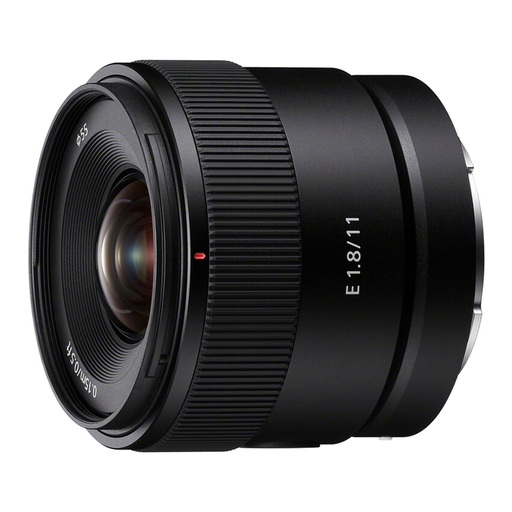
Sony E 11mm F1.8/APS-C Wide Angle Prime Lens (SEL11F18)
The product name identifies this model as a Sony E ultra-wide-angle lens; check whether 11 mm suits the framing you want.
11 mm · F1.8 · APS-C · Sony E mount
View at Joybuy
 No image available
Sony E 50mm f/1.8 OSS Black
The product name lists a 50 mm Sony E lens; check whether its framing and magnification suit your chess photography.
50 mm · f/1.8 · OSS · Black
View at Joybuy
Frequently asked questions
Do I need 1:1 magnification to photograph an entire chess piece?
No, not if you mainly want to photograph a whole piece or a group with some of the surroundings. First decide on your desired framing, then check the maximum magnification of the exact lens; high magnification is mainly useful for smaller details.
How can I keep a chess piece sharp from front to back?
Macro photography has a shallow depth of field. Keep your setup fixed and, if a single shot doesn’t provide enough sharpness from front to back, consider combining several images taken at different focus points.
What should I check if LED lighting causes banding or changing colours?
Take test shots with the light and camera you’re using. Sony describes banding and colour shifts with certain flickering light sources; check the anti-flicker and shutter settings in your camera model’s manual. A different macro lens won’t necessarily solve the problem.
What are my rights in the Netherlands if the lens I bought is faulty?
According to the Dutch government, when you buy as a consumer, you’re entitled to a product that works properly, and the retailer must provide an appropriate solution if there’s a fault. There is no fixed general statutory warranty period in the Netherlands. A manufacturer’s warranty is in addition to your statutory rights.
Can I return a lens bought online within 14 days?
According to the Dutch government, a 14-day cooling-off period applies in many cases to eligible distance sales. Check who the seller is and which exceptions or returns terms apply to your purchase; according to the guidance cited, an online purchase from a private individual does not fall under the same definition of a distance sale.


