First, choose a lens mount that fits your camera, then decide how small a detail you want to photograph. For individual fine carving marks, 1:1 offers greater maximum magnification than a 0.5× lens; Canon, for example, specifies a maximum of 1.4× for the RF 100mm F2.8L MACRO IS USM. When photographing deep ornamentation, you’ll also need to consider lighting space and focusing method. Focus stacking can combine several focus points, but it requires extra shots and post-processing.
Who is this buying guide for?
Detail-focused ornament maker
You want to capture small carving marks and textures clearly enough for a portfolio photo. Compare the maximum magnification with the crop you need; Canon Europe lists different maximum magnifications for the RF 85mm F2 and RF 100mm F2.8L.
Maker with a tabletop studio
You photograph ornaments using your own lighting and want to leave enough room in front of the lens for lights or reflectors. For the Z MC 50mm f/2.8, Nikon Netherlands states that there is approximately 5 cm between the front of the lens and the subject when focusing at close range.
Maker of deep reliefs
You want to show several layers of depth clearly in a single portfolio photo, so you need to choose your focusing and shooting method as well as your lens. Nikon describes focus stacking as combining shots taken at different focus points.
What should you look for when buying?
First, work out which limitation will have the biggest effect on your photo: the detail you want to capture, room for lighting, sharpness through the depth of the subject or versatility. Each row focuses on consumers who prioritise that particular need when buying.
| What to consider |
What to look for when buying |
Who should prioritise this? |
| Magnification for fine details |
Compare the maximum magnification of the exact model with the smallest crop you want, and check the lens mount. |
If I want to show small carving marks large in the frame, I start with the crop I need; around 31% of consumers prioritise sufficient magnification for details. |
| Working distance and room for lighting |
Compare the distance in front of the lens when focusing at close range. Sony Netherlands lists approximately 13 cm for the FE 90mm F2.8 MACRO G OSS; Nikon Netherlands lists approximately 5 cm for the Z MC 50mm f/2.8. These figures apply to specific models. Check the lens mount too. |
If I want to position lights around an ornament, I need to know how much space the lens setup takes up; around 25% of consumers give lighting space top priority. |
| Sharpness through deep relief layers |
Check whether your camera and workflow can handle multiple focus points. Nikon describes focus stacking as combining shots taken at different focus points. |
If I want to keep several relief layers clearly defined, I also consider the focusing method, not just magnification; around 25% of consumers prioritise depth of field. |
| Versatility beyond macro |
Compare close-up magnification with how else you plan to use the lens. Canon Europe specifies a maximum of 0.5× for the RF 85mm F2 MACRO IS STM; check whether that’s enough for your smallest detail. |
If I also want to use the same lens for wider shots or other work, I weigh that against specialist magnification; around 19% of consumers prioritise versatility. |
Common pitfalls
-
Assuming ‘macro’ means a fixed magnification
Maximum magnification varies by model. Canon Europe specifies 0.5× for the RF 85mm F2 MACRO IS STM and up to 1.4× for the RF 100mm F2.8L MACRO IS USM.
First, note how small the detail is that you want to show filling the frame, then compare the maximum magnification of the exact model.
If small carving marks don’t appear large enough in the frame, you may need a different shooting setup or a second lens.
-
Confusing minimum focusing distance with the space in front of the lens
Minimum focusing distance is measured from the image sensor; working distance is the space between the subject and the front of the lens. The latter affects whether you can position lighting in between.
Compare the working distance at the magnification you need with the space on your table and around your ornament.
Limited space in front of the lens may mean you need to reposition lights or reflectors.
-
Expecting higher magnification to keep the entire relief in focus
In macro photography, only a narrow layer may be in focus at a time. Nikon describes focus stacking as combining separate shots taken at different focus points.
For deep carvings, plan a stable setup and check whether your camera and workflow support focus stacking or a similar approach.
A series of shots at different focus points takes extra time and may need post-processing to combine the images.
-
Assuming consumer rights automatically apply to a business purchase
ACM ConsuWijzer distinguishes between a purchase for private use and a contract used mainly or exclusively for business purposes.
Before ordering, decide in what capacity you’re buying and check the terms that apply to your purchase.
Relevant brands and models
Canon
The RF models listed offer different maximum magnifications for close-up and macro photography.
- Canon Europe specifies a maximum of 0.5× for the RF 85mm F2 MACRO IS STM and up to 1.4× for the RF 100mm F2.8L MACRO IS USM.
- The extra magnification of the 100mm is most relevant if you need it for your desired crop; the 85mm is not a 1:1 lens.
Nikon
The Z MC 50mm f/2.8 and Z MC 105mm f/2.8 VR S are macro options for Nikon Z cameras.
- Nikon lists a 1:1 reproduction ratio for the Z MC 105mm f/2.8 VR S.
- According to Nikon, when focusing at close range with the Z MC 50mm f/2.8, the front of the lens is approximately 5 cm from the subject; bear lighting placement in mind.
Sony
The FE 90mm F2.8 MACRO G OSS, model SEL90M28G, is a 1:1 option for a compatible Sony E camera.
- Sony Netherlands specifies a maximum magnification ratio of 1.0×.
- The working distance needs to suit the space your lighting requires; a stated distance doesn’t guarantee that every lighting setup will fit.
Sigma
The 105mm F2.8 DG DN MACRO | Art is available in separate versions for Sony E and L-Mount.
- Sigma lists a minimum focusing distance of 29,5 cm for the version mentioned.
- Before buying, check carefully which mount is compatible with your camera.
OM SYSTEM
The M.Zuiko Digital ED 60mm F2.8 Macro is designed for cameras with a Micro Four Thirds mount.
- OM SYSTEM specifies 1:1, a minimum focusing distance of 0,19 m and a weight of 185 g.
- The 35mm-equivalent magnification is not the same as the actual 1:1 reproduction ratio.
Tamron
The 90mm F/2.8 Di III MACRO VXD, model F072, is available for Sony E and Nikon Z cameras.
- Tamron specifies a 1:1 magnification ratio and a minimum focusing distance of 0,23 m.
- Check that you choose the right mount for your camera body.
Joybuy product picks for close-ups
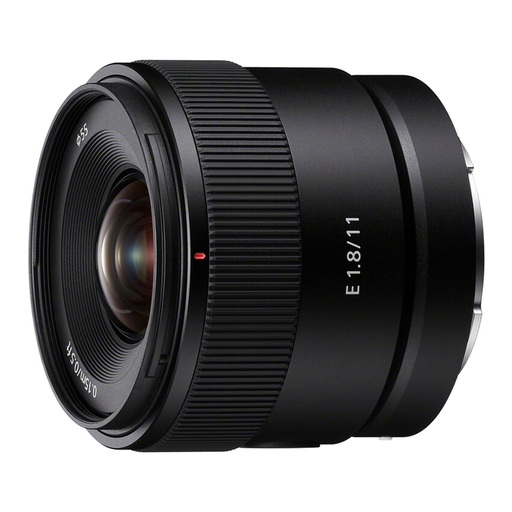
These Sony E lenses are options for close-ups where modest magnification is enough; for very small carving marks, a 1:1 macro lens may be a better starting point.
 No image available
Sony E 11mm F1.8/APS-C wide-angle lens (SEL11F18)
The product listing mentions close-up photography; check whether the magnification is enough for the smallest carving mark you want to capture.
View at Joybuy
 No image available
Sony E 50mm f/1.8 OSS, black
The product listing mentions product, close-up and macro photography; check the magnification against the crop you need for your ornament.
View at Joybuy
Frequently asked questions
What should you check before fitting a macro lens to your camera?
Check the exact mount on both the camera body and the lens version. For example, Sigma offers the 105mm DG DN Macro separately for Sony E and L-Mount; the same focal length doesn’t mean a lens will fit every camera.
How can you keep several layers of a carved ornament in focus?
Keep the camera and ornament still and, if your equipment and workflow allow, take shots at different focus points and combine them. Nikon describes this as focus stacking; check separately whether your camera supports automatic focus bracketing.
Does the lens need to be very close to the ornament?
You can’t tell from the focal length alone. Sony Netherlands distinguishes between minimum focusing distance, measured from the image sensor, and working distance in front of the lens. Focus on how the working distance compares with the space your lighting setup needs, and avoid touching the ornament.
When buying online in the Netherlands, are you always entitled to a cooling-off period and a legal guarantee if you use the lens for your portfolio?
When you buy online as a consumer, you generally have up to 14 days after delivery to change your mind, subject to legal exceptions. You may also be entitled to a legal guarantee if a product doesn’t meet what you could reasonably expect. According to ACM ConsuWijzer, consumer rights don’t automatically apply if you use the contract mainly or exclusively for business purposes. Having a portfolio doesn’t, by itself, determine the capacity in which you’re buying.


