
Table setting photographer
Wants to show the whole candlestick and part of the table. So first check the angle of view, the available distance from the camera and whether your current lens can focus at that distance.


If you want to photograph the whole candlestick and part of the table, first check whether your current lens can focus at the distance you need. A macro lens is most useful for capturing small decorations and material textures. Then choose a lens mount and angle of view to suit your camera and composition, and consider the working distance: focusing close up can leave little room for lighting. Manufacturers such as Canon, Fujifilm, Nikon and Sony publish model specifications, but the best choice depends on your camera and setup.
Wants to show the whole candlestick and part of the table. So first check the angle of view, the available distance from the camera and whether your current lens can focus at that distance.
Wants to capture engravings, edges or material textures in close-up, and needs to balance magnification with the room left to focus and position the lighting. Canon and Sony publish model-specific macro specifications to help you compare.
Has little room around the table, so compares the angle of view and working distance, rather than just the number on the lens. Nikon and Fujifilm provide specifications for their macro lenses that can help you plan your setup.
Start with the framing you want. To photograph the whole candlestick, check whether your current lens can focus close enough. For small details, magnification and room for lighting matter more.
| What to consider | What should you check? | Who is this important for? |
|---|---|---|
| Camera compatibility | Check the lens mount and sensor format of your camera body. | If I want to use the lens with my current camera, I first check that the mount is compatible; around 31% of consumers prioritise camera compatibility. |
| Framing the whole table setting | Compare the angle of view and focusing distance from your intended shooting position. | If I want the frame to include the whole candlestick and part of the table, I need to check how much room I have behind the camera; around 25% of consumers prioritise wider framing. |
| Working distance and lighting | Check the distance from the front of the lens to the subject, and allow room for lighting. | If I want to position a light close to the candlestick, I need clear space in front of the lens; around 19% of consumers prioritise working distance. |
| Capturing small details | Compare the stated magnification and focusing controls for close-up shots. | For engravings or fine textures, I want to know how large the detail can appear in the frame; around 13% of consumers prioritise detail magnification. |
| Use beyond this scene | Consider how often you’ll want to use the lens for other photos, and what your current lens can already do. | If I don’t want an extra lens that rarely leaves my bag, I look at other uses beyond this table shot; around 12% of consumers prioritise versatility. |
Magnification varies by model. For example, Canon lists 0.5× for the RF 35mm F1.8 MACRO STM and up to 1.4× for the RF 100mm F2.8L Macro IS USM.
Compare the maximum reproduction ratio with the size of the detail you want to photograph. Don’t choose based on the category name alone.
Minimum focusing distance is measured from the sensor plane; working distance is the distance between the front of the lens and the subject. These measurements don’t tell you the same thing about the space around the candlestick.
Check both measurements at the magnification you need, and sketch out the camera, lens and lighting on the table if necessary.
A narrower angle of view may mean you need more space behind the camera to frame the whole candlestick and table.
First test the framing you want and check how much room you have for the camera. Choose a mid-range macro lens only if it will fit your space.
The differences mentioned apply to specific lens ranges and camera mounts; they aren’t a general ranking of quality.
For Canon EOS R users, the RF options mentioned here range from close-up photography to high macro magnification.
For Nikon Z cameras, both the Z MC 50mm and Z MC 105mm offer 1:1 magnification, but have different angles of view and space requirements.
The Sony FE 90mm F2.8 Macro G OSS is a mid-range macro option for Sony E cameras.
According to Fujifilm, the Fujifilm XF30mmF2.8 R LM WR Macro combines a 30 mm focal length with 1:1 magnification for the X system.
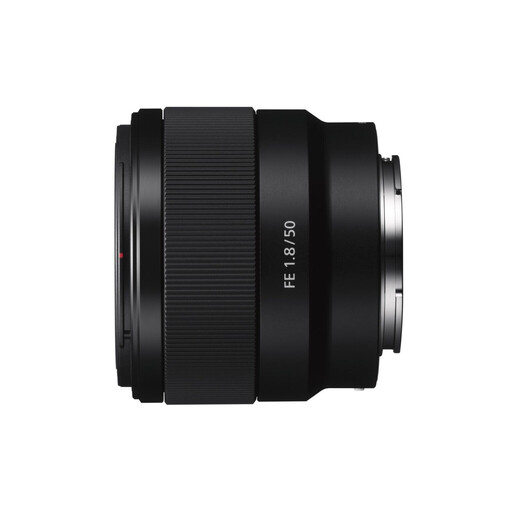
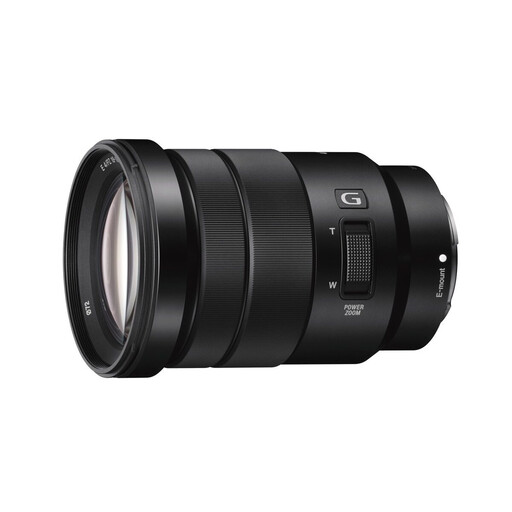
These Joybuy picks are Sony E lenses for product and close-up photography. Check that the mount and close-up capabilities suit your camera and the framing you want.
 No image available
A Sony E lens for product and close-up photography. Bear in mind that it’s less suitable when very small details are the main focus.
 No image available
A Sony E zoom lens for trying different focal lengths as you frame your shot; its magnification is limited for very small details.
Take test shots at your intended shooting distance using different apertures, then check where the focus falls. Canon notes that close-ups can have a shallow depth of field and require precise focusing. A lens with a wider maximum aperture won’t automatically bring the whole candlestick into focus.
No. Minimum focusing distance is measured from the sensor plane, whereas working distance is measured from the front of the lens to the subject. For the SEL90M28G, Sony specifies a minimum focusing distance of 28 cm and a working distance of around 13 cm.
Try a different shooting angle and check the reflections in a test shot. Sony warns that the camera or photographer may be visible in reflective subjects.
According to the Fire Service, place the candle in a sturdy holder on a flat surface and keep it away from flammable materials such as curtains.
For qualifying distance purchases by consumers, the Dutch government says you will often have a 14-day cooling-off period; check whether your purchase is covered by this scheme. You are also entitled to a product that is fit for purpose. The Dutch government says there is no fixed statutory guarantee period in the Netherlands, and the seller is your point of contact if something is faulty.