What should you look for?
When photographing an entire book cover on a small table, it’s best to check your framing and camera mount first, then compare maximum magnification.
| What to consider |
What should you check? |
Who is this important for? |
| Framing the entire cover |
Take a test shot from above with your current lens and measure the available camera height. |
If I want to capture the whole cover on a small table, I need to know whether it will fit in frame straight on from the available tripod height. Around 36% of consumers prioritise framing the entire cover. |
| Compatible camera mount |
Note the full camera model, mount and sensor size, then check the exact lens version. |
When using a camera I already own, I first want to make sure the lens mount and sensor size are compatible with my camera body. Around 29% of consumers prioritise compatibility. |
| Stable set-up and lighting |
Test whether the camera is secure and level above the table, and look for shadows and reflections in a test shot. |
For overhead shots, I want to be able to position the camera securely and check for distracting reflections. Around 21% of consumers prioritise their set-up and control of the lighting. |
| Capturing small details |
Compare the maximum magnification and check how much room there is in front of the lens when focusing up close. |
If small lettering or marks on the material need to fill the frame, I want to know what magnification the lens offers and how much working space I’ll have. Around 14% of consumers start by considering detail photography. |
Joybuy product selection
A lens option to try for a wider frame when using an existing Sony E APS-C camera.
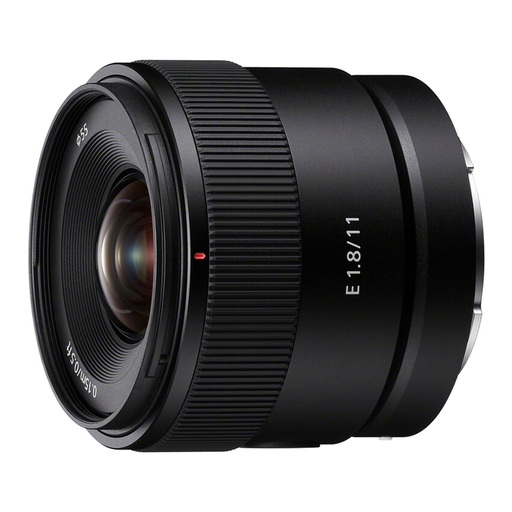 Image unavailable
Sony E 11mm F1.8 APS-C wide-angle lens SEL11F18
An option for testing a wider frame with a compatible Sony E APS-C camera. Take a test shot to see whether the entire cover and the crop you want will fit.
Mount: Sony E. Focal length: 11 mm. Aperture: F1.8. Format: APS-C.
Joybuy
Frequently asked questions
Does 1:1 magnification make it easier to fit the whole book cover in the photo?
No. 1:1 describes the maximum reproduction ratio when focusing up close. To photograph the entire cover, check what you can fit in frame with your lens and sensor at the available camera height.
How do I position the camera above a small table?
Make sure the camera is stable and pointing downwards, and check that it’s level. Adobe suggests using a tripod that can point downwards or a C-stand for flat-lay photography. Take a test shot to check that the cover is straight in frame and that reflections aren’t distracting.
How do I care for a lens after use?
Sony recommends first removing dust from the lens surface with a blower. For heavier soiling, use a suitable soft cloth in line with the instructions for your specific model. Don’t apply cleaning fluid directly to the lens.
What returns and warranty rules apply to online purchases in the Netherlands?
According to ACM ConsuWijzer, online purchases generally come with a statutory cooling-off period of up to 14 days after delivery. Check the terms and any exceptions before buying. The statutory guarantee isn’t automatically two years for every product: expected lifespan depends, among other things, on what you can reasonably expect from the product under normal use.
Can I publish a photo of a book cover online?
Taking a photo of a cover yourself doesn’t automatically give you permission to make protected material available to the public. The Dutch Government distinguishes between a private copy for personal use and distributing or making material available to the public. Before publishing, check which rights, permissions or legal exceptions apply to the specific cover and intended use.


