
Detail-focused mirrorless camera user
You want to fill the frame with leaf veins or droplets. Check your camera’s mount and the lens’s actual maximum magnification before choosing a lens.


Start by choosing a macro lens with the right mount, then decide whether you mainly want to photograph delicate leaf veins or capture the surroundings too. Greater magnification helps with tiny details, while a lightweight lens is easier to carry on a walk. Working distance and protection from moisture also matter when you’re taking close-ups outdoors. Image stabilisation won’t stop a leaf moving in the wind.
You want to fill the frame with leaf veins or droplets. Check your camera’s mount and the lens’s actual maximum magnification before choosing a lens.
You want to photograph both leaves and their surroundings on the same walk. A lens’s weight and angle of view can help you decide whether it’s right for your walking kit.
You take close-ups of damp leaves and want to know how much room you have in front of the lens, as well as exactly what the manufacturer says about moisture protection.
First check that the lens fits your camera, then choose magnification, weight and weather suitability to match what you want to photograph.
| What to consider | What should you check? | Who is this important for? |
|---|---|---|
| Camera mount | Check the lens’s exact mount and version, and make sure it’s compatible with your camera. | I want to make sure the lens fits my camera first, so I don’t choose a version I can’t use. Around 33% of consumers give compatibility top priority. |
| Magnification | Compare the exact model’s actual maximum magnification; a 35mm-equivalent figure is a different measurement. | If I mainly want to capture tiny veins or droplets, I look at how much detail the lens can actually reproduce. Around 27% of consumers prioritise magnification for this kind of detail. |
| Weight and working distance | Check the lens’s weight and how much space there is between the front of the lens and your subject. | I want to keep my kit light and take wider shots along the way too. Carrying comfort is the top priority for around 20% of consumers. |
| Outdoor photography | Check the conditions for image stabilisation and the manufacturer’s specific warnings about moisture. | In windy or damp conditions, I want to know how to protect my lens and camera, and account for the leaf moving. Around 20% of consumers put outdoor use first. |
An equivalent figure isn’t the same as the lens’s actual magnification, which determines how large a detail appears on the sensor.
Compare the actual maximum magnification and check the full model name and version.
The minimum focusing distance is measured from the sensor. With the Fujifilm XF30mmF2.8, Fujifilm says the subject is almost touching the front of the lens at the closest focusing distance.
Where possible, compare the working distance from the front of the lens if you want to take close-ups.
Moisture protection varies by model and doesn’t always prevent water from getting inside.
Follow the manufacturer’s warnings for the exact lens, and protect your lens and camera in the rain.
Moisture damage can also lead to repair costs.
The FE 90mm F2.8 Macro G OSS is designed for compatible Sony E-mount cameras and offers 1:1 magnification, according to Sony.
The RF 100mm F2.8L Macro IS USM is aimed at users of compatible Canon RF cameras who want more than 1:1 magnification.
According to Fujifilm, the XF30mmF2.8 R LM WR Macro combines 1:1 macro capability with everyday use on compatible X-series cameras.
The 105mm F2.8 DG DN Macro Art is available in separate Sony E-mount and L-Mount versions, both offering 1:1 magnification according to Sigma.
The M.Zuiko Digital ED 60mm F2.8 Macro and 90mm F3.5 Macro IS PRO are different options for compatible Micro Four Thirds cameras.
This selection is suited to travelling light and taking close-ups of larger leaf patterns. The stated maximum magnification of 0.16× is limited if you want to capture very small structures at life size on the sensor.
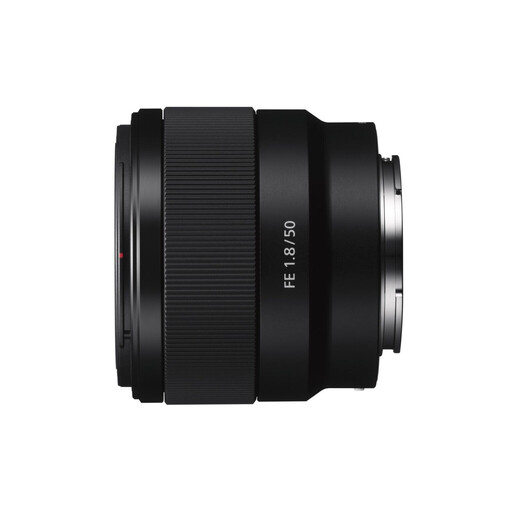 Image unavailable
A good choice for travelling light and capturing larger leaf patterns up close, but not for life-size shots of small structures.
Stated weight: 202 g. Minimum focusing distance: 39 cm. Maximum magnification: 0.16×.
No, it depends on how much detail you want to capture. Canon describes 1.0× as life-size reproduction on the sensor. This can be useful for small details, but you don’t necessarily need 1:1 magnification to photograph an entire leaf.
Image stabilisation helps reduce camera shake, but a moving leaf can still move out of the plane of focus. Sony points out that subject movement can also affect macro photography. Check your focus and adjust your shot to suit the conditions.
It depends on the warnings for the exact model, and splash resistance doesn’t automatically mean the lens is waterproof. Sigma describes its 105mm as suitable for light rain, but not waterproof; Canon warns that the RF 100mm’s sealing does not completely prevent water from getting inside. Protect your camera too.
For a standard online consumer purchase, the ACM says you generally have a 14-day cooling-off period after delivery, subject to statutory exceptions. The seller must also, under the legal guarantee, provide a product that does what you could reasonably expect when used normally. This isn’t simply a fixed manufacturer’s warranty period.
No, access depends on the rules that apply at the location. The Dutch Government says nature reserves and species are protected, and that provinces decide what is and isn’t allowed on site. Check the access rules for the area before you start taking photos.