
Photographers with an existing camera system
You want to buy a macro lens without changing your camera body or mount. Check the full lens specification before comparing other features.


Start with a lens mount that fits your existing camera. Then choose based on the kind of photos you want to take: a shorter focal length can combine close-ups with more of the garden in the frame, while magnification and working distance matter more if you want to isolate tiny details or leave room for lighting. Manufacturers publish specifications for individual models; these are not comparative real-world tests.
You want to buy a macro lens without changing your camera body or mount. Check the full lens specification before comparing other features.
You want to make the cap, ridges or surface texture fill the frame, so you’re comparing magnification with the space left in front of the lens.
You want to photograph both acorns and wider garden scenes, so you’re looking for a lens that’s easy to handle and has a focal length suited to everyday shots too.
First, check that the lens mount fits your camera. Then compare the magnification and working distance with the framing and lighting space you need for your garden photos.
| What to consider | What to look for when buying | Who will find this most important? |
|---|---|---|
| Compatible mount | Check your camera model, the lens name and the mount for the specific version. | If I want to keep using my current camera, the lens needs to fit it. Around 36% of consumers prioritise compatibility. |
| Magnification and framing | Compare the stated maximum magnification with the size of the detail you want to photograph. | For a cap that fills the frame, I want to know how large the detail will appear on the sensor. For a whole acorn with some garden context, that extra magnification may not be necessary. Around 29% of consumers prioritise detail magnification. |
| Working distance and light | Look up the working distance at the magnification you plan to use; the minimum focusing distance doesn’t tell you how much space is left in front of the lens. | If I want to adjust the lighting or my position around the acorn, I look at the distance between the subject and the front of the lens. Around 21% of consumers prioritise this working space. |
| Ease of use outdoors | Compare the weight and stated protection of the specific lens. Weather-resistant doesn’t automatically mean waterproof. | For a walk around the garden, I want a lens that works for both acorns and wider shots, without assuming it offers more protection than stated. Around 14% of consumers prioritise ease of handling and outdoor use. |
A model may be available with different mounts. A lens that doesn’t fit your existing camera won’t suit the way you intend to use it.
Compare the full specification on the product page with the mount on your camera body.
Nikon lists a minimum focusing distance of 0.16 m for the Z MC 50mm, but says that at this distance there’s approximately 5 cm between the front of the lens and the subject.
If you need room to adjust your position or lighting, look up the working distance at the magnification you plan to use.
For the OM SYSTEM 60mm, the stated maximum optical magnification is 1:1 on Micro Four Thirds. The 2× figure is a 35mm equivalent.
Compare magnification figures using the same definition and check what the manufacturer’s figure is based on.
In the Netherlands, an extra manufacturer’s or seller’s warranty, or one you buy separately, is separate from your statutory rights. The Dutch government says there is no fixed statutory warranty period and that the seller must resolve problems with a product.
Read the terms of any additional warranty and compare what it offers beyond your statutory rights with the seller.
For compatible Nikon Z cameras, Nikon lists the Z MC 50mm for macro and everyday photography, and the Z MC 105mm VR S for a longer macro focal length.
The RF 100mm F2.8L Macro IS USM is a macro option for a compatible Canon RF camera if you’re looking for greater magnification.
The 105mm F2.8 DG DN MACRO | Art is available in separate Sony E and L-Mount versions.
Sony describes the FE 90mm F2.8 Macro G OSS as a macro lens with in-lens stabilisation for compatible E-mount cameras.
The M.Zuiko Digital ED 60mm F2.8 Macro is designed for a compatible Micro Four Thirds system.
The selection below includes two Sony E lenses described as suitable for close-up use. Their stated magnification is below 1:1, so don’t compare them directly with a macro lens designed to fill the frame with acorn details.
 No image available
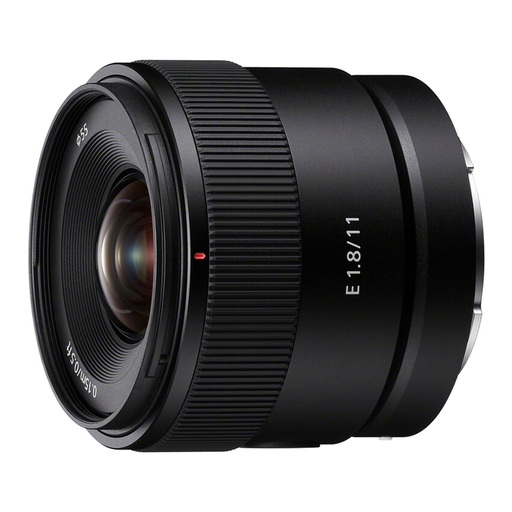
This wide-angle lens may suit you if you want to combine close-ups with plenty of the garden in the frame. Its stated magnification means it isn’t a 1:1 macro lens.
Sony E mount, APS-C and a 104° angle of view. The stated minimum focusing distance is 0.15 m; magnification is 0.13× with autofocus and 0.20× with manual focusing.
The stated weight is 181 g. Check that the Sony E mount and APS-C version are compatible with your camera.
 No image available
The product description mentions close-up and macro photography, but the stated magnification is 0.16×. Bear this in mind if you want to make small acorn details appear large.
Sony E mount and APS-C. The stated weight is 202 g, and the lens has optical image stabilisation.
Check that this specific version is compatible with your camera and offers the magnification you need for your subject.
No, not for the OM SYSTEM 60mm mentioned here. The manufacturer lists a maximum of 1:1 on Micro Four Thirds; 2× is the 35mm equivalent figure. Compare lenses using the same definition of magnification.
A tripod helps keep the camera steady. Nikon also recommends paying attention to depth of field, lighting and manual focusing when taking macro photos. Try out the settings where you plan to take your photos.
Follow the care instructions for your lens and camera. Don’t assume a lens is waterproof just because it’s described as splash-resistant. Sigma says its 105mm lens isn’t waterproof; Canon says the protection on its RF 100mm doesn’t completely prevent material from getting inside.
According to the Dutch government, when you buy online from a business, you generally have a 14-day cooling-off period; an online purchase from a private individual is treated differently. If a product is faulty, contact the seller about your statutory rights. The Netherlands has no fixed statutory warranty period, and an additional warranty doesn’t replace these rights.
Don’t assume that you can. The Dutch Data Protection Authority explains that images of identifiable people are personal data, and privacy rules may apply to taking and publishing them. This information does not, by itself, tell you anything about the access rules for a particular garden.