
Miniature detail photographer
You want to capture the paintwork, faces or equipment on individual toy soldiers in close-up. So, check the close-focusing capabilities of the exact camera and lens.


A macro compact camera is a good choice if you want to focus close to small details without using a separate lens. A mirrorless camera is better suited to those who want to choose a specific macro lens and are happy to use extra equipment and set up their shot. Check the magnification, focusing distance and desired depth of field for the exact camera-and-lens combination. In low window light, a stable setup is useful if you’re using a smaller aperture or focus bracketing.
You want to capture the paintwork, faces or equipment on individual toy soldiers in close-up. So, check the close-focusing capabilities of the exact camera and lens.
You photograph several figures together and want to control how much of the scene is in focus, while making the most of the available window light.
You want to start with minimal extra equipment and weigh up using an existing phone or a macro compact camera against the additional lens choice and setup involved with a mirrorless camera.
A good fit if: you want to try out what level of detail you need first. Check whether your specific phone supports macro photography.
Bear in mind: capabilities vary by model. Apple describes macro photography for compatible iPhones, not every phone.
A good fit if: you want to focus close to small details without changing lenses. OM SYSTEM specifies a focusing distance of 1 cm for the Tough TG-7.
Bear in mind: the lens is built in. Check that the short working distance leaves enough room for window light in your setup.
A good fit if: you want to choose a suitable lens and are prepared to assess the camera body and lens as a combination.
Bear in mind: Canon Europe lists a maximum magnification of 1:2 for the RF 35mm F1.8 MACRO IS STM; Nikon Netherlands specifies 1:1 for the NIKKOR Z MC 50mm f/2.8. These figures apply to these lenses, not every kit lens.
| Consideration | What should you check? | Who is this important for? |
|---|---|---|
| Capturing small details up close | Check the maximum magnification and focusing distance of the exact lens or camera. If possible, try it with a figure of a similar size. | If I want to capture the paintwork, faces or equipment on a small figure clearly, I look at how much space the subject takes up in the frame. Around 36% of consumers prioritise detail. |
| Desired depth of field | Decide whether you want one figure or an entire scene in focus, and check whether the camera supports focus bracketing. | If I photograph several figures by the window, I want to decide in advance how much of the scene should be in focus. Around 29% of consumers prioritise keeping the whole scene in focus. |
| Simple setup | Weigh up a built-in lens against a separate lens, and decide whether you want to practise first with a suitable phone. | If I want to get started quickly without lots of extra equipment, I look for a setup that suits the way I take photos. Around 21% of consumers put simplicity first. |
| Total purchase cost | Check whether the offer includes only a camera body or a suitable lens too; also allow for the possibility of needing a stable setup. | If I want to avoid unnecessary purchases, I compare the complete setup rather than just the camera body. Around 14% of consumers prioritise the total cost. |
With a mirrorless camera, the lens you use also affects how close you can focus. A lens specification does not automatically apply to every kit lens.
Before buying, check everything included in the bundle, the lens mount and the magnification of the exact lens supplied.
Focus bracketing may require extra time for a stable setup and for combining the images.
If the lens or camera needs to be very close to the figure, there may be little room for window light to reach your subject.
As well as checking the minimum focusing distance, see how much space you’ll have between the lens and the figure in your window setup.
A compact camera option for anyone who wants to focus close to small details without changing lenses.
A mirrorless camera option for anyone weighing up interchangeable lenses and focus bracketing support.
Z system cameras can be paired with a separate macro lens.
An E-mount camera can be paired with the separate E 30mm F3.5 Macro lens.
The XF30mmF2.8 R LM WR Macro is an option for a compatible X camera.
These Joybuy cameras offer options for simple operation or adjustable exposure. Check each model individually to see whether it can focus at the distance of your miniatures.
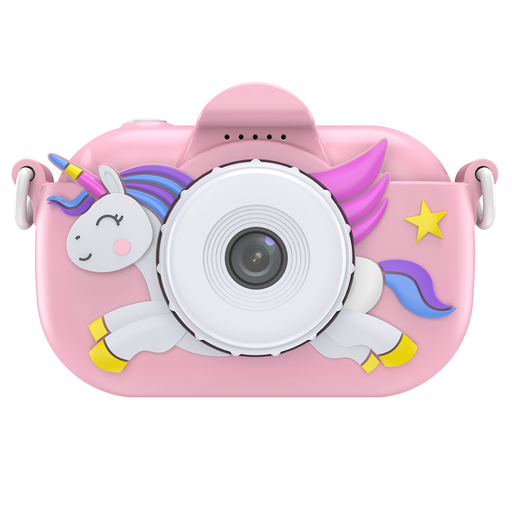 No image available
The description mentions simple buttons and a portable design, which may suit anyone looking for an easy-to-use camera. Check whether it can focus at the distance you’ll be photographing your miniatures from.
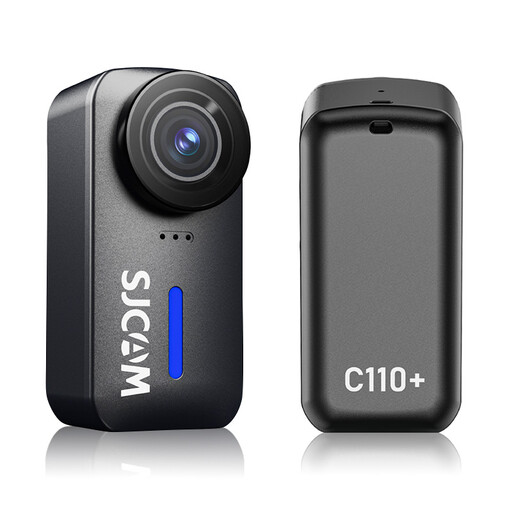 No image available
The description mentions adjustable ISO and exposure compensation, which may be useful if you want to adjust exposure settings. The product name lists 4K video and 20MP photos; check separately whether the camera can focus at the close-up distance you need.
No, it depends on how large you want the figure to appear in the final photo. Canon Europe specifies a maximum magnification of 1:2 for the RF 35mm F1.8 MACRO IS STM; Nikon and Sony specify 1:1 for the separate macro lenses mentioned above. Taking a test shot with a figure of the size you usually use can help you decide which magnification is right for you.
First, check your focus point and take some test shots with a different aperture setting. If one shot doesn’t give you the depth of field you want, you can combine a series of images taken with different focus points; Canon Europe lists focus bracketing for the EOS R50. A stable setup is useful for this.
Check whether the offer includes just a body or a lens that suits your close-up photography as well. For consumer purchases in the Netherlands, the seller is responsible for the statutory guarantee if a product doesn’t meet what you could reasonably expect. According to the Authority for Consumers & Markets, this guarantee isn’t automatically limited to two years.
For a standard online consumer purchase in the Netherlands, you generally have a statutory cooling-off period of up to 14 days after delivery. The Authority for Consumers & Markets also describes some exceptions, so check which rules apply to your specific purchase and how you can assess the camera carefully.