
Vandaag of morgen in huis

Kwaliteit gegarandeerd

Welkomstaanbiedingen ontgrendelen: GRATIS bezorging | Tot 80% korting | Gratis 30 dagen JoyPlus-proefperiode
Download de app
Looking for lychee jelly, lychee jelly candy or a ready-to-eat lychee dessert? At first glance, the selection may seem straightforward: sweet jelly, fruity flavour and convenient portions. In reality, products can differ considerably in texture, sugar content, packaging and ingredients.
The main pitfall is that a product name does not always tell the full story. A jelly may contain only a small percentage of lychee juice, while “fruit” or “collagen” is displayed prominently on the packaging. Use the checkpoints below to compare products based on information actually stated on the label or in the product description.
Check the ingredients list and the percentage of lychee juice or concentrate. For example, Yuki & Love Litchi Flavoured Jellies lists 2.8% lychee juice, alongside apple juice and lychee flavouring. This can deliver a fruity taste, but the product is not made primarily from lychee.
Orion Lychee Kernels Jelly also contains lychee juice concentrate and pieces of lychee kernel. According to the product information, its 67-gram serving contains 15 grams of sugar and 70 kcal. That is relevant if you are looking for a sweet snack, but the product is less suitable for anyone specifically seeking sugar-free jelly.
Always read the full product information. DELIEF Vegan Collagen Konjac Jelly Lychee is labelled vegan and, according to the description, contains plant-based collagen derived from carrots. Its nutritional value is 4 kcal and 0 grams of sugar per 100 grams. These are verifiable details from the product listing; they do not constitute a medical or health claim.
With konjac jelly, also check the sweeteners, thickening agents and serving size. “Sugar-free” does not automatically mean that a product contains no sweeteners. If you have allergies or specific dietary requirements, it is best to check the physical label again when the product arrives.
A multipack can be convenient for families, a well-stocked pantry or sharing with several people. However, check the weight per serving, the number of individual cups and the best-before date. A 1 kg bag may sound generous, but it can contain more sugar per 100 grams than a smaller konjac jelly.
With jelly cups and nata de coco lychee, it is also important to consider how the packaging is opened. Check the seal and follow the storage instructions. Some products must be refrigerated after opening and consumed within the stated period.
Not every fruit jelly has the same mouthfeel:
If you are looking for a dessert to enjoy after a meal, cups or pudding are usually the better choice. For eating on the go, sticks or a resealable squeeze pouch are more practical.
Do not compare calories alone; also look at carbohydrates, sugars and serving weight. Orion lists 70 kcal per 67-gram pack. According to the product information, COZZO Lychee Jelly Beans contains 120 kcal and 30 grams of sugar per 100 grams. Yuki & Love lists 96 kcal and 21 grams of sugar per 100 grams.
DELIEF Lychee Konjac Jelly has a considerably lower stated energy value of 4 kcal per 100 grams. Hethstia Konjac Jelly Lychee lists 7 kcal per 100 grams and 0 grams of sugar. Use these figures to compare products, not as dietary advice.
Check whether the product contains gelatine, milk, sweeteners, colourings or flavourings. COZZO Lychee Jelly Beans contains milk and milk products. Cocon Nata de Coco Lychee Dessert contains milk powder. A product free from the 14 major EU allergens is not automatically suitable for every individual allergy.
Jelly cups and small jelly products can pose a choking hazard. Always follow the age and usage warnings on the packaging. Jele, for example, states that the product is unsuitable for children under three because of the risk of choking.
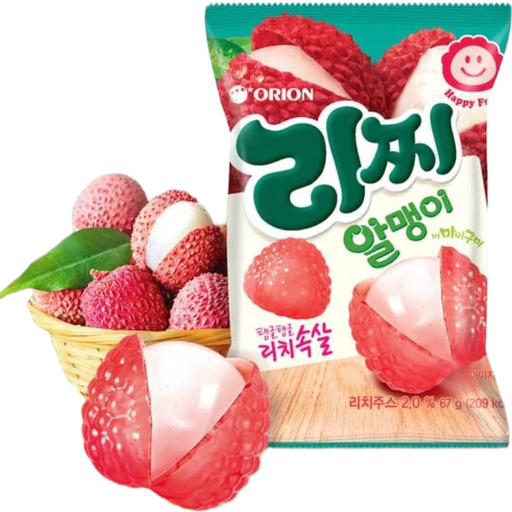
Why This Fits Their Persona: A clearly defined single-serve portion for anyone who wants to try lychee jelly without committing to a multipack.
The weight, nutritional values and ingredients are clearly stated, making it easy to see that 67 grams contains 15 grams of sugar.
67 g per serving; lychee flavour with pieces of lychee kernel; 70 kcal per pack according to the product information.
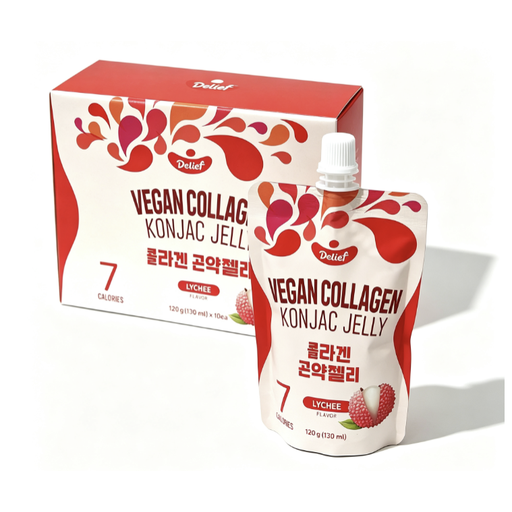
Why This Fits Their Persona: A box of ten portions for anyone who regularly wants to take a konjac jelly snack to work or keep one at home.
The vegan designation and nutritional values are supported by a specific ingredients list rather than relying on marketing language alone.
10 × 120 g; listed as vegan according to the product information; 4 kcal and 0 g of sugar per 100 g.
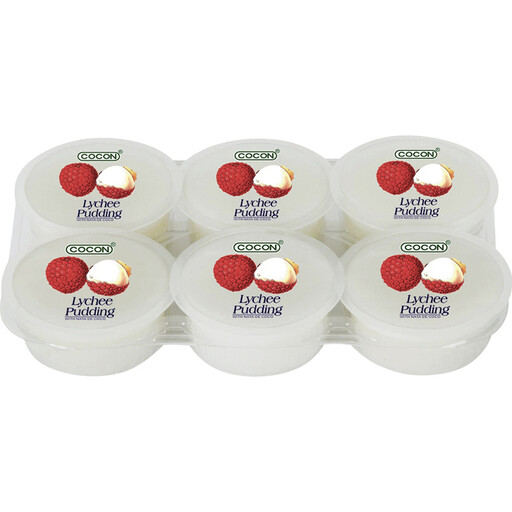
Why This Fits Their Persona: Individual connected cups make this lychee dessert easy to share or serve chilled.
The pack is divided into individual portions, so you do not need to use the entire quantity immediately after opening.
480 g in total; nata de coco cubes; spoons included according to the product description.
Browse a current selection of instant jelly desserts and compare flavour, packaging, ingredients and nutritional values before ordering.
No. Jelly is generally more elastic and is often made with konjac, carrageenan or other gelling agents. Lychee pudding is usually softer and eaten with a spoon. Nata de coco lychee combines a soft base with coconut gel cubes.
Compare the nutritional values per 100 grams and check whether “sugar-free” actually states 0 grams of sugar. DELIEF and Hethstia list 0 grams of sugar in their product information. Always check the label upon delivery, as packaging information may change.
Follow the instructions on the packaging. Many jelly cups must be refrigerated after opening and consumed within the stated period. Store unopened products in a cool, dry place away from direct sunlight and heat. Before consuming, check the seal, best-before date and any age warning.
