
Livraison le jour même et le lendemain

Qualité garantie

Débloquez vos offres de bienvenue: Livraison GRATUITE | Jusqu'à -80 % | 30 jours d'essai gratuits à JoyPlus
Téléchargez l'application
Taking lunch to work, school or on the go sounds simple. Yet lunchboxes and food containers are not all suited to the same purpose. A container that works perfectly well for sandwiches may be awkward for soup. And a container that fits in the fridge is not automatically suitable for the microwave.
The most common buying mistakes usually come down to three pitfalls:
So do not just look at the colour or product photo. Always check the capacity, dimensions, closure, care instructions and suitable uses.
The material determines how you use and clean the container.
A brand’s claim about safety or sustainability is not a guarantee for every use. According to a brand’s own information, for example, a product may be described as leakproof or odour-resistant. Base your choice primarily on the stated construction, closure, dimensions and care instructions.
For an individual lunch, a capacity of around 600 to 1,000 ml is often a sensible choice, but the right size depends on your eating habits. A lunchbox with compartments prevents fruit, bread and snacks from getting mixed together. For sauces or yoghurt, a separate, securely sealed container is usually the wiser option.
Pay attention to the difference between:
The dimensions are at least as important as the number of millilitres. If in doubt, measure the compartment in your lunch bag, fridge or kitchen cupboard.
A leakproof lunchbox needs more than a single click. Look for a silicone sealing ring, sturdy clips or a lid that fits securely all the way around. For soup, dressing and sauces, it is advisable to transport the container upright and check with water before using it every day to make sure the closure works properly.
Also check:
For meal prep, several identical containers are useful. A set of four 1,600 ml containers, for example, may be suitable for larger portions or family use, but it also takes up more storage space.
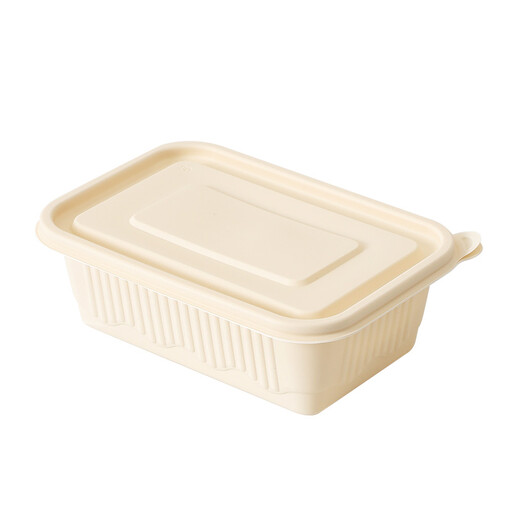
Why it suits this profile: The pack contains 20 750 ml containers. This is practical for occasional use, a picnic or a gathering where you do not want to collect containers afterwards.
The 750 ml capacity is clearly stated. Do not use this version as a reusable lunchbox; use it as intended: for temporary, one-off use.
20 containers per pack; 750 ml each; supplied with lids.

Why it suits this profile: This set is aimed at anyone looking for several sturdy food storage containers for leftovers, the fridge, freezer and meal prep.
The product specifications state that the containers are dishwasher- and freezer-safe. According to the description, they are not suitable for the microwave, helping to prevent incorrect use.
Four containers, each holding 1,600 ml; 316L stainless steel; suitable for the dishwasher and freezer.

Why it suits this profile: The wide opening and 1.4-litre capacity are designed for hot meals, soup or larger portions for work, school and eating on the go.
The instructions recommend hand washing and advise warming or cooling the jar beforehand. They also recommend transporting it upright and not placing it in the dishwasher.
1.4-litre capacity; 304 stainless steel; vacuum insulation; wide opening; supplied storage bag.

Why it suits this profile: A set of eight glass storage containers provides different sizes for leftovers, lunches and meal preparation.
Glass means you do not have to rely solely on marketing claims about the material. However, check the individual specifications for microwave, oven, freezer and dishwasher use before using each component.
Eight-piece set; borosilicate glass; rectangular design; suitable for organising multiple portions.
We have put together a complete, up-to-date list of products that fully meet these strict selection criteria and the applicable European safety regulations.
For a light lunch or snacks, 500 to 750 ml may be enough. If you are taking a full meal, salad or several components with you, you will often need more space. In addition to capacity, consider the internal layout and the dimensions of your bag.
That depends on the glass and the lid. Some products state that borosilicate glass is suitable for use in the microwave or oven, but the lid may have a lower temperature limit. Remove the lid when the product instructions specify this and avoid sudden changes in temperature.
Its lifespan depends on the material, closure and care. Stainless steel can last a long time with normal use, while a silicone sealing ring may show signs of wear sooner. Replace a container when the lid no longer closes properly, the seal is damaged or the material shows cracks. A reusable lunchbox remains practical only if you can clean and dry it thoroughly after every use.
