
Livraison le jour même et le lendemain

Qualité garantie

Débloquez vos offres de bienvenue: Livraison GRATUITE | Jusqu'à -80 % | 30 jours d'essai gratuits à JoyPlus
Téléchargez l'application
A lunchbox that leaks in your bag, a lid that stops sealing properly after a few weeks, or containers that are too big for the fridge: lunchboxes and food storage containers seem simple, but small design details make all the difference in daily use.
Pay particular attention to these three common pitfalls:
A “leak-proof” claim without a clear closure
Check whether the product has a snap-on lid, locking clips or a silicone seal. A loose lid rim is less suitable for soup, sauce or yoghurt.
Compartments that don’t suit your food
A bento lunchbox with multiple compartments is handy for fruit, sandwiches and snacks. However, the compartments are not always completely liquid-tight. Sauces can therefore still seep into other foods.
Wrong expectations around microwave, freezer and dishwasher
Not every material is suitable for every use. Stainless steel food storage containers are generally not microwave-safe. With glass storage containers that have a lid, the lid usually needs to be removed before reheating. Always check the product information and warnings.
For everyday use, there are three logical material choices:
A material name alone doesn’t tell you everything. Also look at the information about food contact, temperature range, sealing and care.
A compact lunchbox with compartments is suitable for a sandwich, fruit and small snacks. For an adult lunch or multiple portions, larger food containers with lids are more practical.
Bear in mind:
Also check the external dimensions alongside the capacity. A 1.5-litre container may be less easy to fit into a full work bag due to its wide shape.
A leak-proof lunchbox needs more than just a sturdy lid. Look for:
With Maxcook food jars, the product description mentions a wide opening, vacuum insulation and a well-sealing lid. According to the product information, the insulation helps keep hot or cold contents at temperature for around 4–6 hours. This is a claim from the product description; the actual temperature depends on factors including the starting temperature, quantity and environment.
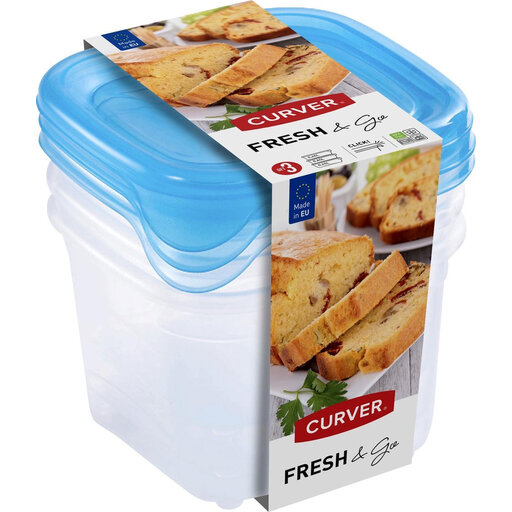
Why this fits the profile: Three compact 0.45-litre containers are practical for snacks, fruit, nuts or smaller leftovers. They take up little space in the fridge and cupboard.
The product description mentions snap-on lids, stackability and use in the freezer, microwave and dishwasher. When using the microwave, the lid must be removed.
Set of three; temperature information from -40 °C to +100 °C according to the product data; nestable and stackable.
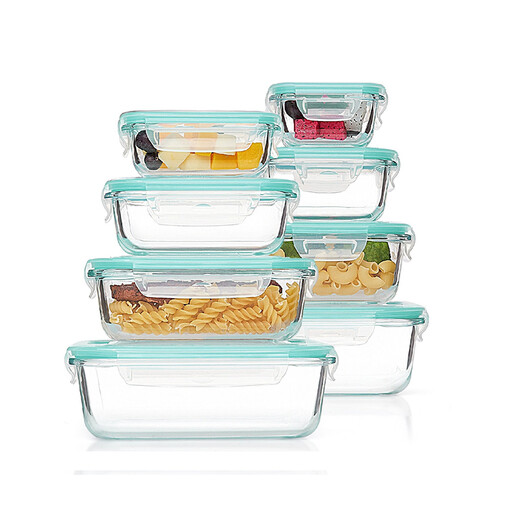
Why this fits the profile: The set of eight rectangular containers is aimed at households that want to store leftovers, prepared meals and ingredients in an organised way.
The rectangular shape makes efficient use of cupboard space. Do check the exact dimensions before purchase and handle glass carefully during transport.
Borosilicate glass; eight pieces with blue locking lids; suitable for organised storage of meals and leftovers according to the product listing.

Why this fits the profile: The 1.5-litre capacity suits commuters, outdoor enthusiasts and households that want to take a large portion of soup, curry or stew with them.
The wide opening makes filling, eating and cleaning easier than with a narrow bottle shape. Transport the jar upright as per the instructions.
316 stainless steel; vacuum insulation; wide opening; 1.5-litre capacity. According to the product description, hand washing is recommended to preserve the seal and insulation.
We’ve put together a full, up-to-date list of products that fully meet these strict selection criteria and comply with current European safety regulations.
For a child’s lunch or light snack, around 0.45 to 0.8 litres is often practical. For an adult meal, a larger lunchbox or a thermal food container of 1 to 1.5 litres may be a better fit. Choose based on portion size and the available space in your bag.
That depends on the glass and the lid. Remove the lid when the product information advises this and check whether the container is microwave-safe. Do not place cold glass directly into a very hot environment to limit thermal shock.
Do not overfill the container, check that the silicone ring is properly in place and close all clips fully. Transport soup and other liquid dishes upright where possible. A leak-proof lunchbox reduces the risk of spills, but no design replaces careful closing and correct transport.
