
Livraison le jour même et le lendemain

Qualité garantie

Débloquez vos offres de bienvenue: Livraison GRATUITE | Jusqu'à -80 % | 30 jours d'essai gratuits à JoyPlus
Téléchargez l'application
Taking lunch with you seems simple, until sauce leaks into your bag, fruit gets squashed or a lid stops closing properly after a few weeks. When it comes to lunch boxes and food storage containers, it’s not just about colour or capacity. The seal, compartments, material information and compatibility with the fridge, freezer, microwave and dishwasher all determine whether a product suits your daily routine.
A bento lunch box or lunch box with compartments can be handy for sandwiches, fruit and snacks. However, not every divided lunch box is suitable for wet ingredients. Check whether the compartments are part of one shared interior or are genuinely separated. Otherwise, yoghurt, dressing or cut fruit could still come into contact with other food.
A lunch box should be easy to open, but stay shut while you’re carrying it. Check the number of fastenings and the type of mechanism. Double fastenings can provide extra security, while a single fastening is quicker to use. The right choice depends on who will be using the lunch box and how full the bag is.
Not every food storage container is suitable for the microwave or freezer, so always check the product information. The product description for the Curver Fresh & Go containers states a temperature range of -40 °C to +100 °C. It also says they can be used in the freezer, microwave and dishwasher. Remove the lid before heating, and don’t use the containers in a conventional oven.
Choose a capacity that suits your usual portion:
A lunch box with compartments is practical when you need to keep ingredients separate. Check:
According to their product names, the Meoky models in this selection come as either a 5-compartment model or a divided lunch box. The product details provided don’t include exact information about the material, microwave use or dishwasher suitability. Check these details on the product page before ordering.
BPA-free food storage containers are a popular choice for everyday use. According to the product description, the Curver products are made from BPA-free plastic in accordance with European food safety regulations. The containers are also described as dishwasher-safe, suitable for the freezer and microwave, and fitted with snap-on lids.
Note the difference between:
Check containers regularly for cracks, warping and wear around the rim. A damaged lid can make the seal and transport less reliable.
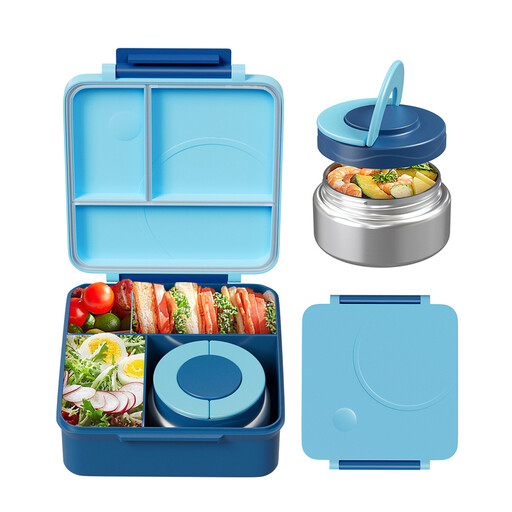
Why it suits this profile: The divided design and single fastening make it a straightforward choice for anyone looking for a practical lunch box without a complicated mechanism.
The divided design means ingredients don’t have to sit loose in your bag. Check the exact dimensions and fastening details before buying.
54 oz capacity, divided design and blue finish with one fastening, according to the product name.
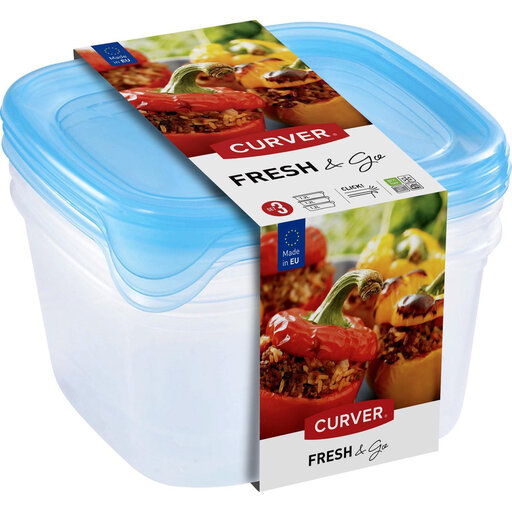
Why it suits this profile: This three-piece set is ideal for households that want to store larger portions, leftovers and ingredients for meal prep.
The product description mentions snap-on lids, an airtight seal and a stackable, nestable design. These features help with leak-resistant transport and save storage space.
Three 1.2-litre containers; according to the product description, they are BPA-free and suitable for the freezer, microwave and dishwasher.
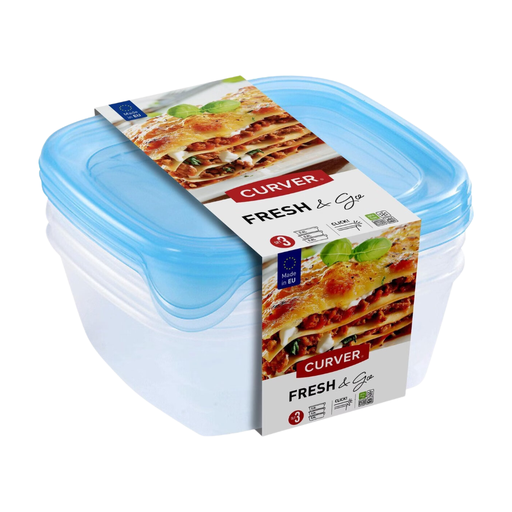
Why it suits this profile: The smaller size works well for everyday portions, snacks, leftovers and storing several prepared meals in the fridge.
The three matching containers make portion sizes easy to predict. According to the product information, they can be nested and stacked, so they take up less space when stored separately.
Three 0.8-litre containers with lids; according to the product description, they are BPA-free and suitable for the fridge, freezer, microwave and dishwasher.
We’ve put together a complete, up-to-date list of products that meet these strict selection criteria and the applicable European safety regulations.
A bento lunch box or lunch box with compartments is practical when you want to keep sandwiches, fruit and snacks separate. Choose a size that fits in the school bag, and check that your child can open the fastening on their own.
It depends on the model. Only use microwave-safe food storage containers as directed in the product information. With the Curver containers mentioned above, you need to remove the lid before heating. Don’t use them in a conventional oven.
There’s no set lifespan for every material and pattern of use. Washing them regularly, not forcing the lids and avoiding use if containers are cracked or warped can help them last longer. Check the sealing rim in particular: it’s often the first place you’ll notice that a container isn’t closing as well as it should.
