
Hosts keeping an eye on sugar
You want to serve biscuits with a sugar content that fits your choice to cut down on sugar. Look beyond the front of the pack: compare the nutritional information per 100 g and, if the weight is given, per biscuit.


When choosing biscuits for Friday afternoon drinks, start by comparing the sugar content per 100 g and per biscuit: ‘less sugar’, ‘sugar-free’ and ‘no added sugar’ do not mean the same thing. If you’re putting out a plate for several guests, check the ingredients and allergens too. Biscuits that are low in sugar may contain polyols, while a familiar flavour or handy portion pack tells you nothing about the sugar content.
You want to serve biscuits with a sugar content that fits your choice to cut down on sugar. Look beyond the front of the pack: compare the nutritional information per 100 g and, if the weight is given, per biscuit.
You’re serving biscuits to people with different preferences or sensitivities to polyols. For biscuits containing maltitol or similar sweeteners, the ingredients list is just as relevant as the sugar content.
You want to be able to show guests which allergens and possible traces are listed on the label. Keep the current packaging to hand so everyone can decide for themselves whether a biscuit is suitable.
Start by understanding what the sugar claim means and checking the nutritional information. Then make sure the ingredients are suitable for your guests and the packaging is convenient for sharing.
| What to consider | What should you check? | Who is this most important for? |
|---|---|---|
| Sugar content and claim | Compare ‘of which sugars’ per 100 g and per biscuit if the portion weight is given. Check whether the pack says ‘less sugar’, ‘sugar-free’ or ‘no added sugar’. | If I want to serve less sugar, I want to know what’s actually in a biscuit, not just what the front of the pack promises. For around 36% of consumers, comparing sugar content comes first. |
| Allergens and ingredients | Check the current allergen information and any ‘may contain’ statement; a diet-related claim is no substitute for checking this. | When I’m hosting guests with different dietary requirements, I want to be able to show them which biscuits may be suitable. Around 29% of consumers put this choice of ingredients and allergens first. |
| Polyols | Look for ingredients such as maltitol or isomalt, and read any warnings on the packaging. | If guests are sensitive to polyols, their tolerance matters more to me than getting the sugar content as low as possible. This need comes first for around 21% of consumers. |
| Sharing and portions | Check the number of biscuits, the weight of each one and whether they’re individually wrapped; also check the nutritional information. | For a plate that’s easy to pass around, I look for familiar flavours or portions that are easy to hand out. Around 14% of consumers put ease of sharing and flavour preference first. |
A biscuit with no added sugar may still contain sugars. ‘Less sugar’ refers to a comparison and doesn’t, by itself, tell you how much sugar the product contains.
Read the full claim and compare the stated sugars per 100 g. Use the value per biscuit if the weight of each one is given.
Albert Heijn lists 0.3 g of sugars and 465 kcal per 100 g for AH Digestive 0% sugar. So the sugar content alone doesn’t tell you everything about the nutritional value.
As well as sugars, check the energy, fat, fibre and portion size on the label.
Several low-sugar biscuits contain polyols. According to the Netherlands Nutrition Centre, large quantities of polyols can cause intestinal discomfort, which is worth bearing in mind when guests are helping themselves from a plate.
Read the ingredients list and any warning. If you don’t know your guests’ preferences, you could also offer an option without these sweeteners.
Individually wrapped packs are convenient for handing out, but they don’t change the ingredients. Lotus Bakeries Nederland lists 38.1 g of sugars per 100 g for Lotus Biscoff Original.
Choose portion packs for convenience; assess whether they’re suitable for serving less sugar separately by checking the nutritional information.
The details below apply to the specific biscuits listed, not automatically to every product from that brand. Always check the label of the variant you choose when buying.
Céréal offers products including Choco Delight and a chocolate-chip variant described as a lower-sugar option.
AH Digestive 0% sugar comes in a large pack of biscuits that you can hand out to a group.
San Francisco Zero is a biscuit for anyone specifically looking for the claim ‘no added sugar’.
Koekhappers are an option if you want to hand out individually wrapped biscuits.
Lotus Biscoff Original is a familiar speculoos biscuit and is also available in packs of two.
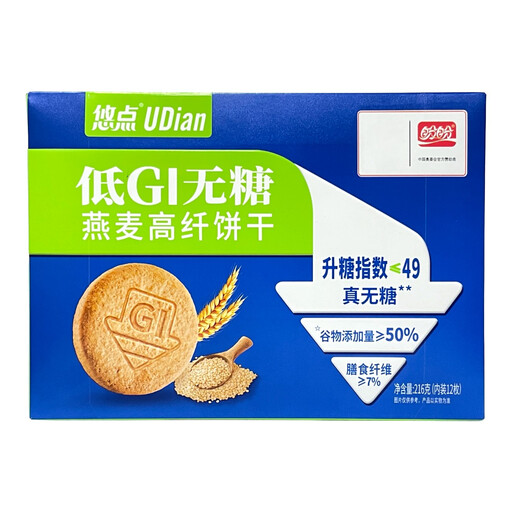
These products are oat biscuits and biscuit bars for anyone wanting to compare sugar content for drinks and nibbles. Their names include sugar claims, so check the stated nutritional information and ingredients for both before deciding.
 No image available
These oat biscuits may be worth considering if you want to compare the stated sugar content per 100 g for drinks and nibbles, but not if you’re expecting a sugar-free product based on the name alone.
The product information lists 11.7 g of sugars and 470 kcal per 100 g. The ‘Sugar-Free’ description doesn’t match the stated sugar content.
The ingredients include maltitol (E965); the product information lists wheat, soya, oats and egg as allergens. Before serving, check the current packaging for possible traces and the sugar content per biscuit too.
 No image available
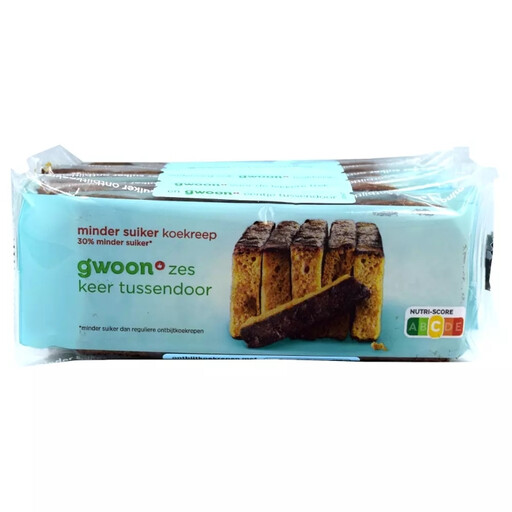
This pack of six biscuit bars is an option if you want to hand out individual portions; biscuit bars are not the same as individual biscuits.
The product information lists 22.8 g of sugars per 100 g. Assess ‘Less Sugar’ in the context of the comparison on the packaging: the name alone doesn’t tell you how much less sugar the bar contains.
The ingredients include rye and glucose-fructose syrup. The product may also contain wheat, barley, oats, milk, almonds and hazelnuts; check the current label and, if you want to compare per portion, the weight and sugar content per bar.
These are different claims: ‘less sugar’ makes a comparison, while ‘no added sugar’ doesn’t mean that the biscuit contains no sugars at all. Read the full claim and compare ‘of which sugars’ per 100 g and per portion, if that information is available.
No. The sugar content doesn’t tell you how much energy, fat or fibre a biscuit contains. For example, Albert Heijn lists 0.3 g of sugars and 465 kcal per 100 g for AH Digestive 0% sugar, so check the full nutritional information and the portion size.
Some biscuits contain polyols, such as maltitol, and according to the Netherlands Nutrition Centre, large quantities of polyols can cause intestinal discomfort. Check the ingredients and any warning on the packaging, especially if guests can help themselves to several biscuits.
Keep the current packaging with the biscuits so guests can check the allergens and possible traces for themselves. Check this information before putting the plate out; a sugar claim or a specific dietary claim doesn’t tell you which other allergens may be present.
Yes. Check the current ingredients, allergens and nutritional information each time you buy them if these matter to your choice. Albert Heijn points out that product information can change when ingredients are reformulated, so don’t rely solely on a product description you looked at previously.