
Label-conscious office snackers
You want less fat and know that ‘low fat’ is a specific claim. You also compare sugar and energy, so that one nutritional value doesn’t determine your whole choice.


Don’t choose popcorn based on how light and airy it looks. Compare the fat content per 100 g, and also check the sugar, energy and portion size you’ll actually share. For solid foods, the European Commission sets the limit for a ‘low fat’ claim at no more than 3 g of fat per 100 g. Convenience and preparation are separate considerations.
You want less fat and know that ‘low fat’ is a specific claim. You also compare sugar and energy, so that one nutritional value doesn’t determine your whole choice.
You’re looking for something that suits the way you serve snacks at work. Packaging, preparation and how to store it after opening all matter.
You want colleagues to be able to check the ingredients and allergen information for the exact product before tucking in.
| What to consider | What should you check? | Who is this most important for? |
|---|---|---|
| Fat content | Compare the fat per 100 g. For solid foods, the European Commission sets the limit for a ‘low fat’ claim at no more than 3 g per 100 g. | If reducing fat is my top priority, I want to compare products on the same basis. Around 36% of consumers with this choice in mind put reducing fat first. |
| Sugar, energy and portion size | Check the sugars and kcal per 100 g too, and take into account the weight of the portion you’ll actually eat. | If I also want to consider sugar, energy and how much I’m sharing, I look beyond fat alone. Around 29% of consumers put these nutritional values and portion size first. |
| Preparation and storage | Check whether you need any equipment or preparation, how large the pack is, and what the label says about storage after opening. | For an office snack box, I want to know how much handling and preparation is involved. Convenience and suitable quantities come first for around 21% of consumers. |
| Ingredients and allergens | Read the information on the exact pack, including any warnings about the possible presence of allergens. | If someone has a dietary requirement or allergy, I check the product before sharing it. Around 14% of consumers put suitability for their diet first. |
The claim depends on the fat per 100 g, not the volume or how light and airy it looks. For solid foods, the European Commission sets the limit at 3 g per 100 g.
Check the nutrition table and only use ‘low fat’ when the relevant conditions are met.
A claim about fat doesn’t tell you how much sugar or energy a product contains, or how much you’ll eat. The Netherlands Nutrition Centre points out that a product carrying a claim isn’t automatically a healthy choice.
Compare sugar and energy too, and consider how much you actually plan to serve.
The date applies to the unopened pack. It isn’t a fixed storage period for opened popcorn in an office snack box.
Follow the storage advice on the exact pack and open an amount that suits how much you’ll use. The Netherlands Nutrition Centre explains that the date applies to the unopened pack.
A box containing crisps and popcorn doesn’t automatically tell you the nutritional values of the popcorn on its own.
Check the popcorn itself and its nutritional information. A mixed box may also contain products you don’t need for the office snack box.
The own-brand range includes several types of popcorn, including ready-to-eat popcorn, microwave popcorn and dried popcorn kernels.
The own-brand range includes sweet popcorn and dried popcorn kernels.
Lidl lists Snack Day Popcorn sweet as a 200 g popcorn product.
Aldi lists SUN SNACKS Salted popcorn in a 100 g pack.
This selection includes popcorn to share and kernels to pop yourself. The kernels need to be prepared, so don’t assess the finished snack based solely on the nutritional values of unpopped maize.
 No image available
The product description presents this popcorn as a snack to share.
The product name specifies cinema butter flavour and a 240 g pack.
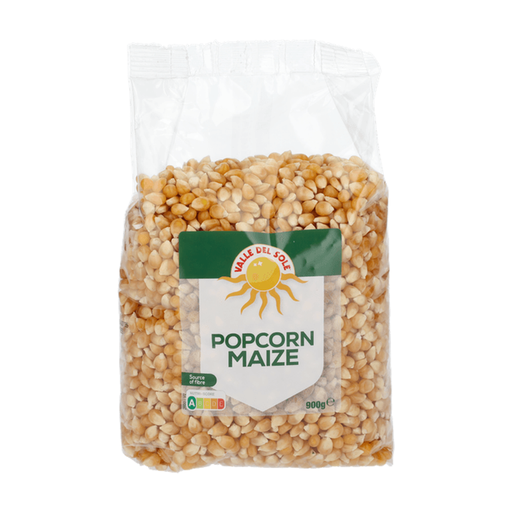 No image available
A good option if you want to pop your own popcorn and have a pan to hand.
The preparation instructions describe using a pan with a lid and 2 tablespoons of vegetable oil. These are kernels that still need to be prepared.
For solid foods, the European Commission sets the limit at 3 g of fat per 100 g. A small portion doesn’t change this limit per 100 g.
Follow the storage advice on the exact pack. For AH Popcorn sweet, Albert Heijn recommends storing it in a cool, dark, dry place and sealing the pack securely after use. The date on the pack isn’t a fixed storage period for opened popcorn.
Follow the instructions on the pack you’re using. For its sweet microwave variant, Albert Heijn advises staying by the microwave while the popcorn pops and opening the hot bag carefully because of the steam.
Keep the label for the exact prepacked product available. The NVWA states that allergen information for prepacked foods must appear on the label. If a caterer or food business offers popcorn unpackaged, that supplier has information requirements to meet.