
Less fat, but still popcorn
If fat content is important to you, compare regular popcorn options. Bear in mind that a lower figure doesn’t automatically mean a product is low fat.


If you’re choosing between the two ready-to-eat salted options reviewed, Jumbo Popcorn Zout contains less total fat per 100 g than AH Zoute popcorn: 23.9 g compared with 29 g, according to Jumbo and Albert Heijn. Neither product can therefore be described as low fat: the European Commission sets a maximum of 3 g of fat per 100 g for solid foods to make this claim. If you’d like to control the amount of oil, salt or sugar yourself, compare dry popping corn with popcorn after preparation, and make sure you compare the same portion size too.
If fat content is important to you, compare regular popcorn options. Bear in mind that a lower figure doesn’t automatically mean a product is low fat.
If you want a small amount to enjoy with your coffee, check the weight of your portion and its nutritional values, rather than relying on its light texture or the number of bags.
If you want to pop your own popcorn, you can control the amount of oil, sugar and salt. Assess the prepared popcorn separately from the nutritional values for the dry corn.
For popcorn with your morning coffee, the product type, the portion you eat and the fat content per 100 g are all important points to compare.
| What to consider | What should you look for? | Who is this important to? |
|---|---|---|
| Fat content and claims | Compare total fat per 100 g for products in the same state. For solid foods, the European Commission sets a maximum of 3 g of fat per 100 g for a low-fat claim. | If I want less fat, I compare specific products without automatically calling the one with the lower figure low fat; around 36% of consumers prioritise fat content. |
| Portion and energy | Compare the nutritional values per 100 g and check how many grams you actually eat; portion sizes shown on packaging can vary. | If I want a small amount with my coffee, I pay attention to my own portion; around 29% of consumers prioritise portion size and energy. |
| Preparation and convenience | Check whether the popcorn is ready to eat, needs to be microwaved or is made from dry corn. Follow the instructions on the packaging. | If I don’t have much time to prepare a snack, I look for one that fits into my coffee break; around 21% of consumers prioritise convenience. |
| Added ingredients | For dry corn, read the preparation instructions and factor in additions such as oil, sugar and salt. Check the latest ingredients and allergen information too. | If I want to control the added ingredients myself and don’t mind preparing it, I look for dry popping corn; around 14% of consumers prioritise having this control. |
Jumbo Popcorn Zout lists 23.9 g of fat per 100 g, while AH Zoute popcorn lists 29 g per 100 g. Both figures are above the maximum of 3 g per 100 g for a low-fat claim on solid foods, as explained by the European Commission.
Use the figures to compare these specific products with each other, but don’t treat a relatively lower fat content as proof that a low-fat or reduced-fat claim applies.
AH Zoute popcorn comes in a 100 g pack with four 25 g portions. Jumbo Popcorn Zout also gives nutritional values for a 30 g portion, so a portion isn’t the same as a whole pack.
Decide how much you want to eat and compare the nutritional values for the same amount.
Nutritional values for dry corn don’t include ingredients added during popping. For example, Albert Heijn recommends using 2 tablespoons of vegetable oil when preparing it in a pan.
Compare prepared portions like for like, and keep the dry corn and any added ingredients in mind separately.
The product examples include ready-to-eat AH Zoute popcorn and AH Biologisch Popcorn mais, which is prepared at home.
The product examples range from ready-to-eat salted popcorn to microwave popcorn and dry corn.
Snack Day Popcorn zeezout is an example of ready-to-eat salted popcorn.
SUN SNACKS Zoute popcorn is an example from the specified supermarket own-label ranges.
This selection of Joybuy products includes ready-to-eat and microwave popcorn. Compare the nutritional values per 100 g and check the product information; the product type or flavour name alone doesn’t prove that a reduced-fat claim applies.
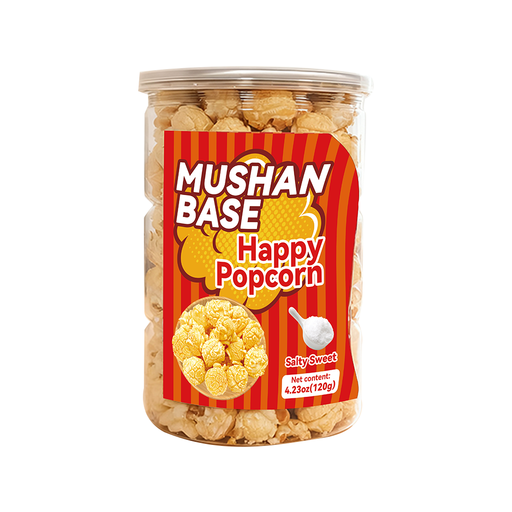 Image unavailable
The product description says this sweet and salty popcorn is ready to eat.
The MUSHAN BASE product description lists 29.6 g of fat per 100 g.
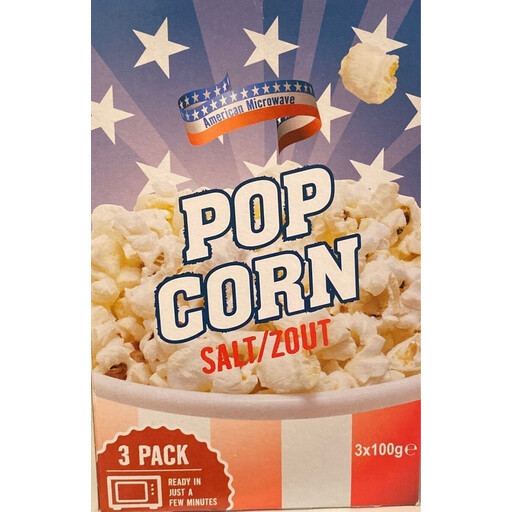 Image unavailable
The product description says it can be prepared in the microwave.
The Joybuy product description lists 23 g of fat per 100 g.
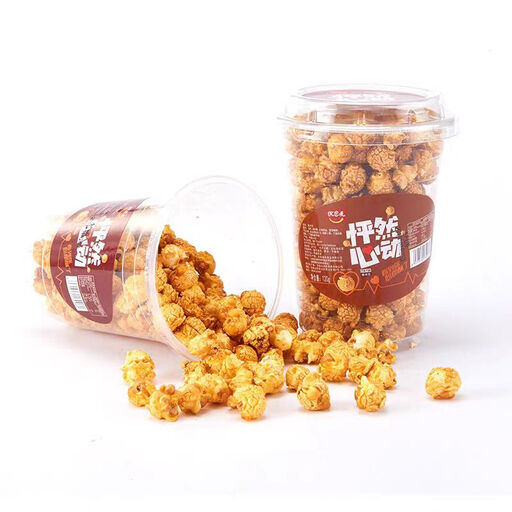 Image unavailable
The product description says this caramel popcorn is ready to eat.
The Yousmai Pengranxindong product description lists 25 g of fat per 100 g.
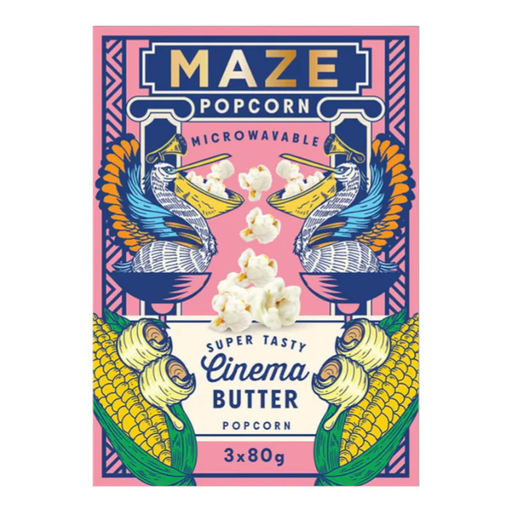 Image unavailable
The product description mentions microwave preparation and a butter flavour.
The SNACK MAZE product description lists 23 g of fat per 100 g.
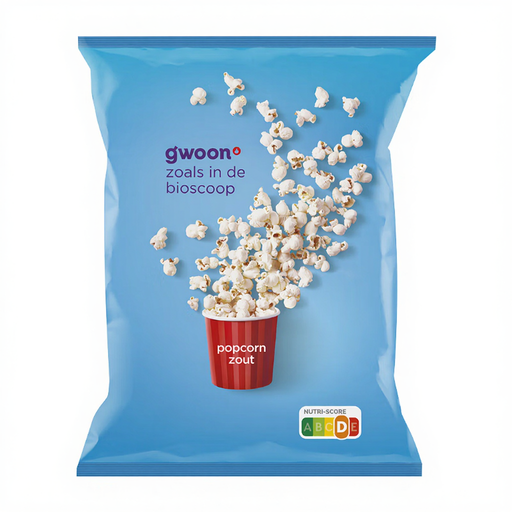 Image unavailable
The product title identifies this as salted popcorn in a 100 g pack.
The g'woon product description lists corn, sunflower oil and salt, and 29.2 g of fat per 100 g.
No. For solid foods, the European Commission sets a maximum of 3 g of fat per 100 g for a low-fat claim. Jumbo Popcorn Zout lists 23.9 g of fat per 100 g and AH Zoute popcorn lists 29 g per 100 g; having a lower figure in this comparison doesn’t make the product low fat.
No. The values for AH Biologisch Popcorn mais and Jumbo Popcorn Maïs apply to dry corn. Albert Heijn describes adding vegetable oil when preparing it in a pan, so be sure to factor in any additions and the weight of your prepared portion too.
Compare the nutritional values for the same amount you eat. Albert Heijn gives portion sizes of 25 g for AH Zoute popcorn, while Jumbo Popcorn Zout also lists nutritional values for 30 g; these portion sizes aren’t directly comparable.
No. Jumbo’s product-specific warning says not to restart preparation after an interruption. Read and follow the instructions on the packaging of the product you’re using.
No. For AH Biologisch Popcorn mais, Albert Heijn warns that it may contain cereals containing gluten, soya and wheat. If you have an allergy, check both the ingredients and the warnings on the current packaging.