What should you look for?
For marathon training, a lower-sugar stroopwafel, a standard stroopwafel and sports nutrition are different choices. First decide whether you’re looking for a snack or food to fuel a long session.
Lower-sugar stroopwafel
A good choice when: Your main aim for a planned snack is to have less sugar than in a comparable standard stroopwafel.
The trade-off: Less sugar doesn’t tell you how many carbohydrates a serving provides or how well you’ll tolerate it while running.
Standard stroopwafel
A good choice when: You want a standard stroopwafel and can try the portion and timing in advance.
The trade-off: A carbohydrate figure per 100 g doesn’t make one stroopwafel a complete eating and drinking plan for a marathon.
Sports drink, gel or bar
A good choice when: You want to plan your carbohydrate intake during a long, intense session.
The trade-off: According to the Voedingscentrum, sports nutrition isn’t necessary as standard. Make your choice based on the duration and intensity of your session, and your hydration plan.
| What to consider | What to check when buying | Who it matters to |
|---|
| Less sugar |
Compare it with the standard version named and check the sugars and total carbohydrates per 100 g and per serving. |
If I have a stroopwafel as a snack, I want to know whether the sugar reduction is compared with the standard version I’d otherwise choose. For around 42% of consumers, less sugar is the priority. |
| Carbohydrates on the go |
Check the carbohydrates per serving and work out how eating and drinking fit into your training plan. |
During a long, intense training session, I want to plan what I eat on the move rather than rely on a single biscuit. Around 33% of consumers prioritise carbohydrates that are practical to use. |
| Tolerance and allergens |
Check the serving size, fat, fibre and allergens on the latest packaging, and try eating it during a training session. |
Just before or during a run, I want to choose a serving with ingredients I know and have tried before. This is the most important factor for around 25% of consumers. |
Stroopwafels at Joybuy
This is a standard stroopwafel for a planned snack. Check the serving size and nutritional information if you want to eat it around a training session; the product name doesn’t mention a sugar reduction.
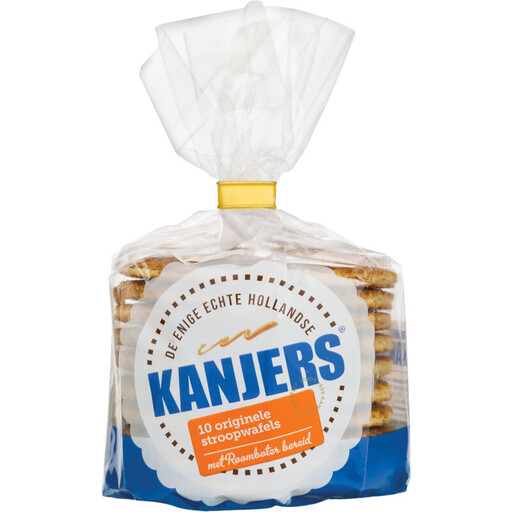 Image unavailable
Kanjers Extra Delicious stroopwafels, 10 pieces
If you’re looking for a standard stroopwafel as a planned snack, this pack contains 10 pieces. Check the pack for the weight and nutritional information per serving before adding one to your training plan.
View at Joybuy
Frequently asked questions
Is a lower-sugar stroopwafel automatically suitable fuel for a marathon?
No. Less sugar alone tells you nothing about the carbohydrates per serving or what you’ll tolerate while running. Albert Heijn states that its Roomboter minder suiker stroopwafels contain 44 g of carbohydrates, 26 g of fibre and 17 g of fat per 100 g. The Voedingscentrum advises avoiding products high in fat or dietary fibre just before exercise.
When do carbohydrates become important during a long training run?
For long, intense endurance sessions, it can be useful to plan your carbohydrate intake while running. For endurance sessions lasting 1 to 2.5 hours, the Voedingscentrum recommends 30–60 g of easily absorbed carbohydrates per hour. Consider the duration and intensity of your session, and practise your hydration plan too, rather than assuming one stroopwafel will be enough.
Can I eat a stroopwafel just before running?
It depends on the serving size, timing and what you can tolerate. The Voedingscentrum advises against large portions and foods high in fat, protein or dietary fibre just before exercise. So try a stroopwafel during a regular training session, not for the first time on race day.
Which allergens should I check in stroopwafels?
Check the latest packaging for the specific stroopwafel. The AH versions reviewed list milk, cereals containing gluten, soya and wheat, among other allergens; the Daelmans Mini’s reviewed list wheat, milk and soya. Ingredients and allergen information can change.
What does ‘less sugar’ mean on a stroopwafel?
The claim calls for a comparison with a named product; it doesn’t mean you should assume the stroopwafel provides more suitable carbohydrates for running. Albert Heijn compares its Roomboter minder suiker stroopwafels with its standard Roomboter stroopwafels and states that they contain 32% less sugar. The European Commission says that nutrition claims are only permitted if they appear in the Annex to Regulation (EC) No 1924/2006 and meet the applicable conditions. Assess the specific packaging against the stated comparison and the full nutritional information.


