What should you look for when choosing?
First decide whether you’re looking for a daily snack or an occasional biscuit. The Netherlands Nutrition Centre lists options such as fruit, vegetables, wholemeal bread and wholemeal crackers for snacks. If you choose a biscuit, check the specific label and consider where you plan to give it to your child.
| What to consider |
What to check before buying |
Who is this most important for? |
| Sugar and frequency |
Compare the sugar value per 100 g with a suitable standard product and decide what portion you plan to give. |
If I want to give my child a biscuit occasionally, I want to be able to compare the sugar content without making it a daily snack. Around 42% of consumers prioritise this combination of sugar choice and frequency. |
| Allergens and childcare rules |
Read the current allergen information and ask which snacks are allowed at the childcare setting or toddler group. |
If I pack a snack, it needs to meet both the allergen requirements and the childcare setting’s rules. Around 33% of consumers put this first when choosing. |
| Zero-sugar products and sweeteners |
Check the ingredients and any warnings; compare the nutritional values per 100 g and per intended portion. |
If I’m considering a zero-sugar option, I want to know what it contains and how much my toddler will actually have. This is the most important consideration for around 25% of consumers. |
A Joybuy product for an occasional biscuit treat
This biscuit bar is labelled Less Sugar and can be considered when comparing options for an occasional treat. Check the nutritional information, portion and texture for your toddler, and confirm the childcare setting’s rules before packing it.
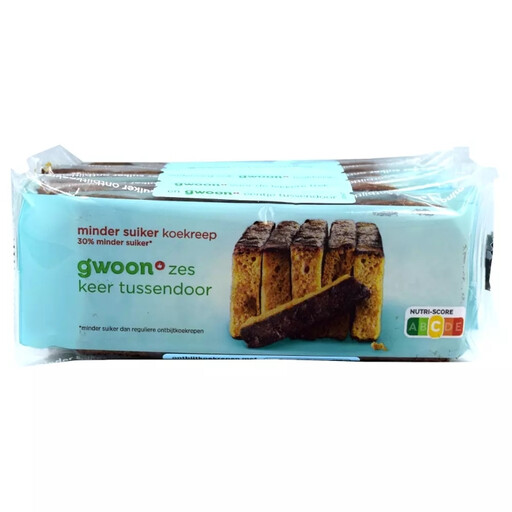 No image available
g'woon Cookie Bars Less Sugar, 6 pieces
For anyone looking to compare a biscuit bar labelled Less Sugar for an occasional treat.
Pack of 6. Check the current packaging for the sugar value per 100 g, what the sugar claim is based on and the allergens.
Before serving, check that the portion and texture are suitable for your toddler. Ask the childcare setting about its rules before packing it.
View at Joybuy
Frequently asked questions
Can lower-sugar biscuits be a daily snack for toddlers?
Don’t make biscuits a standard daily snack just because they have a lower-sugar claim. The Netherlands Nutrition Centre advises giving young children biscuits weekly rather than daily, and lists options such as vegetables, fruit, wholemeal bread and wholemeal crackers for snacks.
What do ‘light’ or ‘less sugar’ on the packaging mean?
These claims need to be compared with another product; looking only at the front of the pack isn’t enough. The Netherlands Nutrition Centre explains that ‘light’ can mean less energy, fat or sugar. Check what the specific claim refers to, and also read the nutritional values per 100 g and per portion.
Should I check for gluten when packing biscuits for childcare?
Check the packaging of the biscuit you’ve chosen for gluten if your child needs to avoid it or the childcare setting has rules about it. Not all biscuits automatically contain gluten; also ask what requirements the childcare setting has for snacks brought from home.
Is a zero-sugar biscuit with sweeteners automatically a better choice for a toddler?
No. The ‘zero’ label doesn’t determine whether a product is suitable for a toddler or for daily use. Read the ingredients, check the intended portion and look for any warnings. For example, Albert Heijn includes a warning about excessive consumption on AH Ontbijtkoek zero.
Which information should I use if the online product page differs from the packaging?
Check the current packaging of the product you’re buying. Albert Heijn warns that ingredients, nutritional values and allergen information listed online may change. This is especially important if you’re choosing the biscuit because of a specific ingredient or allergen.


