
People who count carbohydrates
You want to know how many carbohydrates you’ll get from the amount you eat. Diabetes.nl explains that carbohydrates raise blood glucose, so both the figure per 100 g and your portion size are relevant.


Don’t choose a biscuit or biscuit-style snack based only on the words ‘less sugar’ or ‘sugar-free’. Compare the carbohydrates and sugars per 100 g, work out how much they amount to in the portion you eat and check the ingredients of products containing sweeteners too.
You want to know how many carbohydrates you’ll get from the amount you eat. Diabetes.nl explains that carbohydrates raise blood glucose, so both the figure per 100 g and your portion size are relevant.
You’re looking for a sweet snack with less sugar, but don’t want to confuse a comparative claim with ‘sugar-free’ or a low carbohydrate content.
You’re considering a product containing polyols, such as maltitol or sorbitol, and want to take the ingredients and your own tolerance into account. Diabetes.nl says that sweeteners whose names end in ‘-ol’ can cause diarrhoea.
Compare biscuits with biscuits, and keep ontbijtkoek (Dutch spiced breakfast cake) or mini cakes in a separate product category. Use the nutritional values per 100 g to make comparisons, and the amount you actually eat to assess your snack.
| What to consider | What to check when buying | Who it matters to |
|---|---|---|
| Carbohydrates per eating occasion | Check the carbohydrates per 100 g and work out how much they amount to in the portion you eat. | If I want to fit a biscuit into an eating occasion, I want to know how many carbohydrates are in the amount I’ve chosen. This would be the main question when buying for around 36% of consumers. |
| Sugar content | Read the ‘of which sugars’ figure per 100 g and check what ‘less sugar’ is being compared with. | I’m mainly looking for less sugar than in a similar standard snack, without mistaking the claim on the front for a nutritional value. Around 29% of consumers would want to find this out first. |
| Sweeteners and tolerance | Check the ingredients for polyols, such as maltitol and sorbitol. | When choosing a sugar-free product, I want to know which sweeteners it contains and whether I tolerate them well. This would be the main consideration for around 21% of consumers. |
| Portion and product type | Check the weight of each piece and whether the nutritional values are given per piece or only per 100 g. | When I’m out and about, I want to be able to decide in advance how much of a biscuit, bar or mini cake I’ll eat. Around 14% of consumers would focus mainly on portion size. |
Diabetes.nl points out that carbohydrates raise blood glucose. A product containing less sugar doesn’t tell you how many carbohydrates are in the amount you eat.
First compare the carbohydrates per 100 g, then work out the amount in your portion. Check the sugar content separately too.
According to Diabetes.nl, a product with no added sugars can still contain sugars from its ingredients.
Check the ‘of which sugars’ figure in the nutritional information and read the ingredients list, even if there’s a sugar claim on the front.
A sugar-free product may contain polyols. Diabetes.nl says that sweeteners whose names end in ‘-ol’ can cause diarrhoea.
Read the ingredients and, where the information is available, check the amount of polyols before choosing your portion.
Albert Heijn warns that ingredients, nutritional values and allergen information can change.
Check the packaging again when you buy a product, especially if you’re keeping an eye on carbohydrates or allergens.
Mini Cakes Chocolate Pieces are soft cakes made with sweeteners, not crunchy biscuits.
Jumbo Ontbijtkoek Minder Suiker is a Dutch spiced breakfast cake bar, not a traditional biscuit.
ALDI lists Gesneden ontbijtkoek zero among its snacks.
Lotus Biscoff Original Speculoos is a standard speculoos biscuit for comparison, not a biscuit marketed as lower in sugar.
This selection includes an oat biscuit, cookie bars and a ontbijtkoek-style snack. When comparing them, consider the product type and check sugar claims and nutritional values on the current packaging.
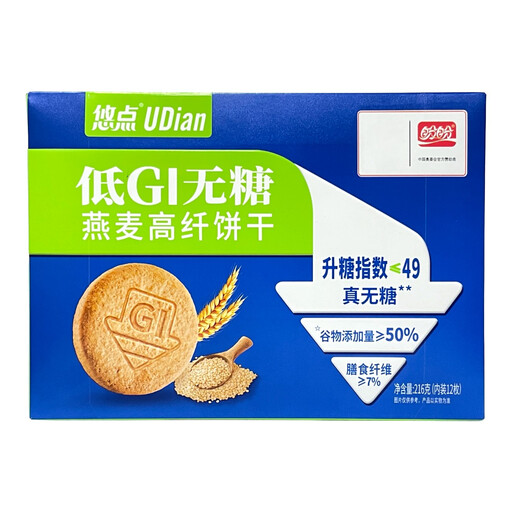 Image unavailable
A biscuit for anyone looking for a biscuit-style snack and wanting to compare sugar and carbohydrates.
The ‘Sugar-Free’ label conflicts with the listed sugar value. Check the current packaging before relying on this claim, and look at the ingredients and nutritional values for the amount you eat.
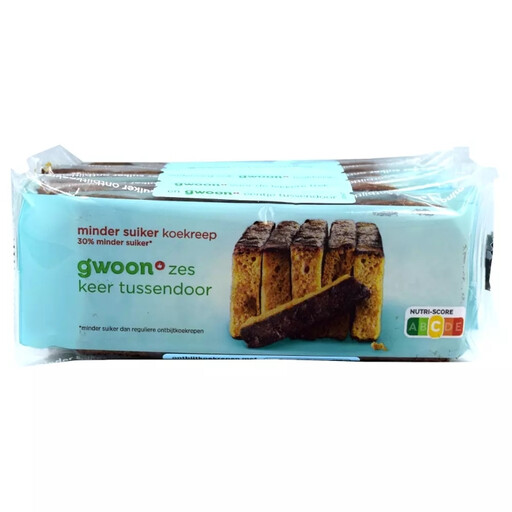 Image unavailable
Cookie bars for anyone who wants to take an individually wrapped piece along as a snack.
‘Less Sugar’ is a comparative claim, so check what it’s being compared with. Also check the weight of each bar on the packaging so you can work out the nutritional values for your snack.
 Image unavailable
An ontbijtkoek-style snack for anyone who’d rather have a bar than a crunchy biscuit.
The sugar claims and the basis for the listed nutritional values aren’t clear. Before working out what’s in the amount you eat, check which values on the packaging are per 100 g and which are per bar.
No. Jumbo lists 22,7 g sugars and 52,2 g carbohydrates per 100 g for its Ontbijtkoek Minder Suiker. So compare both values and work out how many carbohydrates are in the amount you eat.
It can. According to Diabetes.nl, sugars from ingredients may still be present when no sugars have been added. The ‘of which sugars’ line shows how much sugar the product contains according to its nutritional information.
As well as the sugar value, check the carbohydrates, ingredients and any listed amount of polyols. Diabetes.nl says that sweeteners whose names end in ‘-ol’ can cause diarrhoea, so how well you tolerate them is a separate consideration.
Yes, if allergens are relevant to you. A sugar claim tells you nothing about the allergens in a biscuit or biscuit-style snack. Check the ingredients and allergen information on the current packaging.