
Families comparing fat content
You’re looking for crisps with less fat than a named comparison product, but you also want to check fat, saturated fat, energy and salt on the label. That way, a reduction claim won’t make the decision for you.


To choose lower-fat crisps for a school-holiday snack, compare the nutritional values per 100 g, what the fat-reduction claim is measured against and how much you plan to serve. Oven-baked, light and popped varieties are not always compared with the same crisps, and a claim about reduced fat alone won’t tell you how much salt or energy a portion contains. If you’re sharing, check the ingredients and allergens for the flavour you’ve chosen too.
You’re looking for crisps with less fat than a named comparison product, but you also want to check fat, saturated fat, energy and salt on the label. That way, a reduction claim won’t make the decision for you.
You want to decide in advance how much to serve during the school holidays, rather than putting out a big bag. The Netherlands Nutrition Centre recommends regular mealtimes for children and suggests vegetables and fruit as snacks.
You want to choose a flavour that suits everyone who’ll be eating. So check the ingredients and allergens on the packaging for that exact variety; the Netherlands Food and Consumer Product Safety Authority highlights the importance of clear allergen information.
Start with the type of crisps you want to serve, then compare the fat claim with the nutritional information and the portion you have in mind. The reduction figures below use different reference products, so they shouldn’t be treated as a direct ranking.
When to choose them: Lay's Oven Baked is an option if you’re looking for oven-baked potato crisps; Jumbo states that this range contains 50% less fat than regular potato crisps.
Bear in mind: The claim doesn’t tell you how much salt or energy the chosen flavour contains per portion.
When to choose them: Light crisps are worth considering if you want to compare a specific plain variety with a fat-reduction claim. Jumbo states that Lay's Light Naturel contains 30% less fat; Albert Heijn states that AH Ribbelchips Naturel Minder Vet contains 35% less fat.
Bear in mind: Albert Heijn compares its product with its own regular ridged crisps. Don’t compare the percentages as though both claims use the same reference product.
When to choose them: This is an option if you’d like to consider a different texture too. Jumbo states that Croky Pop'd Potatoes Paprika contains 55% less fat than traditionally fried potato crisps.
Bear in mind: A popped paprika variety isn’t directly comparable with plain potato crisps; check the ingredients and nutritional information too.
| What to consider | What should you check? | Who is this most important for? |
|---|---|---|
| Fat and comparison basis | Check which crisps the fat claim is compared with. Then compare fat and saturated fat per 100 g. | If lower fat is my priority, I want to know whether the two claims are based on comparable products. For around 46% of consumers, this fat comparison comes first. |
| Portion and snack break | Compare energy and salt per 100 g, then work out the figures for the amount you plan to serve. | During a day in the school holidays, I want to portion out crisps into bowls in advance, so there’s just one planned snack break. Around 27% of consumers say that portioning is their main priority. |
| Flavour and allergens | Read the ingredients and allergen information on the packaging for the exact flavour. | When several children or guests are eating, I want to check first that the chosen flavour is suitable for them. For around 27% of consumers, this is their main concern. |
According to the product information at Jumbo, Lay's Oven Baked is compared with regular potato crisps, while Croky Pop'd Potatoes is compared with traditionally fried potato crisps. Albert Heijn compares AH Ribbelchips Naturel Minder Vet with its own regular ridged crisps. The percentages therefore use different reference products.
First check what each product is compared with, then compare fat, saturated fat, energy and salt per 100 g.
A fat claim isn’t a salt claim. Albert Heijn states that AH Ribbelchips Naturel Minder Vet contains 0,9 g of salt per 100 g; the Netherlands Nutrition Centre gives 0,56 g of salt per 40 g bowl of light crisps. These figures don’t describe the same specific portion or product.
Check the salt content of the bag you’ve chosen and decide how much you’ll actually serve.
According to the Netherlands Nutrition Centre, a 40 g bowl of average crisps contains 215 kcal and 13,1 g of fat. This average isn’t the nutritional value for every lower-fat variety.
Portion the crisps into bowls in advance. For other snacks, you could also prepare vegetables or fruit, as the Netherlands Nutrition Centre recommends for children.
Ingredients and allergens can vary from one flavour to another. This is especially important when you’re sharing crisps and someone needs to avoid an allergen.
Always check the current ingredients and allergen information on the packaging you’re buying, even if you already know another flavour from the same brand.
Lay's offers both Light and Oven Baked options if you’re comparing potato crisps with a fat-reduction claim.
AH Ribbelchips Naturel Minder Vet is a supermarket own-brand variety compared with regular AH Ribbelchips Naturel.
Pringles is worth considering if you’re looking for stackable crisps or a particular pack size, rather than assuming a fat reduction without comparing specific products.
Smiths also makes other savoury snacks, including Wokkels and Bugles.
Here, Jumbo is a place to shop and compare products, not a crisp brand.
These are Lay's oven-baked crisp flavours in 150 g bags. Choose a flavour that suits your snack break and compare the labels for each variety when checking nutritional values; the products below don’t also represent the light and popped options.
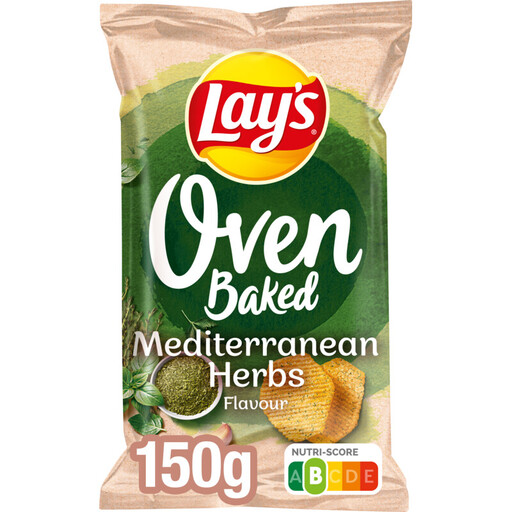 Image unavailable
An oven-baked crisp variety with a Mediterranean Herbs flavour for a planned snack break. The bag contains 150 g; compare the nutritional information per 100 g and check the allergens on the packaging.
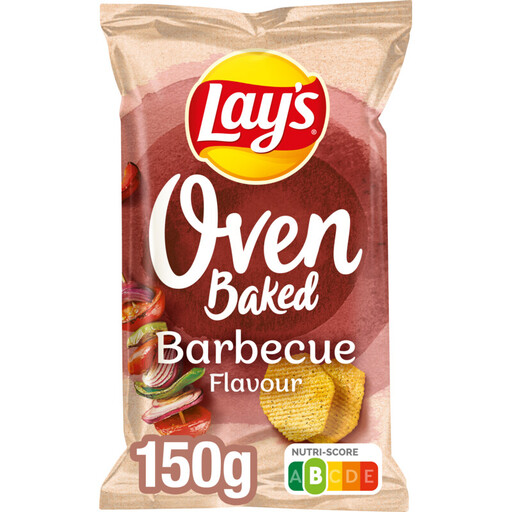 Image unavailable
An oven-baked barbecue variety if you’d like to serve that flavour during the school holidays. The bag contains 150 g; decide how much to put in each bowl and check the ingredients and allergen information for this flavour.
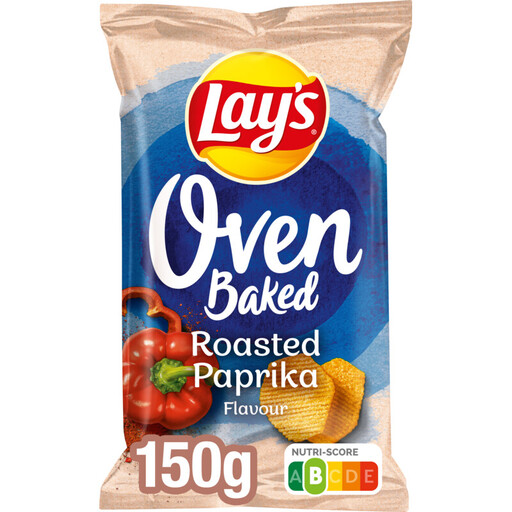 Image unavailable
An oven-baked paprika variety to consider if you enjoy that flavour. The bag contains 150 g; compare the nutritional information per 100 g and check the label for this paprika variety before sharing.
 Image unavailable
An oven-baked plain variety if you want to weigh up different flavours. The bag contains 150 g; check the nutritional information and current allergen details for this specific pack.
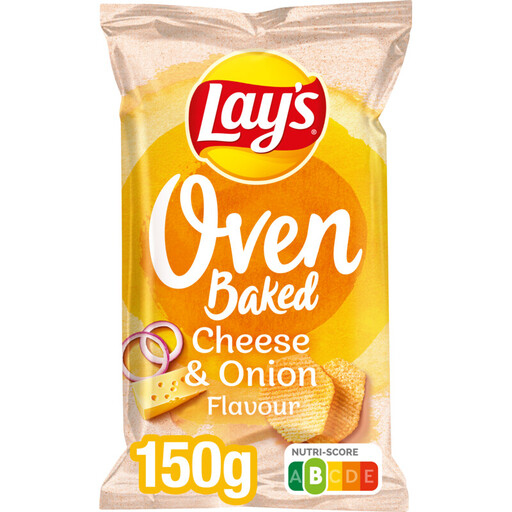 Image unavailable
A crisp variety with a cheese and onion flavour if you’d like to serve that at snack time. The bag contains 150 g; if you’re sharing, read the ingredients and allergens on the packaging and decide on a portion in advance.
A fat-reduction claim doesn’t automatically make crisps suitable as a daily snack. The Netherlands Nutrition Centre points out that snacks can contain a lot of energy, salt or saturated fat, and suggests vegetables and fruit as snacks for children. If you do choose crisps for a school-holiday treat, decide how much to serve in advance.
First check which product each variety is compared with, then compare their nutritional values on the same basis. Look at fat, saturated fat, energy and salt per 100 g, as well as for the amount you plan to serve. Different reference products mean reduction percentages aren’t directly comparable.
Yes. If someone eating with you needs to avoid an allergen or has an intolerance, check the packaging for the exact flavour. Ingredients can vary between varieties, and the Netherlands Food and Consumer Product Safety Authority stresses that allergens must be clearly stated on the label.
No. Nutri-Score won’t tell you which crisps a fat-reduction claim is compared with or how much you’ll serve. Consider the available nutritional information, ingredients list and portion size alongside the label, rather than using a single score to judge what’s right for your personal diet.