What should you look for when buying?
Start with the exact claim and the nutrition table: for solid foods, the European Commission sets a maximum of 3 g of fat per 100 g for a ‘low fat’ claim. The NVWA lists peanuts and nuts as separate allergens, so check for both and look out for any warnings on the packaging.
| What to consider |
What should you check? |
Who should pay particular attention? |
| Lower-fat claim |
Read the exact claim, what it’s being compared with and the fat content per 100 g for the current product. |
If reducing fat is your main reason for choosing it, you’ll want to know what the product is being compared with and what the label says. Around 33% of consumers say reducing fat is their top priority. |
| Suitable for school |
Check allergens and cross-contamination warnings, and find out whether the school has any rules. |
When packing a snack for a child, allergens and school rules may matter more than convenience. Around 27% of consumers say suitability for school is their top priority. |
| Nutrition per portion |
Compare energy, fat, saturated fat and salt per 100 g, then calculate the amount for the portion you’re packing. |
To find out what your child will actually eat, you’ll need the portion weight as well as the figures per 100 g. Around 27% of consumers say nutrition per portion is their top priority. |
| Flavour and packaging |
Check the flavour, net weight and storage instructions on the packaging. |
If you’re mainly looking for something that suits your household’s tastes and needs, packaging and storage are practical considerations. Around 13% of consumers say this is their top priority when choosing for their household. |
Coated peanuts at Joybuy
These are regular coated peanuts for sharing; flavour and preparation descriptions don’t, in themselves, prove a lower fat content.
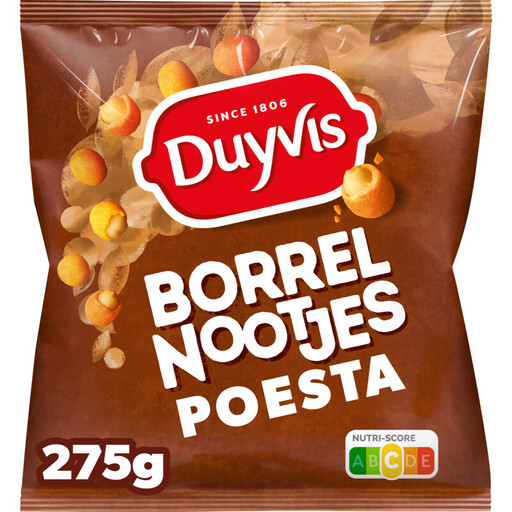 Image unavailable
Duyvis Poeta Coated Peanuts, 275 g
For sharing: the product description features crunchy peanuts with a savoury herb flavour.
Contains peanuts; check the allergen information and any school rules.
View at Joybuy
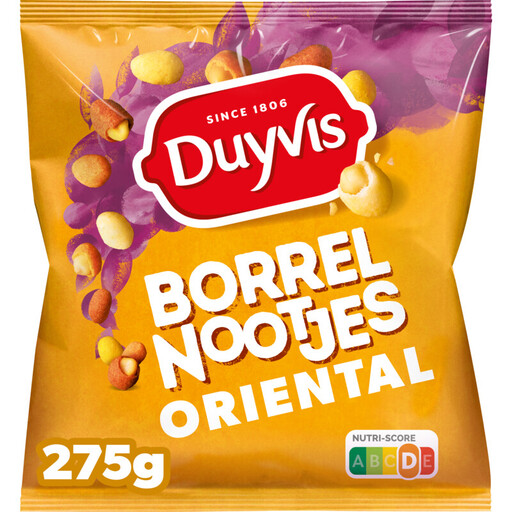 Image unavailable
Duyvis Oriental Coated Peanuts, 275 g
For sharing: the product description features crunchy peanuts with a mild curry flavour.
Contains peanuts; check the allergen information and any school rules.
View at Joybuy
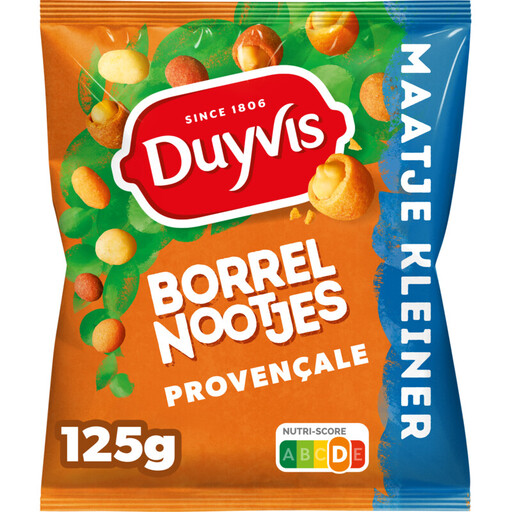 Image unavailable
Duyvis Bran Nuts Provencale, 125 g
For sharing: the product description features peanuts with a crunchy coating and an onion and garlic flavour.
Contains peanuts; check the allergen information and any school rules.
View at Joybuy
 Image unavailable
Duyvis Coated Peanuts Provençal, 275 g
For sharing: the product description features peanuts with a crunchy coating and a Provençal onion and garlic flavour.
Contains peanuts; check the allergen information and any school rules.
View at Joybuy
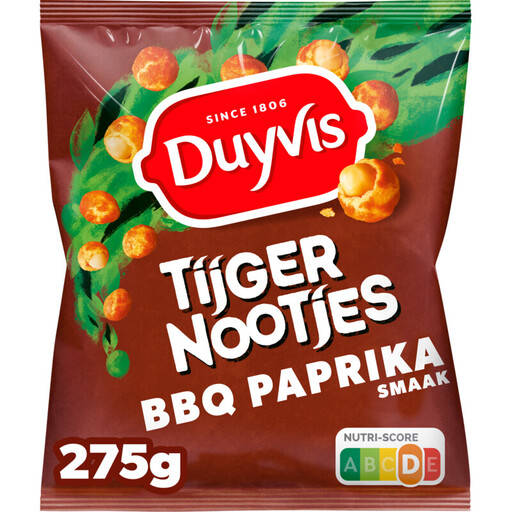 Image unavailable
Duyvis Tigernut BBQ Paprika, 275 g
For sharing: the product description features peanuts with a double coating and a BBQ paprika flavour.
Contains peanuts; check the allergen information and any school rules.
View at Joybuy
Frequently asked questions
When can coated peanuts be labelled ‘low fat’?
For a solid food, the maximum is 3 g of fat per 100 g, according to the European Commission. ‘Oven-baked’, ‘no added fat’ or a comparative claim about having less fat doesn’t, in itself, prove that a product meets this threshold.
What packaging information matters if you have a peanut or nut allergy?
Check the allergen information and warnings on the packaging. The NVWA lists peanuts and nuts as separate allergens, so don’t rely on the product name alone.
Are whole coated peanuts suitable for young children?
The Netherlands Nutrition Centre warns against giving young children whole nuts and peanuts because of the risk of choking. This is a safety warning, not a legally defined age limit.
How do I compare a large pack with the amount I want to pack?
First compare the nutrition information per 100 g, then calculate the figures for the weight of the amount you’re packing. Net weight isn’t a recommended portion size; Your Europe explains how nutrition information is given per 100 g or 100 ml.
How should I store an opened bag of coated peanuts?
Follow the storage instructions on the pack you’ve chosen. The product pages for Jumbo and PLUS advise storing the varieties listed in a cool, dry, dark place.


