
Students keeping an eye on their budget
You’re buying toast for dinner and want to choose a pack you’ll actually use up. So think not only about how much is in the pack, but also how much you need for this meal.


For a student dinner, don’t choose solely on the basis of a ‘reduced sugar’ claim: compare the sugars per 100 g in similar types of toast, and think about how much of a pack you’ll use. Albert Heijn and Jumbo list 3.2 g of sugars per 100 g for AH Melba Toast Natural, Van der Meulen Melba Natural and Van der Meulen Melba Multigrain. The multigrain variety contains more fibre per 100 g, but check the salt, ingredients and allergens too.
You’re buying toast for dinner and want to choose a pack you’ll actually use up. So think not only about how much is in the pack, but also how much you need for this meal.
You want to know how much sugar similar toast products contain. The Netherlands Nutrition Centre recommends comparing nutritional values per 100 g; this gives you a clearer basis than a serving size chosen by the manufacturer.
As well as sugars, you’re weighing up fibre, salt and ingredients. If you’re sharing dinner, it’s important to check the allergen information on the specific pack.
When choosing toast for a student dinner, start with what matters most to you: how much you’ll use, the sugars per 100 g or the overall ingredients.
| What to consider | What to check when buying | Who it matters to |
|---|---|---|
| Quantity and budget | Check the pack weight and think about how much toast you’ll use for the meal. | If I’m buying toast for one dinner, I don’t want to bring home more than I’ll use. Around 42% of consumers put this consideration first. |
| Sugars | For similar types of toast, compare the ‘of which sugars’ figure per 100 g; assess any claim separately. | If I want to choose a lower-sugar option, I want to compare products on the same basis rather than rely on a claim. For around 33% of consumers, comparing sugars is the main priority. |
| Fibre, salt and allergens | Check fibre and salt per 100 g, and read the ingredients and allergen information on the pack. | If I’m sharing dinner, I want to know what’s in the toast and whether it’s suitable for everyone eating. Around 25% of consumers prioritise checking the ingredients. |
A value per 100 g tells you how much sugar a product contains, but it doesn’t prove that its sugar content has been reduced compared with a suitable alternative. The Netherlands Food and Consumer Product Safety Authority says that EU rules apply to nutrition claims.
Compare the nutritional values of similar types of toast and check any reduced-sugar claim on the current packaging.
The ingredients listed by Jumbo for Van der Meulen Melba Multigrain include oats, rye, sesame, soya and wheat. The name ‘multigrain’ alone says nothing about whether it’s suitable for someone with an allergy.
Check the allergen information and any warnings on the specific pack for everyone who’ll be eating.
The word ‘salt’ on a label doesn’t tell you what kind of salt has been used. The Netherlands Nutrition Centre says bakers aren’t required to use baker’s salt.
Check the ingredients list or ask the manufacturer what kind of salt is used in the toast if you want to know.
AH Melba Toast Natural comes in a 240 g pack, making it easy to compare with other melba toast.
The Natural and Multigrain varieties make it possible to compare products within the same melba toast range.
Jumbo’s product information lets you compare Van der Meulen Melba Natural and Multigrain side by side.
ALDI lists Sun Snacks Melba Toast Natural in a 240 g pack.
Lidl lists 240 g melba toast as a product available in store.
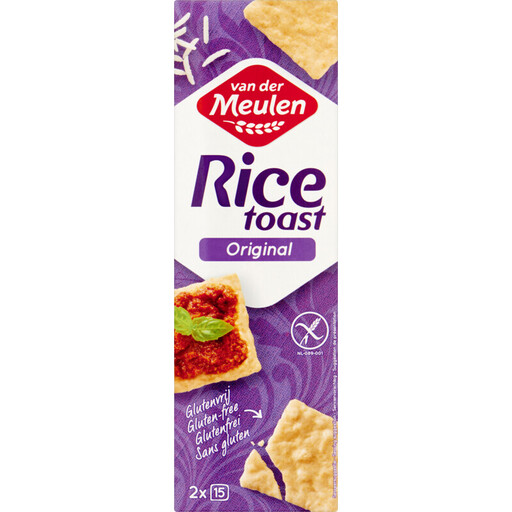
This 65 g pack of rice toast is an option to consider if you’re looking for plain toast for a student dinner. Check the nutritional information on the pack before you choose.
 No image available
For anyone who wants to serve plain rice toast at a student dinner. The pack contains 65 g; check the current label for nutritional values and allergen information.
No. The Netherlands Nutrition Centre points out that a product with no added sugars may still contain sugars. Check the ‘of which sugars’ value per 100 g, and read the ingredients list if you also want to know which ingredients have been used.
For similar types of toast, compare the ‘of which sugars’ value per 100 g. The Netherlands Nutrition Centre explains that manufacturers choose their own serving sizes, so values per serving are less useful for comparing products side by side.
You can’t tell from the toast category alone. The Netherlands Nutrition Centre says bakers aren’t required to use baker’s salt; check the ingredients list or ask the manufacturer what kind of salt is used in the specific product.
Check the allergen information on the current pack for everyone who’ll be eating. The melba toast varieties reviewed contain ingredients such as wheat; the Multigrain variety listed by Jumbo also includes oats, rye, sesame and soya, among other ingredients. Don’t rely on the variety name alone.