
Planner keeping an eye on sugar
You want to compare the sugars in the toast base and take sweet toppings into account too. The nutrition information per 100 g helps you compare products, while the portion you choose also affects the finished bite.


For a family dinner, start by comparing ‘of which sugars’ per 100 g, rather than relying on claims such as ‘light’ or ‘less sugar’. Then check the toppings, allergens, salt and shape of the toast. A low sugar value for the toast base doesn’t automatically make the finished bite suitable for every guest.
You want to compare the sugars in the toast base and take sweet toppings into account too. The nutrition information per 100 g helps you compare products, while the portion you choose also affects the finished bite.
If a guest needs to avoid certain allergens, look beyond the sugar value. Check the label on the exact toast variety, including any ‘may contain’ warnings, and serve it separately if there’s a risk of cross-contact.
You’re looking for toast that works with your toppings and the number of guests. Shape, portion size, storage advice and nutrition information all matter alongside the sugar content.
First decide what matters most for your dinner: the sugars in the toast base, suitability for guests with allergies, or how you want to serve the bites. Then compare the nutrition information for the specific products.
| What to consider | What to check before buying | Most relevant for |
|---|---|---|
| Sugars in the toast base | Compare ‘of which sugars’ per 100 g across similar types of toast. Consider sweet toppings separately. | If I want to limit the sugars in my bites, I start with the value for the toast base and then choose the topping; around 42% of consumers would make this their main consideration. |
| Allergens and gluten | Read the label on the exact pack, including any ‘may contain’ warnings, and check for a gluten-free statement if needed. | If a guest needs to avoid gluten or another allergen, suitability comes before the sugar value. An estimated 33% of consumers would put this need first. |
| Shape and serving | Check whether the shape works with your topping; also compare the number of pieces, salt per 100 g and storage advice. | For a platter with lots of topped bites, I want toast that’s easy to fill or top. Around 25% of consumers would make that their first consideration. |
‘Light’ describes a reduction compared with a similar product; it doesn’t automatically mean the absolute sugar value is low. The Voedingscentrum explains that the reduction can relate to energy, fat or sugars.
Check what the claim refers to, and compare ‘of which sugars’ per 100 g too.
The sugar value for the toast base doesn’t tell you how much sugar the topping or filling adds to the finished bite.
Decide which toppings you’ll serve in advance. If sugars are your main concern, compare their nutrition information separately.
A gluten-free statement doesn’t rule out other allergens or possible traces. The product information for Van der Meulen Rice Toast Original mentions possible traces of sesame and soya.
Check the exact pack and use separate utensils, toppings and a separate serving plate if cross-contact could pose a risk to a guest.
You can’t tell which type of salt a particular variety uses just from the word ‘toast’.
If iodised salt matters to your choice, check the ingredients list on the pack rather than making assumptions.
The products reviewed include multigrain Melba toast and Rice Toast Original: two different types of toast for small bites.
AH Melba toast naturel is an option if you want to serve lots of small pieces of toast with different toppings.
Snack Cups Naturel are shaped pieces of toast for filled bites. According to the product description, their raised edges make them easier to fill.
The Knapperige Toast with black olive and sun-dried tomato reviewed here is a flavoured option for savoury bites.
These toast options come in different shapes and pack sizes for bites at a family dinner. Before choosing, compare the nutrition information and allergens on the exact pack.
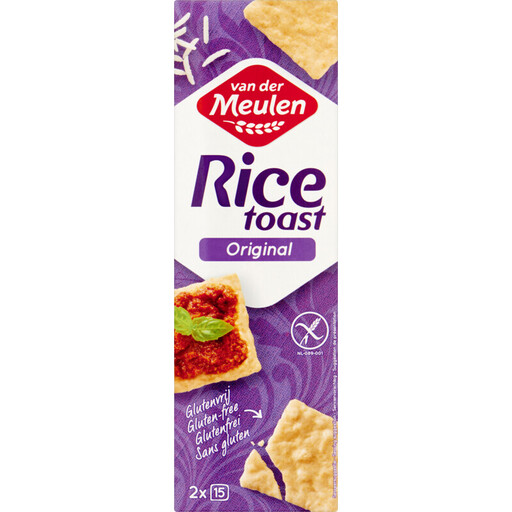 No image available
A rice toast option to consider if you’re looking for a different base for dinner. If a guest needs to avoid gluten or other allergens, check the statements and warnings on the exact pack.
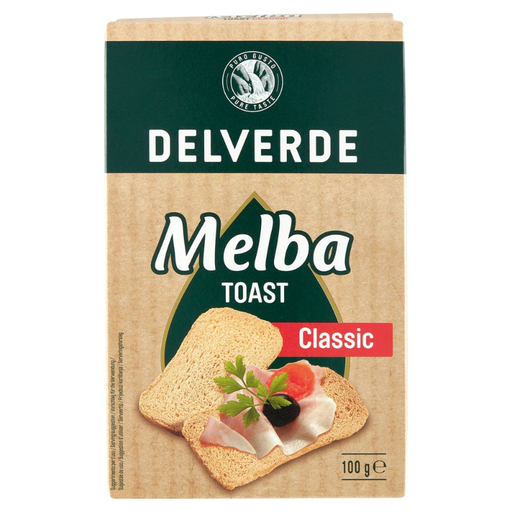 No image available
A Melba toast option for small topped bites. Check the pack for ‘of which sugars’ per 100 g and for any allergens relevant to your guests.
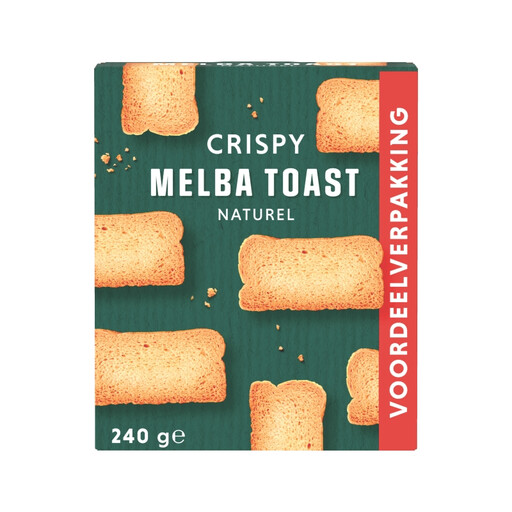 No image available
A Melba toast option if you’re preparing several bites. Before serving it to guests, check the nutrition information and, in particular, the allergens on the exact pack.
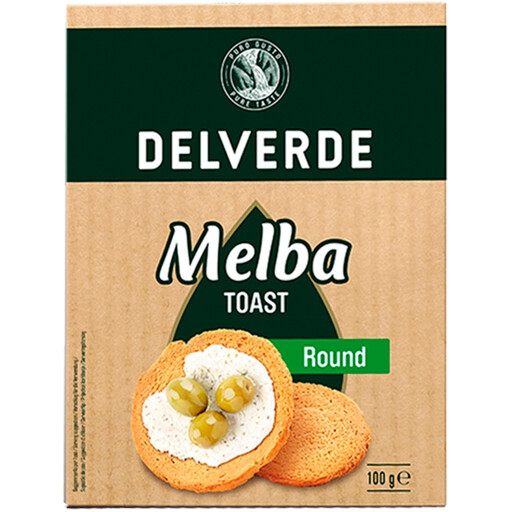 No image available
The round shape may work well for individually topped bites. Compare the sugars per 100 g and read the allergen information on the pack before choosing.
No. ‘Light’ doesn’t automatically mean the absolute sugar value is low. According to the Voedingscentrum, it means at least 30% less energy, fat or sugars than a similar product. Check what the claim refers to and compare ‘of which sugars’ per 100 g.
Choose toast whose exact pack is labelled gluten-free, and check for other allergens too. Van der Meulen Rice Toast Original is shown as gluten-free, but the product information mentions possible traces of sesame and soya. Use separate toppings and utensils if cross-contact could affect your guest.
Store opened toast according to the instructions on the pack, and add moist toppings shortly before serving. Albert Heijn recommends keeping AH Melba toast naturel in a sealed tin after opening; Jumbo recommends storing its Knapperige Toast in a cool, dry, dark place.
Don’t assume this is true of every type of toast. If the type of salt matters to you, check the ingredients list on the specific pack for iodised salt.