
Organising a Christmas market or drinks party
You’re looking for toast to serve with snacks and want to compare the sugars per 100 g, rather than guessing from the product name or flavour.


For a Christmas market or sharing board, compare the ‘of which sugars’ values per 100 g for similar toast products. Words such as ‘wholemeal’ or ‘luxury’ won’t tell you which product contains less sugar. Then check fibre, salt and allergens, and make sure your chosen option is available. The Netherlands Food and Consumer Product Safety Authority also sets specific conditions for the ‘reduced sugars’ claim: the product must contain at least 30% less sugars than a comparable product, without having a higher energy value.
You’re looking for toast to serve with snacks and want to compare the sugars per 100 g, rather than guessing from the product name or flavour.
You want a base for toppings and are comparing fibre as well as sugars. Albert Heijn lists 9.7 g of fibre and 3.2 g of sugars per 100 g for Van der Meulen Melba Toast Wholemeal.
You want to know before serving whether your chosen option suits your guests’ allergies or other dietary requirements. Check the ingredients and allergen information for that exact product.
Start with what matters most to you: the sugar content, fibre, ingredients or practicalities of serving.
| What to consider | What to check | Who is this most important for? |
|---|---|---|
| Sugars | Compare the ‘of which sugars’ values per 100 g for similar toast products. Assess any ‘reduced sugars’ claim separately. | If you want to serve lower-sugar toast, compare the values on similar products’ labels rather than relying on wording on the packaging. This sugar comparison is the top priority for around 36% of consumers. |
| Fibre and salt | Check fibre, sugars and salt on the same basis: per 100 g. Albert Heijn lists 3.9 g of fibre per 100 g for its plain melba toast and 9.7 g for Van der Meulen Melba Toast Wholemeal; both list 3.2 g of sugars per 100 g. | If you’re mainly looking for toast with more fibre, don’t assume that ‘wholemeal’ also means less sugar. Fibre content is the main consideration for around 29% of consumers. |
| Ingredients and allergens | Check the up-to-date ingredients and allergen information for your chosen option, including any warnings about traces. | If you’re serving snacks to someone with an allergy, you need to know whether that specific toast is suitable. Checking the ingredients is the top priority for around 21% of consumers. |
| Availability and serving | Check availability and pack size shortly before buying. Once opened, follow the storage instructions on the pack. | For a Christmas market, you’ll want to take enough toast and keep it dry until serving. Around 14% of consumers prioritise this practical planning. |
Two products having different sugar values doesn’t automatically mean either can carry the ‘reduced sugars’ claim. The Netherlands Food and Consumer Product Safety Authority sets requirements for both the sugar reduction and the energy value compared with a similar product.
Check whether the claim actually appears on the packaging. For your own comparison, use the sugars per 100 g for similar toast products.
Albert Heijn lists 3.2 g of sugars per 100 g for both AH Melba Toast Plain and Van der Meulen Melba Toast Wholemeal, although their stated fibre contents differ.
Compare sugars, fibre and salt separately per 100 g, then decide which matters most for your sharing board.
A listed nutritional value is useful for comparing products, but it doesn’t tell you whether that option is still available to buy. Jumbo marked its Melba Toast Tomato & Basil as no longer available in its online range.
Check availability shortly before buying, and compare an alternative’s label in advance.
The word ‘toast’ doesn’t tell you what type of salt was used in a specific product.
If this matters to you, read the ingredients list on your chosen pack or ask the manufacturer for product-specific information.
A melba toast brand with plain, wholemeal and sesame options, among others, in the supermarket range reviewed.
Own-label AH Melba Toast Plain, sold in a 240 g pack.
An own-label range that included a melba toast option with tomato and basil in the range reviewed.
The brand on a 240 g pack of Melba Toast Plain at ALDI.
This plain rice toast is an option for a crunchy base for party snacks. If you’re choosing based on sugar content, compare it with similar rice toast; the melba toast figures elsewhere in this article aren’t a direct basis for comparison.
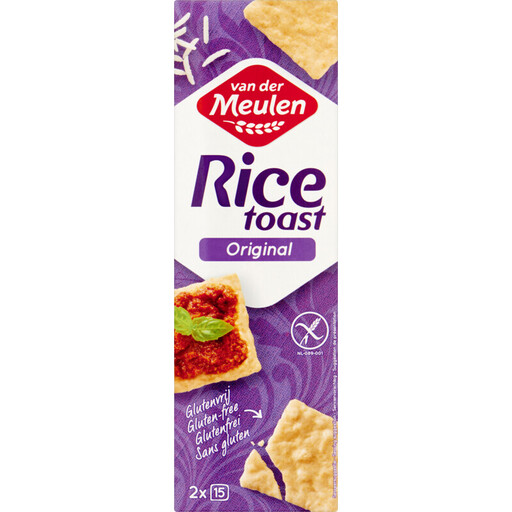 Image unavailable
Plain rice toast to consider as a base for toppings on a sharing board.
The product name lists a 65 g pack. To compare sugar content, check the nutritional information per 100 g for this toast and similar rice toast products.
If you’re sensitive to sesame or soya, read the allergen information on the current packaging.
Yes. According to the Netherlands Food and Consumer Product Safety Authority, the claim requires at least 30% less sugars than a comparable product, and the energy value must not be higher. Simply comparing two labels doesn’t mean a product qualifies for the claim.
No. A statement about added sugars doesn’t describe the total amount of sugars. Albert Heijn lists 0 g of added sugars and 3.2 g of sugars per 100 g for AH Melba Toast Plain. For your comparison, check the ‘of which sugars’ line.
Store the toast somewhere dry and close an opened pack according to the instructions on the packaging. Albert Heijn recommends storing its melba toast in a sealed tin once opened. Add moist toppings shortly before serving.
No. According to the product information, the Van der Meulen Melba Toast Wholemeal reviewed contains wheat, barley, rye, soya and sesame, among other ingredients. Always read the up-to-date ingredients and allergen information for the option you’re actually serving.