
Sugar-conscious night-shift worker
Wants to take a sweet treat along, but will only consider Dutch spiced biscuits a lower-sugar option if the claim and comparison can be verified.


If reducing sugar is your main priority, only choose Dutch spiced biscuits if you can verify a substantiated reduced-sugar claim; a slightly lower sugar value than another brand’s isn’t enough. If you mainly want to take them to enjoy as a treat during your night shift, consider how much you pack and check the nutritional information for that specific variety. If Dutch spiced biscuits aren’t a must, you could also compare another snack category.
Wants to take a sweet treat along, but will only consider Dutch spiced biscuits a lower-sugar option if the claim and comparison can be verified.
Wants to pack something separately for a short break, so checks the portion size, pack size and storage instructions once opened.
Needs to check the ingredients and allergens for the exact variety chosen. Even gluten-free Dutch spiced biscuits may contain other allergens.
First decide whether you’re looking for a demonstrably lower-sugar option or simply want to take a portion of Dutch spiced biscuits as a treat. Then check the label for the variety you’ve chosen and whether you can buy it before your shift.
| What to consider | What to check when buying | Who it matters to |
|---|---|---|
| Demonstrably lower sugar | Look for an explicit reduced-sugar claim, the basis for comparison and the sugars per 100 g. A label such as ‘sugar-conscious’ doesn’t prove the claim. | If lower sugar is a requirement for me, I want to know what the Dutch spiced biscuits are being compared with. For around 42% of consumers, a demonstrable sugar reduction comes first. |
| Portion and portability | Check the stated portion size and storage instructions once opened. Albert Heijn lists a portion of 11 g for AH Taai taai. | For a short break during my shift, I want to decide in advance how much to take, rather than eat from a large pack. Around 25% of consumers prioritise portion planning. |
| Allergens and dietary requirements | Read the ingredients and allergen declaration for the exact variety, even if it’s labelled gluten-free. | If I need to avoid an allergen, the Dutch spiced biscuits I choose must suit my dietary needs; I assess the sugar value separately. Dietary suitability is the top priority for around 17% of consumers. |
| Availability | Check the store’s stock or online ordering status shortly before buying, and choose a pack size that suits how you’ll use it. | As my next night shift approaches, I want to be able to buy my treat in time. Availability is the main concern for around 16% of consumers. |
Albert Heijn lists 39 g of sugars per 100 g for AH Taai taai and 36 g per 100 g for Bolletje Taai Taai; Jumbo listed 38,8 g per 100 g for De Originele Taai Taai. These differences between products don’t prove a reduced-sugar claim.
Check whether the specific variety carries such a claim and what it is being compared with. For an EU claim about reduced content, Regulation (EC) No 1924/2006 requires, among other things, a reduction of at least 30% compared with a similar product.
The value per 100 g makes products easier to compare, but it doesn’t tell you how much you’ll take from the pack during one break. A stated portion is only useful if you stick to that amount.
Check the portion size on the pack and set aside the amount you want to take before your shift.
According to Albert Heijn, gluten-free Maître Mathis Dutch spiced biscuits contain 41 g of sugars per 100 g, as well as milk and lupin. So the gluten-free label alone says nothing about the sugar value or other allergens.
For the variety you’ve chosen, check both the nutritional information and the full ingredients and allergen declaration.
Jumbo stated that De Originele Taai Taai 500 g was no longer in its online range. A product description therefore doesn’t guarantee that you’ll be able to order it before your next shift.
Check the current ordering status or store stock just before you shop.
The product information for AH Taai taai gives you details to assess a portion and its sugar content.
Jumbo De Originele Taai Taai 500 g is a specific example that lets you assess nutritional information and range status separately.
ALDI describes 500 g of anise-flavoured Dutch spiced biscuits in figure shapes.
These two Klene products are liquorice, not Dutch spiced biscuits. They’re only relevant if you’re also considering another snack category for your shift; assess the sugar information and a suitable portion using the current packaging.
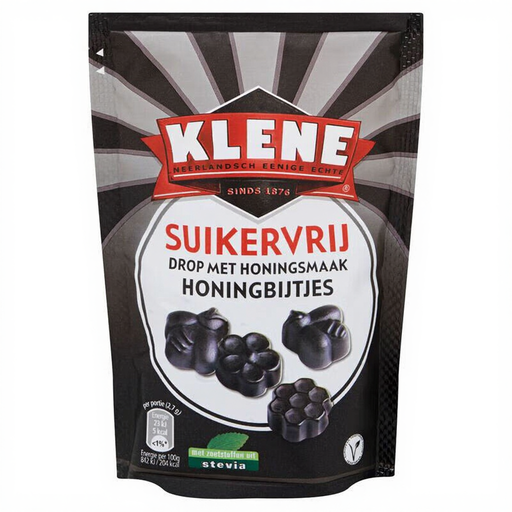 Image unavailable
Worth considering if you’d like to take liquorice rather than Dutch spiced biscuits for your break.
110 g pack. Check the current packaging for nutritional information and the amount per portion. The product information warns that excessive consumption may have a laxative effect.
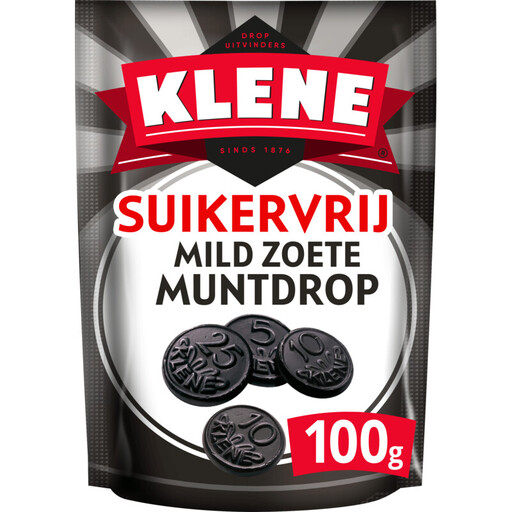 Image unavailable
Worth considering if liquorice is also an option for your break and you’re not specifically looking for Dutch spiced biscuits.
100 g pack. Check the current nutritional information and decide how much to take with you. The product information warns that excessive consumption may have a laxative effect.
Check whether the Dutch spiced biscuits actually carry a reduced-sugar claim and what comparable reference product they’re measured against. For this type of EU nutrition claim, Regulation (EC) No 1924/2006 requires, among other things, a reduction of at least 30% compared with a similar product; a small difference between two sugar values isn’t enough on its own.
It’s better to think of Dutch spiced biscuits as a treat rather than a meal replacement. Arboportaal advises night-shift workers to eat properly and avoid snacking; if you do take some along, you can decide in advance how much you want to eat during your break.
It depends on the variety and the size of the biscuit. Voedingscentrum gives 7,5 g of sugars for a 20 g Dutch spiced biscuit; Albert Heijn lists 39 g of sugars per 100 g and a portion of 11 g for AH Taai taai. Use the portion size on your own pack to make a comparison that suits your choice.
No. The gluten-free label says nothing about whether other allergens are present. According to Albert Heijn, gluten-free Maître Mathis Dutch spiced biscuits contain milk and lupin, so always read the allergen declaration on the exact pack.
Follow the storage instructions on the pack you’ve chosen. Albert Heijn advises keeping AH Taai taai in a cool, dry place and storing it in a sealed tin once opened.