For Flag Day, compare crispbread by its ‘of which sugars’ value per 100 g, rather than relying on a claim such as ‘reduced sugar’. Then check the fibre, salt, ingredients and allergens. The wholegrain rye varieties and gluten-free option reviewed here differ in these respects, and your toppings will also affect the nutritional profile of the finished snack.
Who are these options for?
Label checkers keeping an eye on sugars
You’re looking for crispbread with a suitable sugar content for Flag Day. The Netherlands Nutrition Centre recommends comparing nutritional values per 100 g. Also read the ingredients and consider what you’ll serve on top.
Fans of wholegrain rye
You want to consider fibre as well as sugars, and you can eat rye and gluten. Albert Heijn’s product information lists 20 g of fibre per 100 g for both Wasa Wholegrain and Wasa Light Weight; this doesn’t apply to other varieties.
Hosts looking for gluten-free options
You need a gluten-free option for yourself or a guest. Check the label and allergen information on the exact pack before comparing its sugars, fibre and ingredients.
What should you look for when choosing?
First, identify any ingredients your guests need to avoid. Compare the nutritional values per 100 g of the remaining crispbreads, then plan how much you’ll need and what to serve on your celebration platter.
| What to consider |
What to check when buying |
Who it matters most to |
| Sugars |
Compare ‘of which sugars’ per 100 g for similar crispbreads, and check the ingredients list alongside any sugar claim. |
If I want less sugar in the base of my snacks, I want to know what the nutrition table actually says. For around 40% of consumers, comparing sugars comes first. |
| Wholegrain and fibre |
Check which grain is used and compare fibre per 100 g; also look out for ingredients containing gluten. |
I’m looking for a wholegrain base for the celebration platter, but don’t want to lose sight of my sugar goal. Fibre and wholegrains are the top priority for around 30% of consumers. |
| Allergens |
Read the ingredients and allergen information on the exact pack, even when it says ‘gluten-free’. |
If a guest needs to avoid certain ingredients, choosing a suitable option matters more than comparing sugar content. For around 20% of consumers, suitability is the main priority. |
| Portions and toppings |
Check the number of pieces and the pack weight; consider the toppings separately from the crispbread. |
For a platter of small snacks, I want to buy enough crackers without forgetting to factor the toppings into my sugar goal. For around 10% of consumers, this planning comes first. |
Common mistakes
-
Treating a sugar claim as a complete nutritional comparison
A claim such as ‘reduced sugar’ doesn’t tell you on its own how much sugar, fibre or salt the crispbread contains. Your toppings will also affect the nutritional profile of the snack.
Compare the nutrition tables of similar products per 100 g, and read the ingredients and allergen information on the pack you’re buying.
-
Assuming wholegrain and gluten-free are interchangeable
Wholegrain rye contains gluten. Albert Heijn’s product information lists 20 g of fibre per 100 g for both Wasa Wholegrain and Wasa Light Weight, compared with 7 g for Wasa Gluten Free and Lactose Free Classic.
First rule out any ingredients your guests need to avoid. Then compare sugars, fibre and salt across the suitable options.
-
Assuming all crispbread contains iodised salt
Whether iodised salt is used depends on the ingredients of the specific product; the product category alone doesn’t tell you for sure.
Check the ingredients on the pack or ask the manufacturer if this is important to your choice.
-
Comparing by cracker alone
A cracker doesn’t have a standard weight. The portions listed by Albert Heijn for Wasa Light Weight and Wasa Wholegrain weigh approximately 9.2 g and 12.9 g per piece respectively.
Use the values per 100 g for your nutritional comparison. Then check the number of pieces and pack weight to plan your celebration platter.
Brands compared
Wasa
The Wasa varieties listed by Albert Heijn show why the specific product matters more than the brand name alone.
- Per 100 g, Albert Heijn lists 1.5 g of sugars and 20 g of fibre for Wasa Wholegrain, and 3.5 g of sugars and 20 g of fibre for Wasa Light Weight.
- For Wasa Gluten Free and Lactose Free Classic, Albert Heijn lists 2 g of sugars and 7 g of fibre per 100 g. Check the pack of the variety you choose.
Albert Heijn
Albert Heijn’s range includes its own crispbread varieties, including options with wholegrains, sesame or seeds.
- You can compare different types of crispbread within the range.
- Check sugars and other nutritional values on the individual product page or the exact pack, rather than judging by the variety name.
Lidl
Lidl Netherlands lists a 250 g pack of wholegrain crispbread available in store.
- The product type and pack weight can help you plan your shopping.
- For a comparison of sugars, fibre and salt, check the nutritional information on the pack.
Products for a crunchy celebration platter
These crispbreads and crackers include a range of wholegrain, high-fibre and light options to use as a base for toppings. For Flag Day, choose only after comparing the exact nutritional information and checking which options suit your guests’ needs.
 Image unavailable
g'woon Wholemeal Crispbread, 375 g
A wholemeal option to compare if you’re looking for a crispbread base for toppings.
Pack size: 375 g. If you have allergies, check the ingredients and allergen information on the exact pack before serving.
View at Joybuy
 Image unavailable
Bolletje Whole Grain Crispbread, 265 g
A wholegrain option to compare with other celebration platter choices for sugars per 100 g.
Pack size: 265 g. If you’re serving guests with allergies, check the information on the exact pack.
View at Joybuy
 Image unavailable
Wasa High-Fiber Crackers, 300 g
A cracker option for anyone who wants to compare sugars and fibre on the label when choosing.
Pack size: 300 g. If you need to avoid specific allergens, refer to the information on the exact pack.
View at Joybuy
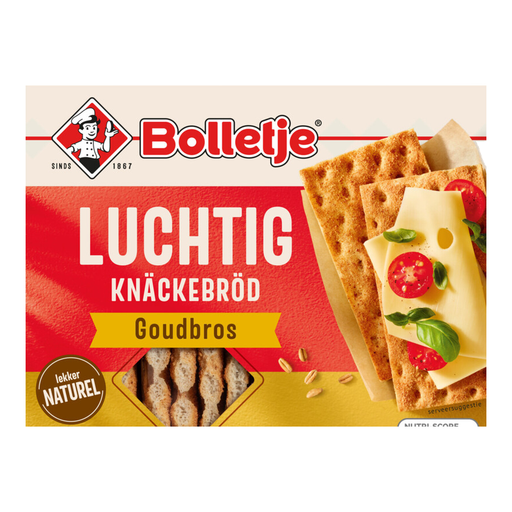 Image unavailable
Bolletje Light Crispbread Golden Crisp, 240 g
An option to consider as a base for small topped snacks; don’t assume ‘Light’ tells you how much sugar it contains.
Pack size: 240 g. Compare the nutritional information per 100 g and check the allergens on the pack.
View at Joybuy
 Image unavailable
Wasa Wholegrain Crispbread, 260 g
A wholegrain crispbread to consider if you’re looking for a base for toppings and want to compare nutritional values.
Pack size: 260 g. Check the label for fibre and allergens if these affect your choice.
View at Joybuy
Frequently asked questions
How can I compare sugars in crispbread fairly?
Compare similar crispbreads by their ‘of which sugars’ value per 100 g, not just per cracker. The Netherlands Nutrition Centre recommends using this basis for comparison. Also read the ingredients list if you want to see which sources of sugar have been added.
Is crispbread labelled ‘reduced sugar’ automatically the right choice for Flag Day?
No. That claim alone doesn’t determine which variety is right for your celebration platter. Also compare the fibre, salt and allergens of the exact products, and take your toppings into account.
Does all Dutch crispbread contain iodised baker’s salt?
Don’t assume that all crispbread contains iodised salt. Check the ingredients of the specific product or ask the manufacturer if this matters for your purchase.
How can I keep topped crispbread snacks crunchy?
Store the crispbread according to the instructions on the pack and add the toppings just before serving. Storage instructions may vary by variety.


