What should you look for when choosing?
If you’re choosing crispbread for yourself or an older person, decide which need matters most. Then compare similar products per 100 g and consider whether they’re pleasant and safe to eat.
| What to consider |
What should you check? |
Who is this important for? |
| Sugars |
Compare total sugars per 100 g; also check the ingredients and whether added sugars are listed separately. |
If I want less sugar, I don’t want different serving sizes to skew my comparison. For around 30% of consumers, lower sugar is the main priority. |
| Wholegrains and fibre |
Check which grains are used and compare fibre per 100 g. |
I’m looking for a wholegrain option and want to know how much fibre the product contains. Wholegrains and fibre are the main consideration for around 30% of consumers. |
| Salt |
Compare salt per 100 g, and also consider how much you eat and what you put on it. |
When I’m watching my salt intake, it’s not just the crispbread that counts but also what I put on it. Around 20% of consumers give reducing salt their highest priority. |
| Ease of eating and overall diet |
Look out for difficulty chewing or swallowing, a reduced appetite and unintended weight loss. |
If crunchy food is difficult to eat or someone is eating less and less, I want to find out what’s suitable first. For around 20% of consumers, safe, easy-to-eat food or getting enough nourishment comes first. |
Brands to compare
Nutrition values vary between products. These brand names are a starting point for comparing specific packs, not a judgement on every product from each brand.
Wasa
Jumbo lists nutrition information for Wasa Wholemeal 260 g and Wasa Protein Wheat 200 g.
- According to Jumbo, Wasa Wholemeal contains 1.5 g of sugars and 20 g of fibre per 100 g; the Protein Wheat variant contains 20 g of protein per 100 g.
- Jumbo lists 1.2 g of salt per 100 g for Wasa Wholemeal and 2.7 g of sugars per 100 g for Protein Wheat. So don’t choose based on the brand name or protein content alone.
Albert Heijn
AH Wholemeal Crispbread, from its own-brand range, is a specific product you can compare for sugars, fibre and salt.
- Albert Heijn lists 3.4 g of total sugars per 100 g for this variant, of which 1.7 g are added sugars, and 12 g of fibre.
- The listed 0.7 g of salt per 100 g is lower than the 1.2 g Jumbo lists for Wasa Wholemeal, while the total sugar content is higher. Also note the listed gluten and sesame in this variant.
Jumbo
Jumbo Wholemeal Crispbread is an own-brand option with nutrition information listed per 100 g.
- Jumbo lists 2.4 g of sugars, 10.9 g of fibre and 0.71 g of salt per 100 g.
- For this variant, Jumbo lists cereals containing gluten and the possible presence of other allergens. Check the pack if allergens are a concern.
Goud Gebakken
ALDI Netherlands offers, among other products under this own-brand label, wholemeal crispbread and a rustic seed variant.
- The wholemeal and seed variants have different ingredients to compare when choosing.
- If sugars, fibre or salt are decisive for you, choose a specific pack based on its nutrition table.
Crispbread at Joybuy
These crispbread products come in different pack sizes and varieties to consider if sugars, wholegrains and ease of eating matter to you. Compare the current labels per 100 g before choosing; the product name alone won’t tell you how much sugar, fibre or salt a variant contains.
 Image unavailable
g'woon wholemeal crispbread, 375 g
A wholemeal option to consider if you want to weigh up sugars and fibre side by side. The pack contains 375 g; check the nutrition information per 100 g and the allergens listed on the pack.
View at Joybuy
 Image unavailable
Bolletje wholegrain crispbread, 265 g
A wholegrain option for anyone who wants to compare fibre as well as sugars. The pack contains 265 g; check the current nutrition information per 100 g and the allergen information.
View at Joybuy
 Image unavailable
Wasa wholemeal crispbread, 260 g
A wholemeal option to compare if sugars and fibre are your priorities. The pack contains 260 g; check the current salt content on the label and make sure the ingredients are suitable.
View at Joybuy
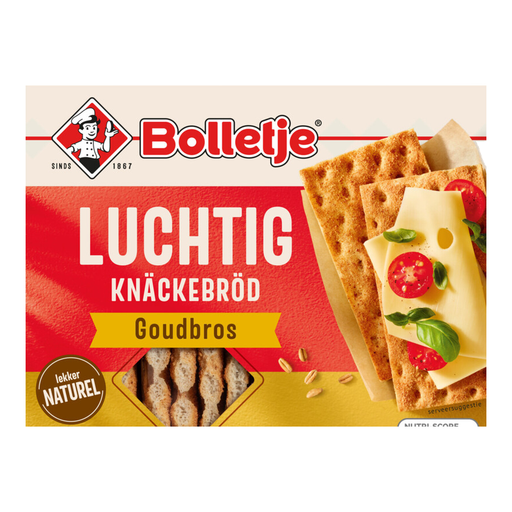 Image unavailable
Bolletje Light Golden Crisp crispbread, 240 g
A crispbread option to compare with wholemeal varieties. The pack contains 240 g; check the type of grain and the nutrition information on the pack if wholegrains and fibre are important to you.
View at Joybuy
 Image unavailable
Wasa Rustic crispbread, 215 g
A rye option to include when comparing sugars, fibre and salt. The pack contains 215 g; check the current label for these values and the allergen information.
View at Joybuy
Frequently asked questions
How do I compare the sugar content of crispbread?
Compare similar crispbreads per 100 g, as the Netherlands Nutrition Centre advises for nutrition information on food labels. Check total sugars, read the ingredients list and look for a separate listing of added sugars if available; serving sizes can vary between products.
Is the crispbread with the least sugar also the right choice?
Not necessarily: fibre, salt, allergens and ease of eating can all affect your choice. Jumbo lists 1.5 g of sugars, 20 g of fibre and 1.2 g of salt per 100 g for Wasa Wholemeal 260 g; compare these figures with the current labels of the varieties you’re considering.
Can someone with swallowing difficulties eat crispbread?
First check whether crunchy crispbread is suitable if someone chokes on food or has difficulty swallowing. For swallowing difficulties, Thuisarts describes adjustments such as soft, puréed or liquid food; discuss a suitable food texture with a healthcare professional.
What if an older person is losing weight unintentionally or has a poor appetite?
Contact their GP to assess their overall diet and possible causes. According to the Netherlands Nutrition Centre, older people with a reduced appetite may need additional dietary advice; choosing crispbread based on its sugar content is no substitute for that assessment.
Does all crispbread contain iodine from baker’s salt?
That isn’t guaranteed by Dutch regulations: the Netherlands Food and Consumer Product Safety Authority explains that iodine compounds may be present in bread substitutes through baker’s salt, up to a maximum of 65 mg of iodine per kg of salt. This permitted use doesn’t tell you how much iodine is in a specific pack of crispbread; ask the manufacturer about the product if this matters to you.


