What should you look for when choosing?
Start by comparing the nutritional information per 100 g for similar types of crispbread. Then read the ingredients and allergen information, and assess the toppings separately.
| What to look for |
What to check when buying |
Who it matters most to |
| Sugars and claims |
Compare ‘of which sugars’ per 100 g and read the ingredients list if you want to identify added sugars. Check what any ‘light’ claim refers to. |
If I’m watching my sugar intake, I want to know what’s really in the crispbread, not just what the front of the pack promises. Around 33% of consumers put this first. |
| Wholegrain and fibre |
Check which grains are listed as ingredients and compare fibre and salt per 100 g. |
For my lunch, I’m mainly looking for a wholegrain base and want to be able to compare the fibre content. This is a priority for around 27% of consumers. |
| Gluten and allergens |
Read the allergen information for the variety you choose. If you need to avoid gluten, only choose a product explicitly labelled as gluten-free. |
If I need to avoid an allergen, I first need to know whether I can eat the product. This is the main purchasing concern for around 20% of consumers. |
| Toppings and storage |
Decide which toppings you’ll take with you and check their nutritional information separately. Also check the storage instructions on the packaging. |
At work, I want a lunch that’s easy to take with me and top, without looking only at the cracker. Around 20% of consumers give this the highest priority. |
Crispbread and snacks for your office lunch
These Joybuy products include plain crispbread for you to add your own toppings and a filled cheese snack. Don’t compare them as if they were the same kind of lunch base: the filling and individual packaging affect what you take with you and which ingredients you need to check.
 No image available
Wasa High-Fiber Crackers, 300 g
A variety to compare if fibre is an important factor in your lunch choice.
Joybuy’s product information lists 2.0 g of sugars and 26.0 g of fibre per 100 g. The product contains rye, wheat, oats and sesame, among other ingredients; check the packaging if you need to avoid any ingredients.
View at Joybuy
 No image available
Wasa Wholegrain Crispbread, 260 g
A plain wholegrain rye variety for choosing your own toppings for an office lunch.
Wasa lists 1.5 g of sugars and 20 g of fibre per 100 g for Wholegrain. Check whether the nutritional information on this pack matches. Rye contains gluten.
View at Joybuy
 No image available
Wasa Rustic Crispbread, 215 g
A plain variety for adding your own toppings at work. If they matter to your choice, compare the nutritional information on the pack, including sugars and fibre per 100 g.
View at Joybuy
 No image available
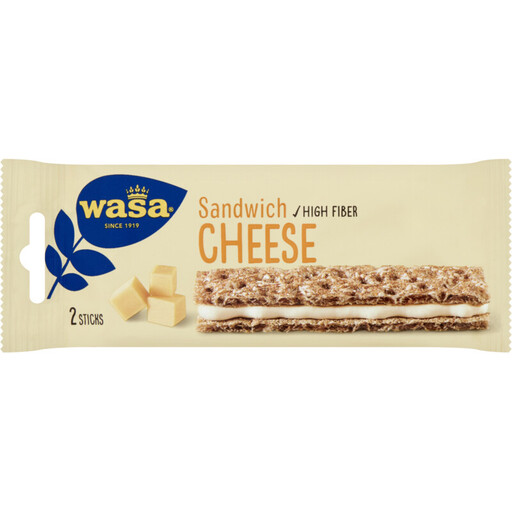
Wasa Cheese Sandwich, 3 × 31 g
A filled cheese snack in three portions, rather than a neutral cracker to top yourself. Check the ingredients and allergen information if milk, gluten or sesame are relevant to your choice.
View at Joybuy
Frequently asked questions
Does a low ‘of which sugars’ value mean no sugar has been added?
No. According to the Netherlands Nutrition Centre, ‘of which sugars’ includes both naturally occurring and added sugars. Read the ingredients list too if you want to check whether sugar, syrup or honey, for example, has been used.
Does ‘light’ mean that crispbread is low in sugar?
Not necessarily. The Netherlands Nutrition Centre explains that ‘light’ can refer, for example, to 30% less sugar than in a similar product. Check what the claim refers to and read the sugars value per 100 g.
Can I choose ordinary rye crispbread if I need to avoid gluten?
No. The Wasa and Leksands rye products discussed here contain gluten. If you need to avoid gluten, choose a product explicitly labelled as gluten-free and check the packaging of the variety you select.
Does Dutch crispbread always contain iodised baker’s salt?
No. According to the Netherlands Nutrition Centre, using baker’s salt isn’t compulsory. If the type of salt used matters to your choice, read the ingredients on the packaging or ask the manufacturer.
How should I store crispbread for an office lunch?
Follow the storage instructions on the packaging. For Wasa Wholegrain, Joybuy recommends storing it in a cool, dry place away from direct sunlight and keeping the pack tightly closed after opening. If you like, take moist toppings separately and add them to the crispbread just before eating.


