For a work-from-home lunch, compare the sugars per 100 g rather than relying solely on wording on the front of the pack. Plain wholegrain rye crispbread is a good fit if you want a short ingredients list. If fibre matters more to you, compare the high-fibre options too, along with their salt content and allergens. If you regularly replace bread with crispbread, also consider your overall dietary sources of iodine.
Who is this relevant to?
People working from home who want to compare sugars
You make a quick lunch yourself and want to know how much sugar different types of crispbread contain. To compare them, check the nutritional information per 100 g and read the ingredients, as the Netherlands Nutrition Centre recommends when comparing food labels.
Lunch lovers keeping an eye on fibre
You’re looking for a base for your toppings and value wholegrains and the stated fibre content. Also consider what you put on your crispbread: the crackers are only one part of your lunch.
People replacing bread or checking allergens
You regularly eat crispbread instead of bread, or need to take ingredients such as gluten or sesame into account. Check the packaging for the exact variety. According to the Netherlands Nutrition Centre, bread made with iodised baker’s salt is an important source of iodine in the Netherlands. If you often replace bread, also consider your overall diet.
What should you look for?
Start with the sugars per 100 g. Then weigh up fibre, salt and ingredients according to what matters most for your lunch. The Netherlands Nutrition Centre recommends comparing products per 100 g when pack sizes or portion sizes differ.
| What to consider |
What should you check? |
Who does this matter to? |
| Sugars |
Compare ‘of which sugars’ per 100 g and check the ingredients for things such as honey or dried fruit. |
If I want to choose a lower-sugar option for lunch, I want to compare the actual figures across similar products. For around 42% of consumers, comparing sugar content comes first. |
| Fibre and wholegrains |
Check the stated fibre per 100 g and see which wholegrains are listed in the ingredients. |
For my lunch with toppings, the type of grain and fibre content matter more to me than a low-carb claim alone. Around 33% of consumers give these features top priority. |
| Salt, allergens and replacing bread |
Check the salt per 100 g and the allergens on the pack. If you often replace bread, also consider your dietary sources of iodine. |
If I often replace bread or need to avoid an ingredient, I want to know whether the exact variety is right for my lunch. These checks matter most to around 25% of consumers. |
Common mistakes
-
Assuming ‘reduced sugar’ means a consistently low sugar content
A reduction claim refers to a comparison with a similar product. It doesn’t tell you how much sugar the crispbread actually contains per 100 g.
Compare the actual ‘of which sugars’ figure in the nutrition table for the products you’re considering.
-
Looking only at ‘high-fibre’ or ‘low carb’ claims
A claim like this is no substitute for comparing the rest of the nutritional information. Ingredients and allergens can also vary between varieties.
As well as fibre, check the sugars and salt per 100 g, and read the ingredients on the exact pack.
-
Assuming crispbread is automatically a like-for-like replacement for bread
According to the Netherlands Nutrition Centre, bread made with iodised baker’s salt is an important source of iodine in the Netherlands, but using baker’s salt is not compulsory. So don’t assume every type of crispbread has the same ingredients.
If you regularly eat less bread, consider what other sources of iodine you have and check the ingredients of the product you buy.
Brands to compare
Wasa
Wasa offers various types of crispbread and crackers. Compare individual varieties, not just the brand, if sugars and fibre matter for your lunch.
- Joybuy’s product pages list 1.5 g sugars per 100 g for Wasa Wholegrain, and 2.0 g sugars and 26 g fibre per 100 g for Wasa High-Fiber.
- These figures apply to the varieties listed. Check the salt and allergens on each pack too.
Ryvita
Ryvita offers rye crispbread as well as a Fruit Crunch variety. This difference makes the ingredients and nutrition table important when choosing what to have for lunch.
- Ryvita’s UK product pages list 2.4 g sugars per 100 g for Original Crispbread and 17.6 g per 100 g for Fruit Crunch, which contains currants, sugar and honey.
- These figures come from UK product pages. Check the label on the pack you buy.
Albert Heijn
Albert Heijn’s crispbread range includes own-brand products and varieties from other brands. It’s a useful category for comparing different grain and seed options side by side.
- The online range includes wholegrain and sesame varieties, making it easier to find a label that suits your lunch.
- A category overview doesn’t compare the nutritional information for every variety. For that, check the details for each individual product.
Products for a work-from-home lunch
These Joybuy products offer a range of wholegrain and high-fibre options for a lunch with toppings, as well as a sesame variety. When choosing, compare the nutritional information and ingredients on the exact pack.
 Image unavailable
g'woon Wholemeal Crispbread, 375 g
A wholemeal crispbread to consider as a base for your lunch. Compare the sugars and fibre per 100 g on the pack with other varieties, and check the allergens if they’re relevant to you.
View on Joybuy
 Image unavailable
Bolletje Whole Grain Crispbread, 265 g
A wholegrain option if you’re looking for crispbread to have with lunch toppings. Before comparing it with another wholegrain option, read the nutrition information per 100 g and the ingredients for this variety.
View on Joybuy
 Image unavailable
Wasa High-Fiber Crackers, 300 g
Worth comparing if fibre is a priority for your lunch: Joybuy’s product information lists 26 g fibre, 2.0 g sugars and 1.1 g salt per 100 g. If you have allergies, check the packaging for this variety, particularly for gluten-containing cereals and sesame.
View on Joybuy
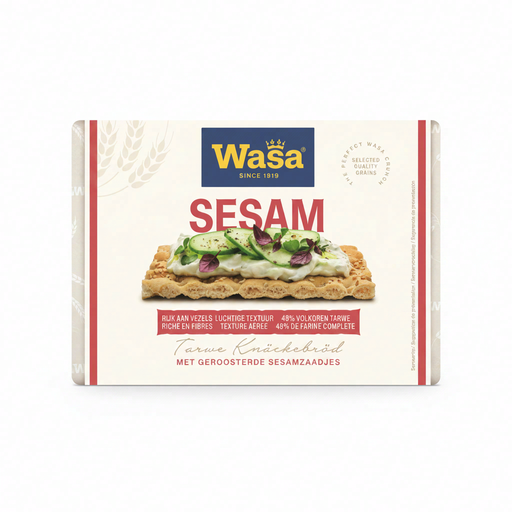 Image unavailable
Wasa Breakfast Biscuits Sesame, 250 g
A sesame variety to compare if you also want to consider this type of biscuit for lunch. It’s not the same type of product as plain rye crispbread: check the sugars per 100 g, and read the ingredients and allergens on the pack.
View on Joybuy
 Image unavailable
Wasa Wholegrain Crispbread, 260 g
A plain wholegrain rye option for a savoury lunch: Joybuy’s product information lists wholegrain rye flour, yeast and salt as ingredients, with 1.5 g sugars and 1.25 g salt per 100 g. The product contains gluten; also check the pack for possible traces of sesame and milk.
View on Joybuy
Frequently asked questions
Does ‘reduced sugar’ mean crispbread is low in sugars?
No, the claim alone doesn’t tell you the actual amount of sugar in the finished product. For your work-from-home lunch, compare ‘of which sugars’ per 100 g on the packs of similar products.
How do I compare two packs of crispbread?
Compare the nutritional information per 100 g, even if the portion sizes shown on the packs differ. Then check the sugars, salt and stated fibre, and read the ingredients and allergens for both varieties.
What should I look for if crispbread often replaces bread in my diet?
Look beyond the crispbread itself and consider your overall dietary sources of iodine. According to the Netherlands Nutrition Centre, bread made with iodised baker’s salt is an important source of iodine in the Netherlands, although using baker’s salt is not compulsory. So check the ingredients for the specific product.
Can I choose any rye or high-fibre variety if I need to avoid gluten or sesame?
No, ingredients and allergens vary between varieties. Joybuy’s product information lists rye and gluten for Wasa Wholegrain Crispbread, and gluten-containing cereals and sesame for Wasa High-Fiber Crackers. Always read the packaging of the product you buy.


