
Festival-goer keeping an eye on sugar
You’re looking for a crunchy snack base and want to compare the sugar content per 100 g and per planned portion, without relying solely on the front of the pack.


For a street festival, first compare the sugar content in crispbread per 100 g and per portion, rather than relying on a claim on the packaging alone. Then consider fibre, salt and allergens too. Keep the crispbread dry and pack moist toppings separately if you want it to stay crunchy.
You’re looking for a crunchy snack base and want to compare the sugar content per 100 g and per planned portion, without relying solely on the front of the pack.
You’re looking for crispbread for a long day at a festival and also want to check the fibre or protein content. You don’t want to overlook salt or ingredients either.
You want to know which grains and allergens a variety contains before buying it. This can vary from product to product, so always check the latest packaging.
Start by comparing products per 100 g. Then check the portion you plan to take with you and any features that could affect your choice.
| What to consider | What to check before buying | Who it matters to |
|---|---|---|
| Comparing sugars | Check ‘of which sugars’ per 100 g and work out what that means for your planned portion; don’t assess a claim separately from the nutrition information. | If I want to eat less sugar, I want to know how much is in my snack portion rather than relying on a claim alone. Around 39% of consumers put this sugar comparison first. |
| Fibre and salt | Compare fibre and salt on the same basis, per 100 g, and take into account how many crispbreads you’ll have and any toppings. | On a long festival day, I want to consider fibre without unknowingly choosing a lot of salt. Around 23% of consumers give this balance top priority. |
| Taking it with you | Check the storage instructions and packaging; pack moist toppings separately. | I want to take crispbread with me without it going soggy or crumbling before I eat it. This is the main concern for around 23% of consumers. |
| Ingredients and allergens | Check the current ingredients list and the ‘contains’ and ‘may contain’ statements on the packaging. | If I need to avoid certain grains or allergens, the packaging determines whether a variety is suitable for me. Around 15% of consumers give this check top priority. |
A claim about sugars doesn’t tell you how much fibre or salt the crispbread contains, and says nothing about allergens. The Netherlands Food and Consumer Product Safety Authority emphasises that nutrition claims must be accurate, but a claim doesn’t replace the rest of the product information.
Compare the nutrition information per 100 g and check the ingredients and allergen information too.
Crackers can vary in weight. That means the amount of sugars per cracker doesn’t necessarily tell you which product contains less sugar per 100 g.
Compare products per 100 g first, then consider how many crackers you actually want to eat.
The nutrition information listed by Jumbo for Wasa High-Fiber gives 26 g of fibre, but also 1.2 g of salt per 100 g. Ingredients and allergens matter too.
Consider fibre, sugars and salt together, and check that the ingredients suit your needs.
According to the Netherlands Nutrition Centre, bakers aren’t required to use baker’s salt. So you can’t assume that crispbread contains it.
If iodised salt is relevant to your choice, check the ingredients of the specific product.
The Wasa Sesame and Wasa High-Fiber varieties listed by Jumbo show why it’s worth comparing individual products, even within the same brand.
Ryvita Original Crispbread is another option to compare if you can check the latest Dutch packaging and availability.
Jumbo provides nutrition information for its wholegrain crispbread, as well as for various Wasa varieties.
Albert Heijn’s crispbread category includes both own-brand products and products from other brands.
Lidl lists a 250 g wholegrain crispbread and states that this item is only available in store.
ALDI lists several types of crispbread under the name Goud Gebakken, including wholegrain and rustic varieties.
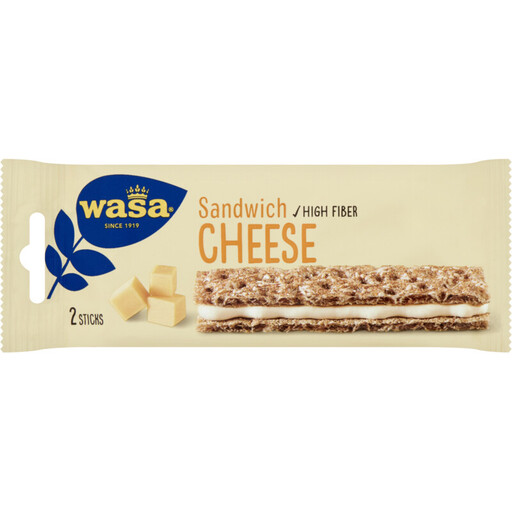
The products below include both plain crispbread and a filled crispbread snack. Choose a plain variety if you want to add your own toppings; the cheese sandwich is another option if you’d prefer a filled snack to take with you. When comparing sugar content, always check the nutrition information on the latest packaging.
 No image available
A filled crispbread snack for anyone who doesn’t want to take their own toppings. The pack contains three 31 g portions; check the sugars and salt on the latest label, and check the allergens if they’re relevant to your choice.
 No image available
A plain option to consider if you want to compare fibre as well as sugars. The pack is 300 g; before buying, check the salt content and the ingredients and allergen information too.
 No image available
A plain crispbread base for anyone who wants to choose their own toppings. The pack is 215 g; compare the sugars and salt per 100 g on the label, and check the information about rye and any other relevant allergens.
 No image available
A wholegrain crispbread base for anyone who wants to take fibre into account when choosing. The pack is 265 g; before comparing sugars and salt, check what quantity the values on the label refer to. Check the allergens too.
 No image available
A wholegrain crispbread base for anyone who wants to put together their own snack. The pack is 375 g; check what quantity the sugar and salt values on the label refer to. If you have allergies, carefully read the latest ingredients and allergen information, particularly the information about egg and milk.
No. A claim refers to the property it mentions, not the full nutritional value. As well as checking ‘of which sugars’, look at the fibre and salt values, the ingredients and how much you plan to eat.
No, these are different nutrition claims. The Netherlands Food and Consumer Product Safety Authority emphasises that such claims must be accurate. Use the nutrition information per 100 g and the portion size to compare products for your needs.
Not without checking the label. The Wasa and Jumbo varieties described contain wheat, rye or other gluten-containing grains. Check the latest ingredients and allergen information for each variety.
No, you can’t assume that. According to the Netherlands Nutrition Centre, bakers aren’t required to use baker’s salt. If this matters to your choice, check the ingredients of the specific crispbread.
Keep it dry and pack moist toppings separately until you’re ready to eat. Also follow the storage instructions on the packaging of the variety you take with you.