What should you look for when buying?
Compare crispbread within the same product category using the nutritional information per 100 g. Then decide whether your chosen variety works as a lunch base and whether guests can access the allergen information.
| What to consider |
What to check when buying |
Who is this most important for? |
| Sugar content and claim |
Check ‘of which sugars’ per 100 g. If a product claims ‘reduced sugar’, ask what it is being compared with; don’t confuse this claim with ‘low sugars’. |
If I want to offer less sugar in the canteen, I need to know how much sugar the chosen variety actually contains. This is the main priority for around 33% of consumers. |
| Fibre and how it works for lunch |
Compare fibre per 100 g and check the wholegrain ingredients. Check sugars and salt in the same nutrition table. |
For a lunch with toppings, I’m looking for crispbread that works as a base, not just a product with a prominent sugar claim. Around 42% of consumers give this lunch base top priority. |
| Allergens and serving |
Check the current label for each variety and its toppings. If products are served unpackaged, make allergen information accessible before purchase. |
When I eat in the canteen, I need to be able to check in advance whether the product and toppings on offer are suitable for me. This is the main concern for around 25% of consumers when making this choice. |
Brands to consider
Always compare the specific variety you’re considering: nutritional information, ingredients and allergens can differ between product ranges.
Jumbo
Jumbo Knäckebröd Volkoren is an example to consider if your canteen is looking for a larger pack: Jumbo lists a 375 g pack with 25 portions.
- For this variety, Jumbo lists 2.4 g of sugars, 10.9 g of fibre and 0.71 g of salt per 100 g.
- The product information lists wheat and rye as ingredients and declares allergens, including cereals containing gluten; also check the information on possible sesame traces.
Bolletje
Bolletje wholegrain high-fibre crispbread is a useful example for comparing wholegrain varieties.
- Albert Heijn lists 14 g of fibre and 1.5 g of sugars per 100 g for this variety.
- Albert Heijn also lists 0.97 g of salt per 100 g. Check the allergen information, including for cereals containing gluten and sesame.
Wasa
The range shown by Albert Heijn includes Wasa Wholegrain, High Fibre, Sesame and Sourdough Rye varieties.
- The different varieties offer a way to compare ingredients and nutritional information for each product.
- When buying, use the label for the specific variety, particularly for sugars, salt and allergens.
Ryvita
Ryvita Original is a rye crispbread for which the manufacturer publishes a UK product specification.
- That specification lists 2.4 g of sugars, 13.4 g of fibre and 0.75 g of salt per 100 g.
- Rye contains gluten, and the manufacturer notes the possible presence of other sources of gluten and sesame. If buying in the Netherlands, check the variety available and its current label.
Albert Heijn
Albert Heijn’s category page features both its own-brand products and a range of crispbread brands and varieties.
- Wholegrain, sesame and sourdough are examples of different product types you can explore separately.
- A category overview is no substitute for checking the nutritional information and allergen declaration for the product your canteen actually chooses.
Crispbread and snacks on Joybuy
This selection includes crispbread that can be used as a base for toppings, as well as a filled snack in individual portions. Before buying, check whether the nutritional information and allergens for each variety are suitable for your canteen offering.
 Image unavailable
Wasa High-Fiber Crackers, 300 g
An option to consider as a base for a canteen lunch with toppings. Before choosing this variety, compare the sugars, fibre and salt per 100 g on the current label.
Also check the allergen information if you serve the crispbread unpackaged.
View on Joybuy
 Image unavailable
Wasa Rustic Crispbread, 215 g
Worth considering as crispbread for a lunch with toppings. If these figures are important to your choice, check the label for fibre and salt per 100 g as well as sugars.
Read the ingredients and allergen information on the current pack before serving it to guests.
View on Joybuy
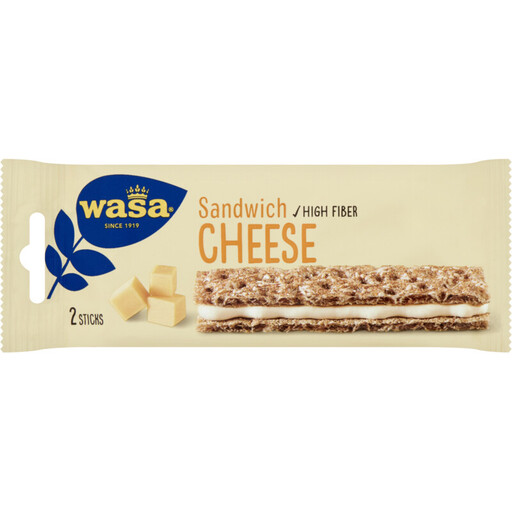 Image unavailable
Wasa Cheese Sandwich, 3 x 31 g
A filled snack in individual portions, rather than plain crispbread that guests can top themselves. Assess the nutritional information for the complete product.
Check the allergens in both the crispbread and the cheese filling before serving.
View on Joybuy
 Image unavailable
g'woon Wholemeal Crispbread, 375 g
A wholemeal crispbread to consider as a lunch base. When comparing it with other varieties, check that the label gives sugars and salt per 100 g.
Take the current ingredients and allergen information into account if you plan to serve it unpackaged.
View on Joybuy
 Image unavailable
Bolletje Whole Grain Crispbread, 265 g
A wholegrain variety to compare if you’re looking for crispbread as a base for toppings. Check sugars, fibre and salt on the current label, all per 100 g.
Check the allergen information for this pack separately from that of other Bolletje varieties.
View on Joybuy
Frequently asked questions
Does ‘reduced sugar’ mean the same as ‘low sugars’?
No. Under European rules on nutrition claims, solid foods can only be labelled ‘low sugars’ if they contain no more than 5 g of sugars per 100 g. A ‘reduced sugar’ claim, meanwhile, requires a reduction of at least 30% compared with a similar product. Check the nutrition table, and if a reduction claim is made, ask which product is used as the reference.
Does a workplace canteen have to provide allergen information for unpackaged crispbread?
Yes. The Netherlands Food and Consumer Product Safety Authority says consumers must also be able to obtain allergen information for non-prepacked foods. Make sure this information is accessible before purchase for both the crispbread and its toppings. If it is provided verbally, guests must be clearly told that they can ask for it.
Does all crispbread in the Netherlands contain iodine?
You can’t tell from the product category alone. Dutch rules on iodine in baker’s salt do not confirm which individual varieties are made with it. Check the current label or ask the supplier about the variety you’re considering.
How should you store an opened pack of crispbread in the canteen?
Follow the storage instructions on the pack you’ve chosen. For its Knäckebröd Volkoren, Jumbo advises storing it in a cool, dry place and closing the pack securely after opening. When serving it, also keep the product information available for guests who want to check the ingredients or allergens.


