If you’re choosing a lower-sugar cracker to have with your coffee, start by comparing similar products on ‘of which sugars’ per 100 g, then check the salt, ingredients and allergens. Jumbo lists 0.3 g of sugars per 100 g for its Organic Wholegrain Crackers; Albert Heijn lists 2.8 g per 100 g for Bolletje Protein & Low Carb Crackers. So a low-carb claim answers a different question from the sugar content, and what you put on your cracker matters too.
Who is this comparison useful for?
Coffee drinkers keeping an eye on sugar
You want to compare crackers with sweeter snacks to enjoy with your coffee. Check ‘of which sugars’ per 100 g and include any toppings in your choice. The Netherlands Nutrition Centre recommends comparing the nutritional values of similar products per 100 g.
If you’re also considering fibre or protein
You’re looking for an afternoon snack and don’t want to choose based on sugar alone. The nutrition table lets you compare fibre and protein separately; claims on the front of the pack are no substitute for these values.
If you’re watching your carbohydrate intake
You’re comparing crackers by their carbohydrate content as part of your own eating habits. Check ‘of which sugars’ too: these are separate values in the nutrition information.
What should you look for when choosing?
Start by comparing the nutritional values per 100 g of similar crackers. Then decide which other factor matters most for your coffee break, such as fibre, salt or carbohydrates.
| What to consider | What to check | Who it matters to |
|---|
| Sugars |
Compare ‘of which sugars’ per 100 g; check the ingredients list too if you’re also looking out for added sugars. |
I mainly want to compare the sugar content of crackers to have with my coffee. This is the top priority for around 40% of consumers. |
| Fibre and protein |
Compare fibre, protein and sugars per 100 g, and consider the portion you eat with your toppings. |
When choosing an afternoon snack, I want to consider fibre or protein as well as sugar. These are the top priority for around 30% of consumers. |
| Ingredients and allergens |
Check the latest ingredients and allergen information, and compare the salt content per 100 g. |
I want to know whether a cracker suits my preference for wholegrain ingredients or avoids the allergens I need to watch out for. The ingredients are the deciding factor for around 20% of consumers. |
| Carbohydrates |
Compare carbohydrates per 100 g and check ‘of which sugars’ separately. |
If I want to take carbohydrates into account, a low sugar content alone doesn’t tell me enough. That’s why around 10% of consumers put carbohydrates first. |
Common mistakes
-
Assuming ‘low carb’ means ‘low sugar’
A claim about carbohydrates doesn’t tell you how much sugar a cracker contains. Albert Heijn lists 15 g of carbohydrates and 2.8 g of sugars per 100 g for Bolletje Protein & Low Carb Crackers.
Compare the two values separately, depending on what you want to take into account.
-
Looking only at the sugar content
A low sugar content on its own says nothing about the salt content or whether a product is suitable if you have an allergy. Alongside 0.3 g of sugars, Jumbo lists 0.98 g of salt per 100 g for its Organic Wholegrain Crackers.
As well as the nutritional values, check the ingredients and allergen information on the latest packaging.
-
Leaving toppings out of the comparison
The nutritional value of a cracker doesn’t automatically reflect your whole coffee break if you add toppings or put something in your drink.
Consider the cracker and anything you have with it as separate parts of your choice.
-
Relying on a product page you viewed earlier
Ingredients and nutritional values can change. Albert Heijn notes in its product information that the packaging is the definitive source.
Check the nutritional information again when you buy the product, as well as the allergen statement if it’s relevant to you.
Brands and ranges to explore
Values vary between crackers within these ranges. So compare specific products rather than relying on brand names or claims on the packaging.
Bolletje
The range includes breakfast crackers and varieties with low-carb or high-protein claims.
- Albert Heijn lists 2.8 g of sugars, 17 g of fibre and 35 g of protein per 100 g for Bolletje Protein & Low Carb Crackers.
- The low-carb claim doesn’t tell you which cracker in this comparison has the lowest sugar content.
Albert Heijn
The AH Thin Wholegrain Crackers own-brand product gives you a specific label to use when comparing wholegrain crackers.
- Albert Heijn lists 1.6 g of sugars and 13 g of fibre per 100 g for this variety.
- Albert Heijn recommends checking the latest packaging if product information changes.
Jumbo
The own-brand range includes organic wholegrain crackers and hearty wholegrain crackers with seeds.
- Jumbo lists 0.3 g of sugars per 100 g for Organic Wholegrain Crackers and 1.2 g per 100 g for Hearty Wholegrain Crackers with Sesame and Linseed.
- The organic wholegrain variety also lists 0.98 g of salt per 100 g, so compare salt separately from sugar.
Goud Gebakken (ALDI)
ALDI’s own-brand range includes low-carb crackers, rye crackers and crispbread.
- ALDI lists 1.2 g of carbohydrates per cracker for Goud Gebakken Low Carb Crackers.
- If you’re comparing sugar content, you’ll also need the ‘of which sugars’ value per 100 g from the packaging.
Lidl
Lidl offers Crackers luchtig in a plain variety and a variety labelled high-fibre.
- Lidl lists a 250 g pack for this product, available in two varieties.
- To choose based on sugar content, compare the nutritional information for the specific variety.
Crackers and snacks on Joybuy
This selection includes rye, matzo and seasoned crackers, plus a ready-made sandwich variety to have with your coffee. A filled sandwich isn’t directly comparable to a plain cracker without toppings; check the latest nutritional information per 100 g for each product.
 Image unavailable
Wasa Sourdough Rye crackers, 235 g
A rye cracker to compare with other crackers to have with your coffee.
235 g pack. Check the latest label for sugars, salt and any allergens.
View on Joybuy
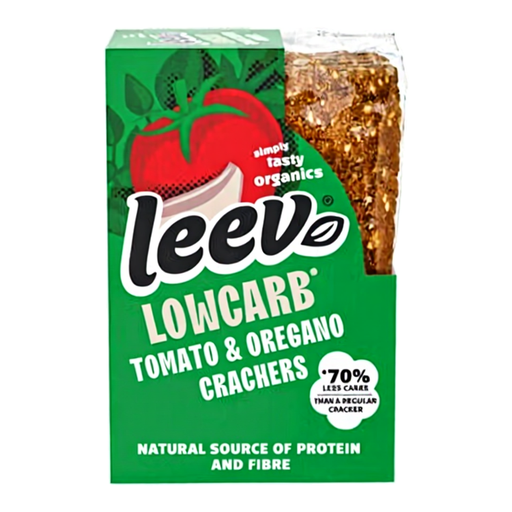 Image unavailable
Leev Organic Low-Carb Tomato Oregano crackers, 80 g
A seasoned cracker for anyone who also wants to keep an eye on carbohydrates with their coffee.
80 g pack. Check carbohydrates and ‘of which sugars’ separately, and also check the salt and allergens on the packaging.
View on Joybuy
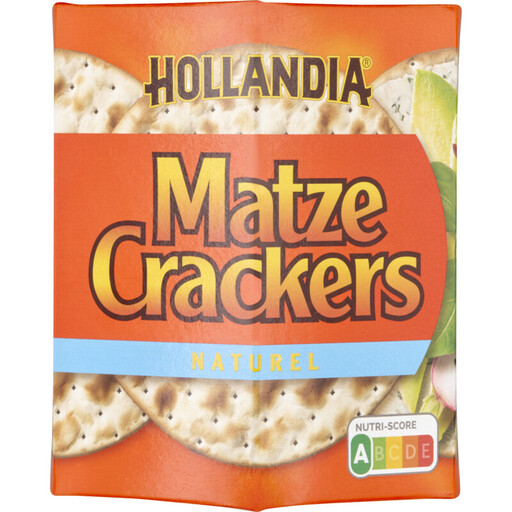 Image unavailable
Hollandia Matzo Crackers Natural, 16 stuks
Matzo crackers for anyone looking to compare a plain variety to have with their coffee.
Pack of 16. Check sugars and salt per 100 g, and refer to the latest packaging if you have allergies.
View on Joybuy
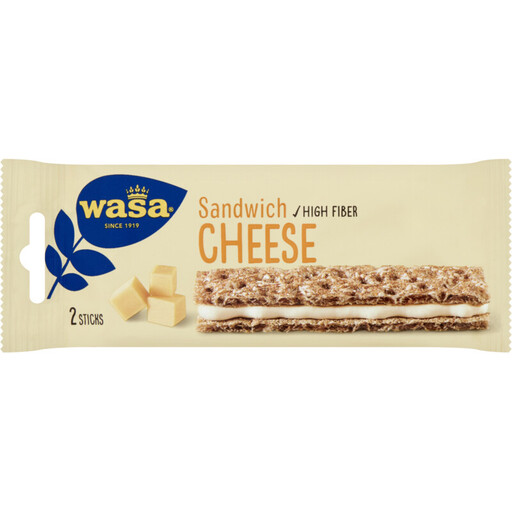 Image unavailable
Wasa Cheese Sandwich, 3 x 31 g
A ready-made sandwich variety for anyone who’d rather not choose a separate topping.
Pack of 3 x 31 g. Compare the nutritional information for the whole product, including the filling, and check the allergen statement.
View on Joybuy
 Image unavailable
Wasa High-Fiber crackers, 300 g
A cracker for anyone who wants to compare fibre and sugars when choosing something for their coffee break.
300 g pack. Check both values per 100 g, as well as the salt and allergens on the label.
View on Joybuy
Frequently asked questions
Does ‘no added sugars’ mean a cracker is low in sugar?
No. This claim doesn’t tell you how much sugar the product contains overall. The Netherlands Nutrition Centre recommends comparing ‘of which sugars’ per 100 g, and checking the ingredients list if you want to know what has been added to the product.
How do I compare crackers with different portion sizes?
Start by comparing the nutritional values per 100 g for similar crackers. The Netherlands Nutrition Centre recommends this approach because portion sizes can vary between products; then consider how much you actually eat.
Is a low-carb cracker automatically the lowest-sugar choice?
No. Carbohydrates and ‘of which sugars’ are separate values on the label. Albert Heijn lists 15 g of carbohydrates and 2.8 g of sugars per 100 g for Bolletje Protein & Low Carb Crackers. If sugar is your main priority, compare its sugar content with that of other crackers.
What should I check if I have an allergy?
Check the allergen information on the latest packaging for the specific product. The Netherlands Food and Consumer Product Safety Authority explains how allergens are labelled on food; a low sugar content tells you nothing about whether allergens are present.


