If you’re choosing lower-sugar crackers for Easter drinks, compare similar options by their sugar content per 100 g. Then check the salt, fibre, ingredients and allergens too. Plain, wholemeal and flavoured varieties suit different preferences, but their names don’t tell you how much sugar or salt they contain. The toppings matter too.
Who might find this choice relevant?
Those keeping an eye on sugar at Easter drinks
You want to compare the sugar content of crackers. The Netherlands Nutrition Centre recommends comparing similar products using the nutritional information per 100 g, rather than relying on the front of the pack alone.
People who pay attention to fibre
You’re looking for a crispy base for toppings and want to take fibre into account too. A label such as ‘wholemeal’ or ‘multigrain’ is a reason to check the packaging, not a substitute for doing so.
Hosts checking for allergens
You’re serving crackers to guests and check the ingredients and allergens for the exact variety before buying. If someone has an allergy, check for any warnings about cross-contamination too.
What should you look for when choosing?
Start by comparing the sugar content per 100 g of similar crackers. Then choose between plain, wholemeal and flavoured varieties by comparing salt, fibre and ingredients too. If you’re serving guests, remember to check the toppings as well.
| What to consider |
What to check before buying |
Who it matters to |
| Sugars |
For similar crackers, compare the ‘of which sugars’ value per 100 g and read the ingredients list. |
I want to choose crackers for Easter drinks without relying on a claim on the front of the pack. Lower sugar is a priority for around 29% of consumers. |
| Sugar and salt |
Compare sugar and salt per 100 g, especially when choosing between plain and flavoured varieties. |
With seasoned crackers, I don’t want to look at sugar alone, as salt matters to my choice too. Around 29% of consumers prioritise both sugar and salt. |
| Fibre |
Check the fibre per 100 g and compare sugar and salt too. Don’t decide based on the words ‘wholemeal’ or ‘multigrain’ alone. |
I’m looking for a crispy base and fibre is my main consideration. Fibre is the deciding factor for around 21% of consumers. |
| Ingredients for guests |
Check the ingredients, allergen information and any warnings on the exact pack, and check the toppings too. |
When I’m serving guests, I want to know what’s in the crackers and toppings I’ve chosen. Around 21% of consumers place the greatest importance on suitability for guests and ease of serving. |
Common mistakes
-
Relying only on a claim on the front of the pack
A term such as ‘light’ or ‘high in fibre’ doesn’t tell you how the sugar, salt and fibre compare with those in another cracker.
Compare similar products per 100 g, then read the ingredients list. The Netherlands Nutrition Centre recommends using the label as the basis for comparing products.
-
Treating a variety name as nutritional information
‘Plain’, ‘wholemeal’ and ‘multigrain’ describe a product, but they don’t tell you its full nutritional value.
Use the name to find varieties you want to compare, then check the sugar, salt and fibre on the exact pack before you decide.
-
Leaving the toppings out of the comparison
At Easter drinks, crackers are often served with toppings or a dip. Looking at the nutritional value of the cracker alone won’t give you the full picture.
Compare the crackers first, then check the ingredients and nutritional information for the toppings you plan to serve.
-
Guessing allergens from a brand name or photo
Ingredients and allergens can vary between varieties. Albert Heijn also points out that product information may change.
Just before buying, check the allergen information and any warnings on the pack of the specific variety.
Brands to consider
Van der Meulen
Jumbo lists Van der Meulen melba toast in plain, wholemeal and multigrain varieties, among others.
- These varieties give you different types of melba toast to compare by checking their labels.
- Check the nutritional information on the pack of the variety you choose; the type name doesn’t determine the nutritional values.
Albert Heijn
Its own-brand range includes AH Melba toast naturel and AH BASIC Melba Toast.
- You can compare these varieties as separate options by checking their labels.
- Albert Heijn warns that ingredients, nutritional values and allergen information may change, so check the current packaging.
Jumbo
Jumbo lists its own tomato and basil melba toast, as well as several Van der Meulen melba toast varieties.
- A flavoured variety and plainer options offer different possibilities for Easter drinks.
- A flavour name doesn’t tell you exactly how much sugar or salt a product contains; compare the labels on the exact products.
Bolletje
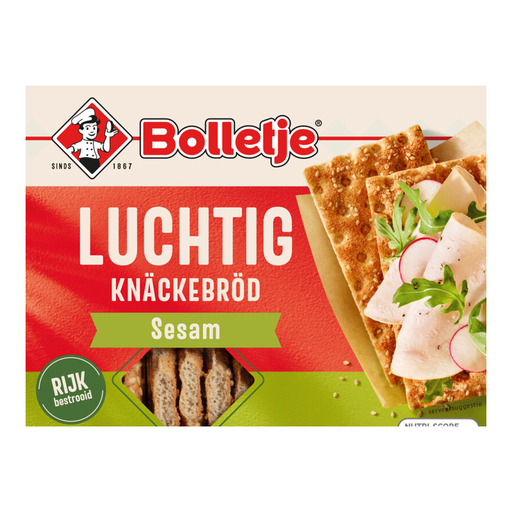
Bolletje offers rusks, crackers and crispbread, among other products. These can be crispy bases, but they aren’t necessarily the same type of product as melba toast.
- Crackers can be an alternative if you’re mainly looking for a base for toppings.
- Bolletje’s ingredients list shows that its Ciabatta Crackers Tomaat & Kruiden contain sugar and salt, among other ingredients. Check each variety individually.
Crispy alternatives at Joybuy
This crispbread makes a crispy base for toppings, but it isn’t melba toast. Compare its nutritional information with products of the same type, and don’t treat the variety name as proof that it’s suitable for someone with an allergy.
 No image available
Bolletje Light Crispbread Sesame-Free 240 g
A crispy base for toppings and an alternative to melba toast, but not a directly comparable type of cracker.
The ‘Sesame-Free’ wording in the product name conflicts with other product information that lists sesame. Don’t choose this product for someone with a sesame allergy based on the name; check the ingredients and allergens on the current packaging before buying.
View at Joybuy
Frequently asked questions
How do I compare crackers if I want less sugar?
For similar crackers, compare the ‘of which sugars’ value per 100 g in the nutrition table. Check salt and fibre too, so a claim on the front of the pack isn’t your only basis for choosing.
Is wholemeal or multigrain melba toast automatically the right choice?
No. The variety name alone doesn’t give you the full nutritional value. The Netherlands Nutrition Centre uses criteria for sugar, salt and fibre, among other things, for products included in its Wheel of Five. Check the values for the specific melba toast you’re considering.
What should I check if a guest needs to avoid an allergen?
Read the ingredients, allergen information and any warnings on the current packaging of the exact variety. Do the same for the toppings, and don’t rely on the product name or a photo alone.
How should I store opened crackers until Easter brunch?
Follow the storage advice on the pack of the crackers you’ve chosen. Before serving, check the use-by date and make sure the crackers still have their expected smell and texture.


