
Sugar-conscious host
You want to serve chocolate biscuits, but look beyond ‘zero’ or ‘less sugar’ on the front of the pack. The Netherlands Nutrition Centre recommends comparing products per 100 g.


If reducing sugar is a priority for your garden party, compare chocolate biscuits by their sugar content per 100 g and check what a claim such as ‘less sugar’ is based on. A standard sharing pack is only an alternative if reducing sugar isn’t a firm requirement. For your guests, check the ingredients and allergens on the packaging of the product you buy; according to the Netherlands Nutrition Centre, large amounts of polyols can cause digestive problems.
You want to serve chocolate biscuits, but look beyond ‘zero’ or ‘less sugar’ on the front of the pack. The Netherlands Nutrition Centre recommends comparing products per 100 g.
You want to be able to show guests the ingredients and allergens, and take into account how much they eat when serving biscuits containing polyols.
You’re looking for enough biscuits to share, without assuming that a larger pack of standard chocolate biscuits will meet your lower-sugar needs.
First, decide whether reducing sugar is a requirement. Then compare the nutritional information for suitable biscuits and check the packaging of your chosen variety before serving.
| What to consider | What to check when buying | Who it matters to |
|---|---|---|
| Less sugar | Compare the sugar content per 100 g of similar biscuits and check what any less-sugar claim is based on. | I don’t want to rely on the front of the pack alone; I want to see how the sugar levels compare. Around 40% of consumers prioritise a demonstrable reduction in sugar. |
| Ingredients and allergens | Read the allergen information and ingredients list; if the biscuits contain polyols, also look for any warnings on the packaging. | If different guests are sharing from the same plate, I want to keep the packaging handy so they can check the ingredients for themselves. Suitability for guests is a priority for around 30% of consumers. |
| How many to share | Check the pack weight and, if stated, the number of biscuits; also make sure you’ve checked the variety you’re buying. | I want to put out enough to share without mistaking a standard sharing pack for a lower-sugar product. Having enough biscuits to share is the main concern for around 20% of consumers. |
| Taste and texture | Check whether you’re choosing a biscuit with a filling, chocolate pieces or a chocolate coating; if in doubt, try a small pack first. | The type of biscuit my guests enjoy matters too, even when I’m keeping an eye on sugar. Taste and texture are the deciding factors for around 10% of consumers. |
This kind of claim compares one product with another. On its own, it doesn’t tell you how much sugar the biscuit contains per 100 g or what ingredients it contains.
Compare the nutrition tables of similar biscuits and check what the claim is being compared with.
The Netherlands Nutrition Centre says that large amounts of polyols can cause digestive problems. This is worth bearing in mind when guests are helping themselves to biscuits from a plate.
Read the ingredients and keep the packaging, including any warnings, available for guests.
A product name doesn’t tell you which allergens or other ingredients are in the variety you buy. Albert Heijn also warns that online product information can change.
Check the nutritional information and allergens on the packaging of the exact variety you’re serving.
Jumbo lists Céréal Minder Suikers Choco Delight Puur 126 g as a biscuit with less sugar than a comparable product.
Albert Heijn lists Verkade San Francisco zero. The product name alone doesn’t confirm that this variety is a chocolate biscuit.
Albert Heijn lists AH Digestive 0% suiker. A digestive biscuit isn’t necessarily a chocolate biscuit.
Jumbo has a chocolate biscuit category and also lists the Céréal variety with less sugar.
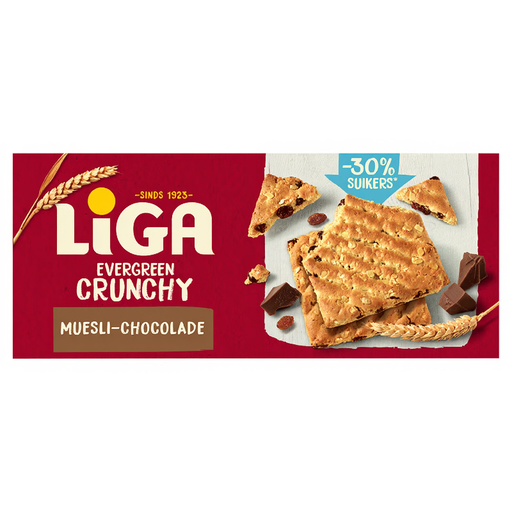
This standard option is worth considering if reducing sugar isn’t a firm requirement. Don’t treat it as a lower-sugar product without comparing its sugar content with that of a suitable chocolate biscuit.
 No image available
A standard option to consider if reducing sugar isn’t a firm requirement for your garden party.
The pack contains 225 g. Before buying, compare the sugar content per 100 g on the current packaging with that of a similar product, and check the ingredients and allergens for your guests.
Compare similar biscuits per 100 g and check what any less-sugar claim refers to. The Netherlands Nutrition Centre recommends comparing products per 100 g; also read the ingredients of the varieties you’re considering.
Not on the basis of sugar content alone. Check the ingredients and allergens on the packaging of the product you buy, and let guests check that information for themselves.
Read the ingredients and any warning on the packaging before serving the biscuit. According to the Netherlands Nutrition Centre, large amounts of polyols can cause digestive problems, so keep the packaging available alongside the biscuits.
Keep the original packaging available so guests can read the allergen information for the exact product being served. The Netherlands Food and Consumer Product Safety Authority explains the mandatory labelling of 14 allergens.
Use it to shortlist products, but check the packaging of the product you actually buy. Albert Heijn says that ingredients, nutritional values and allergen information can change.