
Sugar-conscious Easter shopper
You’re looking for a chocolate biscuit for Easter and want to compare the amount of sugars per 100 g, rather than relying only on claims on the packaging.


Looking for a lower-sugar chocolate biscuit for Easter? Compare similar products by their ‘of which sugars’ value per 100 g, as recommended by the Netherlands Nutrition Centre. Then check the ingredients and allergen information, and use the value per biscuit to decide how many to serve. A lower sugar value alone tells you nothing about the energy content or whether a product suits your taste.
You’re looking for a chocolate biscuit for Easter and want to compare the amount of sugars per 100 g, rather than relying only on claims on the packaging.
You’re serving biscuits with coffee or when people visit over Easter, and want to know how many to put out. The nutritional information per biscuit can help you plan; for comparing products, the value per 100 g remains important.
You want to check which allergens or sweeteners are in the variant you’ve chosen before buying. To do this, read the information on the current packaging.
When: reducing sugar is your priority and you can compare the values per 100 g of similar products side by side.
Consider: check the ingredients and energy content too; less sugar doesn’t automatically mean fewer calories.
When: you want to serve a familiar variant to visitors and decide in advance how many biscuits to offer.
Consider: serving a smaller portion doesn’t make the product itself low in sugar. Jumbo lists 37,0 g of sugars per 100 g for its Dark Chocolate Biscuits.
| What to consider | What to check before buying | Who it matters to |
|---|---|---|
| Amount of sugars | Compare ‘of which sugars’ per 100 g across similar chocolate biscuits, then read the ingredients. | If I want less sugar, I want to be able to see the difference between products without portion sizes distorting the comparison. Around 42% of consumers prioritise this sugar comparison. |
| Portions and sharing | Check the number of biscuits, pack size and, if provided, the nutritional information per biscuit. | When people visit, I want to decide how many biscuits to put out without mistaking a portion value for a product comparison. For around 33% of consumers, the occasion for serving them comes first. |
| Ingredients and allergens | Read the current ingredients and allergen information, including if you want to check for a sweetener. | If an allergen or sweetener matters to me, I need to know what’s in this exact variant. Checking the ingredients is a priority for around 25% of consumers. |
Portion sizes can vary between manufacturers. As a result, two packs may seem comparable even when the amount of sugars per 100 g differs.
The Netherlands Nutrition Centre recommends comparing similar biscuits per 100 g first, and only then checking the amount per biscuit.
A difference in sugar doesn’t tell you everything about a biscuit’s nutritional value.
As well as ‘of which sugars’, check the energy content, saturated fat and ingredients of the exact variant.
The allergen information for one chocolate biscuit doesn’t automatically apply to another flavour or pack.
Read the current label every time you buy, even if you already know the brand.
Ingredients and nutritional values can change; Albert Heijn also points this out in its product information.
Check the packaging of the product you’re actually choosing just before you buy it.
Always compare the exact variant: information about one biscuit doesn’t mean that other products from the same brand contain less sugar.
A brand to consider when comparing familiar biscuit options for your Easter shop.
A chocolate-coated speculoos option for anyone considering a biscuit to enjoy with coffee.
A supermarket range where you can browse biscuits and specific sugar-conscious products.
A supermarket brand with chocolate biscuits and a separate sugar-conscious range.
A supermarket range to consider alongside other chocolate biscuits when doing your Easter shop.
These products are suitable for serving alongside regular chocolate biscuits or biscuit sticks. Before comparing their sugar content with alternatives, check the value per 100 g on the current packaging.
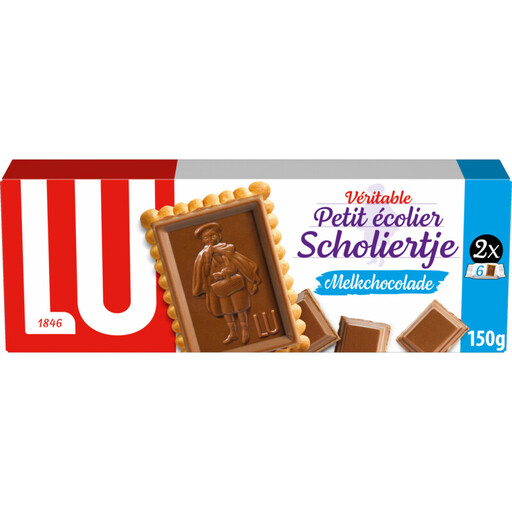 Image unavailable
A milk chocolate biscuit to serve with coffee or when people visit over Easter. The pack contains 150 g. If you’re looking for a lower-sugar option, check ‘of which sugars’ per 100 g, and read the current label if you have allergies.
 Image unavailable
Chocolate biscuit sticks for anyone looking to take along or share a different kind of biscuit. The pack contains 47 g. To compare sugar content, check the value per 100 g on the current packaging and read the allergen information.
First compare similar chocolate biscuits by their ‘of which sugars’ value per 100 g. The Netherlands Nutrition Centre explains that a value per portion can be confusing when comparing products; use the value per biscuit afterwards to plan how many to serve.
No, they’re different nutrition claims. Read the exact wording on the packaging and check how many sugars the product contains per 100 g. Don’t treat a description such as ‘sugar-conscious’ as a substitute for this nutritional information.
Not necessarily. First check which ingredients you’re happy to consume and compare the products’ nutritional values. According to the Netherlands Nutrition Centre, any sweetener used will be listed on the label; its presence alone doesn’t mean the biscuit contains fewer calories.
You can’t tell from the sugar value alone. Check the allergen information for the exact variant on the current packaging, even if you’ve bought a similar biscuit before.
Store the biscuits in a well-sealed pack in a cool, dry, dark place, as the Netherlands Nutrition Centre recommends for sugar-free biscuits. Also follow the storage advice on the packaging of the product you’ve bought.