
People keeping an eye on sugar content
You’re looking for biscuits whose nutritional information lists 0 g of sugars per serving or per 100 g. Also check the total carbohydrate content and any polyols.


First decide which sugar claim suits your needs, then compare the nutritional information: biscuits with no added sugar can still contain sugars. For your holiday bag, also check portion sizes, storage advice, polyols and allergens. A low sugar content does not automatically make biscuits a complete breakfast.
You’re looking for biscuits whose nutritional information lists 0 g of sugars per serving or per 100 g. Also check the total carbohydrate content and any polyols.
You want to avoid added sugar, but don’t assume that a claim such as ‘zero’ means 0 g of sugars. Biscuits for on-the-go snacking are not automatically a substitute for breakfast either.
For example, you may need to look out for milk, soya, cereals containing gluten or other allergens, or you may be looking specifically for a vegan or lactose-free option. Check which sweeteners are listed on the pack you choose, too.
First decide whether you’re looking for 0 g of sugars or mainly want to avoid added sugar. Then check that the packaging and ingredients suit how you plan to use the biscuits.
| What to look for | What to check before buying | Who it matters to |
|---|---|---|
| Sugars and carbohydrates | Compare the claim on the pack with the ‘of which sugars’ figure and total carbohydrates, both per 100 g and per serving. | If I want 0 g of sugars, ‘no added sugar’ alone isn’t enough to make my choice. For around 40% of consumers, checking sugars and carbohydrates comes first. |
| Portions and storage | Check the serving size, pack size, nutritional information per biscuit and storage advice for the option you choose. | For a day bag, I want to know how many biscuits to take and how to store an opened pack. Around 30% of consumers give this practical use the highest priority. |
| Ingredients and dietary requirements | Read the latest ingredients and allergen information. If the biscuits contain polyols, check the warning on the pack as well. | If a biscuit needs to meet my ingredient requirements, I can’t rely on the sugar claim or brand name. Around 30% of consumers put suitability first. |
Albert Heijn lists both 0% added sugar and 1.7 g of sugars per 100 g for Verkade San Francisco Zero. The name AH Digestive 0% suiker doesn’t mean its nutritional information shows 0 g either: Albert Heijn lists 0.3 g of sugars per 100 g.
As well as checking the claim on the front, always read the ‘of which sugars’ figure for the exact option you’re buying.
Several of the biscuits mentioned contain maltitols. For AH Digestive 0% suiker, Albert Heijn warns that excessive consumption may have a laxative effect.
Check the ingredients, the amount of polyols listed and any warnings, especially if you’re packing biscuits for a day out.
The amount of sugars doesn’t tell you how much energy, fat or fibre a biscuit contains. A low sugar content therefore doesn’t automatically make it a complete breakfast.
If you plan to have the biscuit at breakfast or as a snack, compare the nutritional information and serving size.
According to Albert Heijn’s product information, Verkade San Francisco Zero contains wheat, milk and soya. Ingredients and allergens can vary between options.
Read the allergen declaration on the current pack of the biscuits you’re actually taking with you.
Céréal offers several types of biscuits with sugar-related claims at Albert Heijn or Jumbo. Compare each option individually.
AH Digestive 0% suiker is a supermarket own-brand biscuit for anyone comparing the nutritional information and ingredients of a larger pack.
Verkade San Francisco Zero is worth considering if your main concern is whether sugar has been added, rather than finding a biscuit with 0 g of total sugars.
This biscuit may suit you if you’re mainly looking at claims about added sugar. It isn’t suitable if you’re looking for 0 g of sugars per 100 g; also check the age group specified.
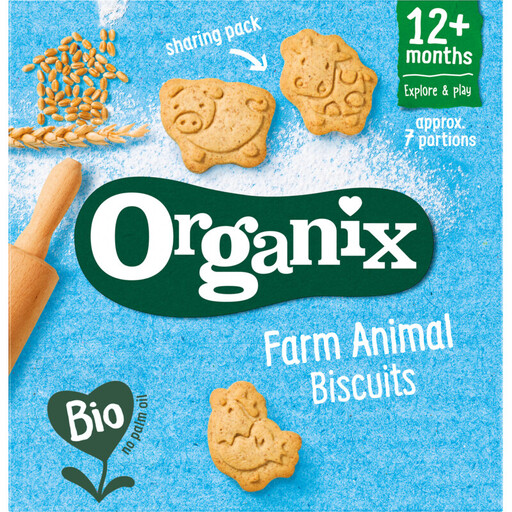 Image unavailable
The product description is aimed at children aged 12 months and over and uses the claim ‘no added sugar’. However, the nutritional information lists 18 g of sugars per 100 g. Check the serving size on the current pack before assessing how much you’re having at each sitting.
No. Albert Heijn lists Verkade San Francisco Zero as having 0% added sugar, but also 1.7 g of sugars per 100 g, which the product page says are naturally occurring. Check the nutrition table for the amount of sugars in the option you choose.
Not on the basis of sugar content alone. Compare the serving size and other nutritional information, including fibre and fat, rather than treating a biscuit as a breakfast substitute because of a single claim.
This warning may appear on biscuits containing polyols such as maltitols. For AH Digestive 0% suiker, Albert Heijn says excessive consumption may have a laxative effect. Read the ingredients and warnings on the specific pack.
Follow the storage advice for the option you choose and seal any opened pack. Albert Heijn advises storing AH Digestive 0% suiker in a cool, dark and dry place and keeping it in a sealed tin after opening. Verkade San Francisco Zero should be stored in a cool, dry place.
Check the allergen information on the current pack of every option you choose. Ingredients vary: for example, Albert Heijn lists wheat, milk and soya for Verkade San Francisco Zero, while AH Digestive 0% suiker contains wheat.