
If you’re looking to cut down on sugars
You compare the listed amount of sugars in biscuits or breakfast cake, then check whether the ingredients and portion size suit your preferences.


Choose a biscuit with no sugars if the amount of sugars listed is your main priority, or a lower-sugar option if you’re looking for a specific reduction compared with a similar product. Either way, compare the nutritional information and ingredients: a sugar claim doesn’t tell you how much energy, carbohydrate or fibre a portion contains. For a weekend breakfast, a biscuit is better as an extra than as the only part of your meal.
You compare the listed amount of sugars in biscuits or breakfast cake, then check whether the ingredients and portion size suit your preferences.
You don’t want to rely solely on a biscuit’s sugar claim. You also want to check the fibre content and pair the biscuit with other breakfast foods.
You pay attention to sweeteners, polyols, allergens or total carbohydrates. In that case, the current ingredients list and nutritional information matter more than the wording on the front of the pack.
First decide whether you’re mainly looking for less listed sugar, a more varied breakfast or clear information about specific ingredients. Then compare products per 100 g and consider how much you’ll actually eat.
| What to consider | What to check when buying | Who is this important for? |
|---|---|---|
| Listed sugars | Compare ‘of which sugars’ per 100 g and per portion; for ‘less sugar’ claims, check what the product is being compared with. | If I want a biscuit with breakfast but also want to limit sugars, the nutritional information is more useful than just the claim on the front. Around 42% of consumers prioritise the amount of sugars listed. |
| Where the biscuit fits into breakfast | Check the fibre and ingredients, and decide what other foods will be part of your breakfast. | A biscuit on its own isn’t enough for me if I also want a wholegrain product or other breakfast foods with my weekend breakfast. For around 33% of consumers, the make-up of the whole breakfast comes first. |
| Ingredients and tolerance | Read the ingredients, allergens and any warnings; also check total carbohydrates and polyols. | If I need to avoid certain ingredients or don’t tolerate them well, the packaging helps me decide whether an option is suitable. This check is a priority for around 25% of consumers. |
‘Less sugar’ describes a comparison; ‘no sugars’ doesn’t tell you how much energy, fat or fibre a product contains. For example, Jumbo says its Ontbijtkoek Minder Suiker has 30% less sugar than its own plain version, while Jumbo lists 0 g sugars and 427 kcal per 100 g for Céréal Kokos.
Compare the nutritional information per 100 g, then consider the portion you plan to eat.
The AH Ontbijtkoek zero product reviewed contains xylitol; Albert Heijn warns that excessive consumption may have a laxative effect. The ingredients list is also important for biscuits containing other polyols.
If you’re sensitive to these ingredients, check which sweeteners and warnings are shown on the packaging.
A lower sugar content doesn’t make a biscuit a complete breakfast with all the components you consider important. Voedingscentrum (the Netherlands Nutrition Centre) includes wholegrain products among its breakfast recommendations.
Decide how the biscuit will fit alongside, for example, a wholegrain product, yoghurt and fruit, rather than judging the biscuit on its own.
Lotus Biscoff describes its 6-grain version in terms of the grains used. That description alone doesn’t tell you how much sugar the biscuit contains.
Check the ingredients and the ‘of which sugars’ line in the nutritional information separately.
Albert Heijn offers products including AH Ontbijtkoek zero; breakfast cake is not the same product as a biscuit.
Jumbo sells Ontbijtkoek Minder Suiker in individually wrapped bars.
Céréal offers biscuit varieties with different sugar claims, including Zonder Suikers Kokos.
ALDI describes Koek & Bakker Gesneden Ontbijtkoek Zero as breakfast cake with no added sugars.
Lotus Biscoff offers a 6-grain version of its speculoos biscuits.
These Joybuy products are crackers, not lower-sugar biscuits or breakfast cake. They’re an option if you’d like to build your weekend breakfast around a cracker and have a biscuit as an extra.
 Image unavailable
A cracker for anyone looking for a crisp base for breakfast rather than a sweet biscuit. If they affect your choice, check the nutritional information and allergens on the packaging.
 Image unavailable
A rye cracker if you’d like a different breakfast base from a sweet biscuit. When buying, compare its nutritional information and ingredients with those of the other crackers.
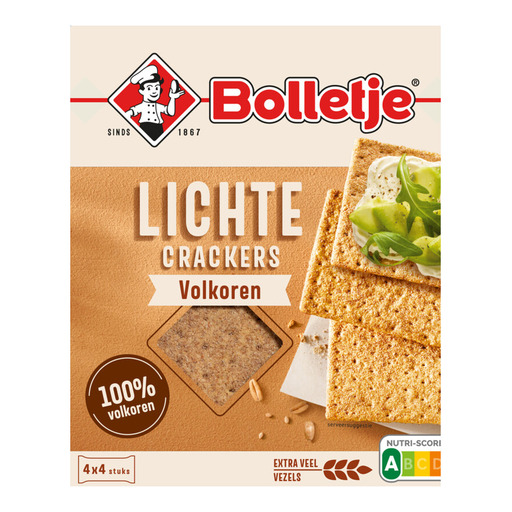 Image unavailable
A cracker for anyone putting together a breakfast with a crisp base. Check the nutritional information and ingredients on the packaging to understand what ‘Light Whole Grain’ means; it isn’t a sugar claim.
No, it’s a comparison with another product. Jumbo states that Ontbijtkoek Minder Suiker contains 30% less sugar than its own plain version. Also check ‘of which sugars’ per 100 g and per portion to assess the amount in the bar you choose.
No, a sugar claim doesn’t describe the make-up of your whole breakfast. Check the rest of the nutritional information too, and decide how the biscuit fits alongside other breakfast foods.
Read the ingredients and any warning about polyols on the packaging. Albert Heijn warns that its Ontbijtkoek zero may have a laxative effect if consumed in excess. If you’re also monitoring carbohydrates, check the full nutritional information.
No, ‘6 grains’ doesn’t mean that a biscuit contains less sugar or is made entirely from wholegrain flour. Voedingscentrum (the Netherlands Nutrition Centre) distinguishes between a wholegrain claim and general descriptions of grains on biscuits. Check the ingredients and sugar content separately.
Check the current packaging of the version you’re buying, especially for ingredients, allergens and nutritional values. Product information can change, so an earlier listing may not match the pack you have.