
Adults who want to limit sugar intake
You’re looking for a biscuit with a low stated sugar content per 100 g. You also want to know which sweeteners it contains and what warnings and allergen information appear on the packaging.


For the Sinterklaas arrival procession, first compare the sugar content per 100 g, then decide which type of biscuit is right for handing out. Biscuits with very low declared sugar levels may contain polyols; a more traditional treat labelled ‘less sugar’ may still contain a considerable amount of sugar. For either option, check the current packaging for ingredients, allergens and warnings.
You’re looking for a biscuit with a low stated sugar content per 100 g. You also want to know which sweeteners it contains and what warnings and allergen information appear on the packaging.
You want to hand out something reminiscent of speculoos or syrup waffles, but you also assess a ‘less sugar’ claim against the product it’s compared with and the nutritional information.
You want to know how many biscuits you can hand out and have the latest allergen information to hand. A claim on the front of the pack isn’t enough.
The Netherlands Nutrition Centre recommends comparing nutritional values per 100 g. When choosing biscuits for the procession, also consider the flavour, serving size and ingredients listed on the packaging.
| What to consider | What to check when buying | Who it matters to |
|---|---|---|
| Sugar content | Compare ‘of which sugars’ per 100 g for similar biscuits. Also check which sweeteners or polyols have been used. | If I mainly want to offer biscuits with little sugar, I look beyond the wording on the front of the pack. For around 33% of consumers, the lowest stated sugar content is the top priority. |
| Festive flavour with reduced sugar | Check which standard product the reduction is compared with and read the sugar content per 100 g. | For the procession, I want a familiar style of biscuit, but I also want to know exactly what ‘less sugar’ means. Around 27% of consumers say this combination is their top priority. |
| Handing out and portions | Check the number of biscuits, the weight of each one and whether individual wrapping is needed for your event. | When I’m handing biscuits out to a group, I want to work out in advance how many I’ll need. For around 20% of consumers, ease of handing out is the top priority. |
| Ingredients and allergens | Read the current ingredients list, the stated allergens and any warnings; keep the pack available while handing out the biscuits. | If guests need to avoid certain ingredients, I want to be able to show them the packaging. For around 20% of consumers, checking this information matters most. |
A low sugar content doesn’t tell you how much energy or fat a biscuit contains. Albert Heijn lists AH Digestive 0% suiker as containing 0.3 g of sugars, as well as 465 kcal and 20 g of fat per 100 g.
Compare the nutritional values per 100 g, then decide what portion you want to hand out.
According to Albert Heijn, its reduced-sugar butter syrup waffles contain 32% less sugar than the standard AH butter syrup waffles. The reduced-sugar version still contains 23 g of sugars per 100 g.
Check both the product used as the comparison and the absolute sugar content. If you want to choose syrup waffles, compare them with other syrup waffles.
Biscuits with low declared sugar levels may contain polyols. Jumbo lists 29 g of polyols per 100 g for Céréal Speculoos with almond; Albert Heijn warns that excessive consumption of AH Digestive 0% suiker may have a laxative effect.
Read the ingredients and warnings on the pack before buying or handing out large quantities.
According to Jumbo, the Céréal speculoos variety contains, among other things, wheat, almond, soya, egg, milk and barley. The sugar content doesn’t tell you which allergens are present.
Use the current allergen information on the packaging and make it easy for visitors to access.
These examples show a range of treats and claims; not every product mentioned is a lower-sugar biscuit. Always check the specific variety you’re planning to buy.
The AH range includes both a digestive biscuit with a very low stated sugar content and a syrup waffle with a relative sugar reduction.
Jumbo stocks Céréal biscuits in a range of flavours and sugar levels. The speculoos variety has a flavour that suits the Sinterklaas theme.
Goud Gebakken Koekhappers Less Sugar are worth considering if you want to hand out biscuits individually.
Lidl lists Ontbijtkoek zero in a 485 g pack as an in-store product. Ontbijtkoek is a different product category from the biscuits that are the main focus here.
Lotus Biscoff speculoos is a familiar style of biscuit for the procession, but it isn’t a reduced-sugar option.
If you’re looking to hand out six biscuit bars at the procession, this pack is worth considering. Compare the nutritional information on the pack before choosing it because of the ‘Less Sugar’ claim; biscuit bars aren’t the same as the biscuits and speculoos biscuits mentioned above.
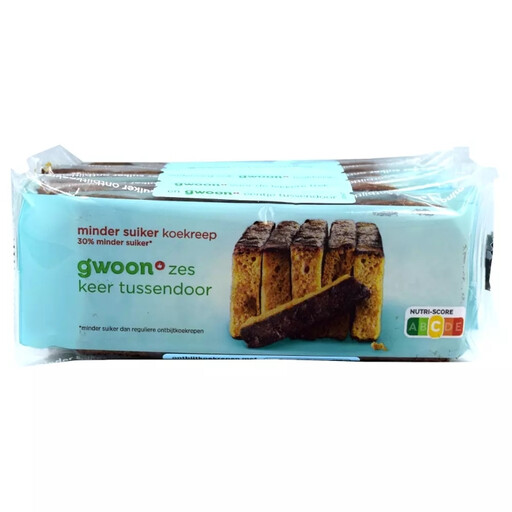 Image unavailable
A pack to consider if you want to hand out six biscuit bars at the procession.
Check the sugar content per 100 g, ingredients and allergens on the pack. Also find out what ‘Less Sugar’ is compared with and whether the bars are individually wrapped, if that matters for handing them out.
First compare the ‘of which sugars’ figure per 100 g for similar types of biscuit. The Netherlands Nutrition Centre recommends using this basis to compare labels. Also check the other nutritional values, ingredients and the portion size you plan to hand out.
No, you can’t tell from the name alone. Albert Heijn lists AH Digestive 0% suiker as containing 0.3 g of sugars, 465 kcal and 20 g of fat per 100 g. So assess sugar and energy separately.
Read the ingredients list and any warnings on the current packaging. Albert Heijn warns that excessive consumption of AH Digestive 0% suiker may have a laxative effect. Keep the pack available if you’re handing out the biscuits.
Check the allergen information and any details about the possible presence of other allergens on the current packaging. The Netherlands Food and Consumer Product Safety Authority says allergens must be clearly stated on labels. A lower sugar content doesn’t tell you whether the product contains allergens such as wheat, milk or nuts.