
Parents who want to compare sugars
They’re looking for a biscuit for the school break and want to understand what a claim such as ‘less sugar’ or ‘no added sugars’ means for the nutritional value of the portion they choose.


When choosing a biscuit for school, don’t focus on the sugar claim alone. Compare ‘of which sugars’ per 100 g and per portion you’ll pack, and check whether the packaging is practical for break time. According to the Netherlands Nutrition Centre (Voedingscentrum), ‘no added sugars’ doesn’t automatically mean sugar-free or low-calorie. Before packing it, check the allergens, any sweetener warnings and the school’s rules.
They’re looking for a biscuit for the school break and want to understand what a claim such as ‘less sugar’ or ‘no added sugars’ means for the nutritional value of the portion they choose.
An individually wrapped bar or a small pack can make packing easier. The number of pieces and the weight per pack are still important when deciding on a portion.
For them, gluten, other allergens and any sweetener warnings are all factors to consider before putting a biscuit in the school bag.
Start with the ingredients that matter for your child and the school’s rules. Then compare the sugars per portion and decide whether that portion is practical to pack.
| What to consider | What to check before buying | Who it matters to |
|---|---|---|
| Sugar claim and nutritional value | Compare ‘of which sugars’ per 100 g and per portion you’ll pack. If the product claims ‘less sugar’, check what it is being compared with. | If I want to pack less sugar, I don’t want to rely on the wording on the front alone. Around 31% of consumers prioritise this comparison. |
| Portion for the school bag | Check how many pieces and grams are in a pack, and whether the bars or biscuits are individually wrapped. | For a short break, I want to be able to pack an appropriate amount without splitting up a large pack at home. For around 25% of consumers, choosing the right portion matters most. |
| Allergens and school rules | Read the allergen information for the exact variant and check what rules the school or class follows. | If certain ingredients need to be avoided or the class has rules about handing out food, I need to know before packing it. This is the main concern for around 25% of consumers. |
| Sweeteners and other nutritional information | Check the ingredients and product warnings. Take the portion size and other nutritional information into account too. | I want to know whether a significant reduction in sugar means the product contains sweeteners, and whether I’d rather pack something else. Around 19% of consumers prioritise this consideration. |
According to the Netherlands Nutrition Centre (Voedingscentrum), ‘no added sugars’ doesn’t automatically mean a product is sugar-free or low-calorie. A claim on the front also doesn’t tell you how much sugar is in the portion you’ll pack.
Compare the ‘of which sugars’ line in the nutrition table and read the ingredients list for the exact variant.
If a child needs to avoid certain ingredients, a biscuit with an appealing sugar claim may still be unsuitable. The Netherlands Food and Consumer Product Safety Authority (NVWA) stresses the importance of clear allergen information on the label.
Read the current packaging and, if necessary, check with the school before packing or handing out the product. If a gluten-free diet is essential, only choose a product that is clearly suitable for that situation.
A product with less sugar may contain sweeteners. Albert Heijn includes a warning on AH Ontbijtkoek zero about a laxative effect if consumed excessively; Jumbo lists maltitols in Céréal Choco Delight Puur.
Check the ingredients and warnings on the pack you choose rather than relying solely on the percentage reduction.
A pack may contain several biscuits, while the nutritional information is given per 100 g. For example, Albert Heijn lists its strawberry Sultana Fruitbiscuit in packs of three.
Check how many pieces make up the portion you actually want to pack.
Fruit biscuits for anyone looking for a pre-portioned option for the school bag.
Gingerbread for anyone who’d rather pack a bar than a dry biscuit.
Biscuits for anyone weighing up a relative sugar claim against the ingredients.
Speculoos for anyone specifically looking for this type of biscuit, rather than a choice based solely on sugar reduction.
A supermarket own brand with options including sliced gingerbread as an alternative to an individually wrapped bar.
These products include cereal bars, a muesli bar and gingerbread that you could consider for a school break. A muesli bar isn’t a biscuit, so compare different product types by portion size and the information on their own packaging.
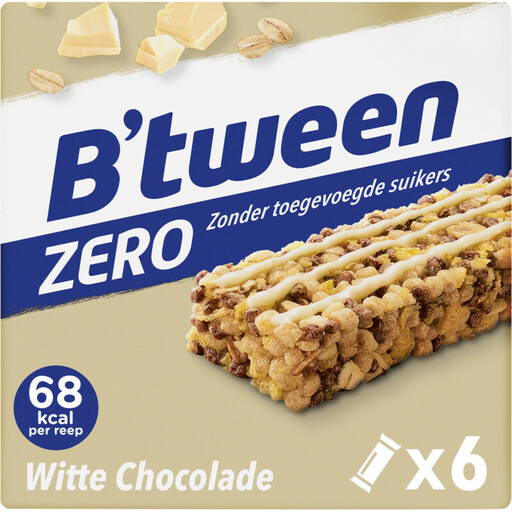 Image unavailable
A muesli bar to consider if you’re open to packing a different kind of snack instead of a biscuit. Check the nutritional information, ingredients, allergens and any warnings for each bar; ‘Zero’ in the name is no substitute for doing so.
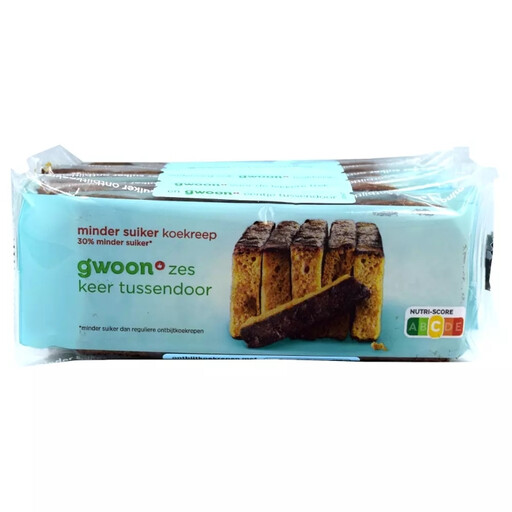 Image unavailable
A pack of biscuit bars for anyone who wants to pack this type of snack for school. Check how much sugar there is in one bar, what the ‘Less Sugar’ claim is being compared with, and whether the six bars are individually wrapped. Also read the latest allergen information.
 Image unavailable
Gingerbread as an alternative to a cereal bar or biscuit in the school bag. Check the pack to see how much your portion weighs and which quantity the nutritional information relates to. Check the sugar and allergen information; don’t assume from ‘Less Sugar-Free’ that the gingerbread is sugar-free.
No. According to the Netherlands Nutrition Centre (Voedingscentrum), ‘no added sugars’ doesn’t automatically mean sugar-free or low-calorie. The ‘of which sugars’ line shows how much sugar is listed in the nutrition table; also check how much you’ll be packing.
It depends on the child and the school’s rules. A biscuit containing gluten isn’t suitable for someone who needs to avoid gluten. Read the current allergen information for the exact variant and check the rules on bringing in or handing out food.
Some products contain sweeteners and carry a warning about excessive consumption. For sliced AH Ontbijtkoek zero, Albert Heijn states that excessive consumption may have a laxative effect. Read the warning on the pack you choose, even if the sugar claim looks appealing.
No. The Netherlands Nutrition Centre recommends fruit and vegetables as good snacks for children aged 4 to 12. A lower-sugar biscuit isn’t automatically the best everyday choice; decide what role it should play alongside other snacks.