
Parents looking to choose less sugar
You’re looking for a familiar biscuit for a day out during the holidays, but want to know what a sugar claim means and how much sugar the product contains per 100 g.


When choosing a snack for the school holidays, first compare similar biscuits per 100 g for sugars and other nutritional values. Then check the portion size, ingredients and allergens. A claim such as ‘less sugar’ tells you how a product compares with another, not how much sugar it contains overall. For ‘zero’ or ‘sugar-free’ varieties, it’s also worth checking the sweeteners and product warnings.
You’re looking for a familiar biscuit for a day out during the holidays, but want to know what a sugar claim means and how much sugar the product contains per 100 g.
A pre-portioned snack can be handy for journeys or days out. Check how many biscuits are in a portion and whether they’re individually wrapped.
If sweeteners, polyols or allergens matter to you, check the ingredients and warnings on the packaging of the variety you choose.
Start with the sugar claim and nutritional information for similar biscuits. Then consider whether the portion is practical and whether the ingredients suit what you want to avoid.
| What to look for | What to check when buying | Who it matters to |
|---|---|---|
| Sugar claim and nutritional information | Check what ‘light’ or ‘less sugar’ refers to. Compare similar biscuits per 100 g for sugars, energy, fibre, saturated fat and salt. | If I want to give my child less sugar, I want to know how much sugar the biscuit actually contains and what it’s being compared with. For around 40% of consumers, this sugar comparison comes first. |
| Portions for days out | Check how many biscuits are in a portion and whether they’re individually wrapped. Also look at the nutritional information per portion. | For a day out, I want to be able to take a portion with me without having to divide up the biscuits on the spot. This convenience is the top buying priority for around 30% of consumers. |
| Ingredients and allergens | Check the ingredients list for sweeteners and polyols, and read the allergen information and any product warnings. | When choosing a biscuit for my child, I want to be able to check which ingredients and allergens it contains. Around 30% of consumers say this is their top priority. |
According to the Netherlands Nutrition Centre, ‘light’ means at least 30% less energy, fat or sugars than the standard product. On its own, this doesn’t tell you how much sugar or energy the biscuit contains.
Check which part has been reduced and compare the nutritional information per 100 g with that of a similar biscuit.
Albert Heijn lists 465 kcal per 100 g for AH Digestive 0% sugar. So the sugar information alone doesn’t give you the full nutritional picture.
Compare products per 100 g, then check how many biscuits are in the portion you want to take with you.
Some biscuits containing sweeteners carry a warning about a possible laxative effect. The Netherlands Nutrition Centre says that a high intake of polyols can cause wind or diarrhoea in sensitive people.
Read the ingredients and the warning on the packaging, especially if you’re considering several products containing polyols.
Ingredients and warnings can vary between biscuits and varieties. A familiar brand name or pack is no substitute for checking the label on the product you’re buying.
Check the current ingredients and allergen information every time, including any warnings about the possible presence of allergens.
These examples show why the type of biscuit and the exact variety matter: a biscuit, fruit biscuit and cookie bar can’t automatically be judged against the same claim.
Albert Heijn offers, among other things, a biscuit with a sugar claim and a separate ginger cake bar variety.
Sultana Fruitbiscuit banana is a fruit biscuit for anyone looking for a pre-portioned snack.
Céréal Sugar-Free Coconut is a biscuit variety made with sweeteners.
De Koekhappers less sugar are worth considering if individually wrapped biscuits are a priority.
Sondey is a Lidl range that includes different types of cookies, biscuits, wafers and bars.
Lotus Biscoff is a caramelised biscuit for a treat.
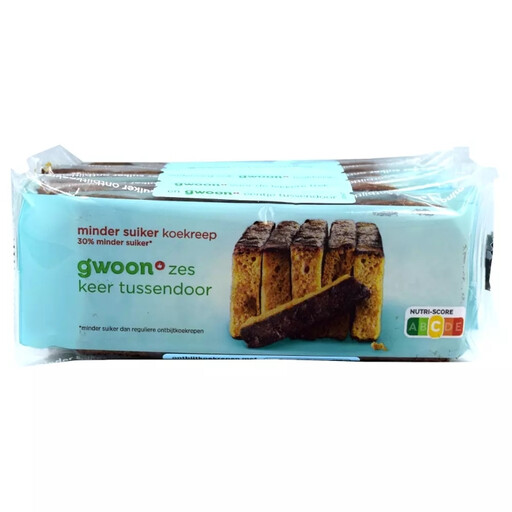
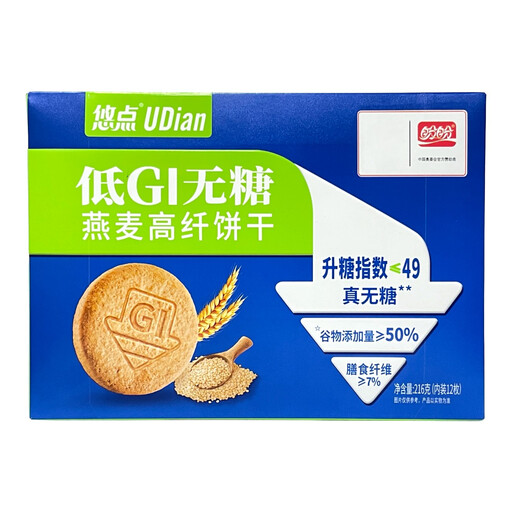
Here you’ll find a pack of six cookie bars and an oat biscuit labelled ‘Sugar-Free’. They’re different types of biscuits, so don’t compare their nutritional information as though the claims mean the same thing. Check the details on the current packaging.
 No image available
A cookie bar to consider if you’re looking for a pack of six. Check what ‘Less Sugar’ is being compared with, and whether the bars are individually wrapped if you want to take them with you. If you have allergies, check the current packaging.
 No image available
An oat biscuit to compare only after checking the sugar information. The ‘Sugar-Free’ wording in the title conflicts with the sugar content listed in the product information, so check the current packaging to see what applies to this variety. Also check the ingredients and portion size.
No. It’s a comparison with another product, not a statement that the total amount is low. Albert Heijn says Sultana Fruitbiscuit banana contains at least 30% less sugar than Fruitbiscuit, but also lists 23 g of sugars per 100 g. So compare the nutritional information per 100 g for similar products.
Not based on that word alone. As well as sugars, check the other nutritional information, portion size and ingredients. Albert Heijn lists 465 kcal per 100 g for AH Digestive 0% sugar and warns of a possible laxative effect if consumed in excess.
The warning may relate to polyols used as sweeteners. According to the Netherlands Nutrition Centre, high intakes of polyols can cause wind or diarrhoea in sensitive people. Check which sweeteners the biscuit contains and follow the warning on the packaging.
Each time you buy, read the allergen information on the current packaging for the variety you’ve chosen. The Netherlands Food and Consumer Product Safety Authority stresses that allergens must be clearly listed on labels for prepacked foods. Also look out for any warnings about their possible presence.
A biscuit can be an occasional treat, but a sugar claim doesn’t automatically make it a good everyday choice. For children aged 4 to 12, the Netherlands Nutrition Centre advises having no more than four eating or drinking occasions between meals. It suggests options such as fruit, vegetables and wholemeal bread for snacks.