What should you look for in biscuits for a drinks occasion?
First decide whether you’re putting together a savoury snack platter or planning a separate sweet occasion. Then compare the biscuits’ nutritional information and ingredients for that sweet occasion.
| What to consider |
What to check when buying |
Who it matters to |
| Sugars listed |
Compare ‘of which sugars’ per 100 g and check the rest of the nutritional information too. |
I want to choose a biscuit to have with coffee based on its stated sugar content, not just the front of the pack. For around 36% of consumers, the sugar figure is the most important factor. |
| Occasion and flavour |
Decide whether the biscuit will be served separately with coffee or tea, then choose a suitable flavour and portion size. |
If my guests are expecting savoury snacks, I want to offer a sweet biscuit only on a separate occasion. This is the top priority for around 29% of consumers. |
| Ingredients and allergens |
Read the latest ingredient and allergen information, and check for sweeteners such as maltitols. |
When catering for guests with an allergy or a specific dietary requirement, I want to know what I’m serving in advance. For around 21% of consumers, these questions about ingredients are most important. |
| Pack size and ease of sharing |
Check the net weight, number of biscuits and whether they’re individually wrapped. |
If I’m putting out something sweet for several guests, I want to know how many biscuits I can hand out. Packaging and quantity are the deciding factors for around 14% of consumers. |
Joybuy biscuits for a separate sweet occasion
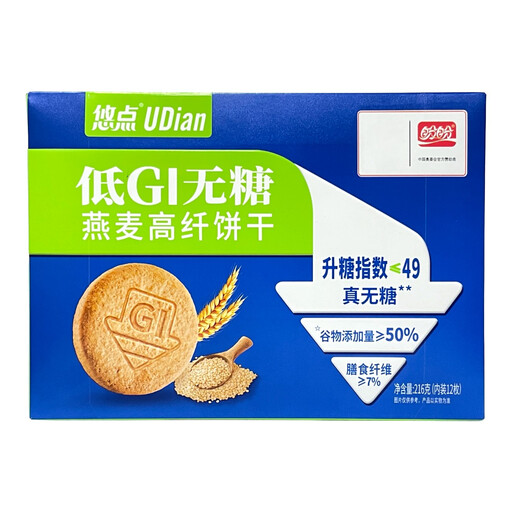
This oat biscuit could be a sweet extra alongside savoury snacks, but it isn’t a substitute for them. Check the sugar information on the current packaging before choosing it based on a sugar claim.
 No image available
Panpan oat biscuits 216 g
For anyone who’d like to serve a sweet biscuit separately with coffee or tea. The ‘Sugar-Free’ claim in the title conflicts with the listed 11.7 g of sugars per 100 g, so check the current packaging. Also look for the listed sweetener maltitol and the allergen information, which includes wheat, soya, oats and egg.
View on Joybuy
Frequently asked questions
Can lower-sugar biscuits replace savoury drinks snacks?
No, not if you mean the usual savoury snacks served with drinks. Woorden.org describes these as snacks served with drinks, consisting of fried foods; it’s better to serve a sweet biscuit separately with coffee or tea.
How do I compare the sugar content of two biscuits?
Compare the ‘of which sugars’ figure per 100 g on both packs. The Netherlands Nutrition Centre recommends comparing products per 100 g; then check the portion size and any other nutritional information relevant to your choice.
Do biscuits labelled ‘sugar-free’ contain sweeteners?
They can: Albert Heijn lists polyols for AH Digestive 0% suiker, while Jumbo lists maltitols for the Céréal varieties reviewed. Check the ingredients list for each biscuit; Albert Heijn also warns that excessive consumption of its digestive biscuit may have a laxative effect.
Does ‘30% less sugar’ mean a koekhapper is low in sugars?
Not necessarily: the claim ALDI makes for Goud Gebakken Koekhappers is a relative comparison and doesn’t state the amount of sugars per 100 g. Check the nutritional information on the pack for that, and bear in mind that a koekhapper isn’t a classic biscuit.
What should I check when serving biscuits to a group?
Check the current allergen information for each variety before serving. Albert Heijn lists wheat for AH Digestive 0% suiker; for Céréal Speculoos Stukjes Amandel, Jumbo lists almonds, barley, egg, milk, soya and wheat, among other ingredients.


