
Shoppers comparing sugar content
You want to check the amount of sugars per 100 g before setting off, rather than relying solely on phrases such as ‘zero’ or ‘less sugar’.


For a road trip, first decide what matters most to you: fewer sugars per 100 g or a portion that’s easy to take with you. An individually wrapped biscuit is handy in the car, but it isn’t necessarily low in sugar. For products with less or no sugar, check the nutritional information, ingredients and any warnings on the packaging too.
You want to check the amount of sugars per 100 g before setting off, rather than relying solely on phrases such as ‘zero’ or ‘less sugar’.
You want to be able to grab a set portion during the journey, perhaps from an individual packet or from portions you’ve divided up in advance.
As well as the nutritional information, you check for sweeteners, polyols and allergens. If you have an allergy, the information on the packaging of the product you choose is what matters.
First, compare the amount of sugars per 100 g in similar products. Then check whether the packaging suits your journey and whether there are any ingredients or warnings you need to consider.
| What to consider | What to check before buying | Who it matters to |
|---|---|---|
| Sugars and claims | Compare ‘of which sugars’ per 100 g; for ‘less sugar’ claims, also check which product it’s being compared with. | If my main aim is to eat less sugar, the nutritional information needs to suit my goal; the front of the pack alone isn’t enough. Around 42% of shoppers put this first. |
| Portions for the journey | Check how many biscuits or packets the pack contains and look at the weight per portion. | In the car, I want to be able to grab a portion without leaving a large pack open. For around 25% of shoppers, convenience comes first. |
| Ingredients and allergens | Read the ingredients list, allergen information and any warning about polyols. | If I need to watch out for certain ingredients or allergens, I can’t choose based on sugar content alone. This is the top priority for around 33% of shoppers. |
A low sugar content doesn’t tell you how much energy a biscuit provides. Albert Heijn lists AH Digestive 0% sugar as containing 0.3 g of sugars and 465 kcal per 100 g.
Check the full nutritional information and compare the product per 100 g with a similar biscuit.
Portion sizes can vary between packs. That means the figures for two portions don’t immediately tell you which product contains fewer sugars per 100 g.
Compare per 100 g first, as the Voedingscentrum recommends, then consider how much you want to take with you.
Products including AH Digestive 0% sugar and Céréal Sugar-Free Coconut carry a warning that excessive consumption may have a laxative effect. That’s worth considering before a long journey.
Read the warning on the specific product before packing several portions.
Lotus Biscoff Snack Pack contains eight packets, each with two biscuits, but Albert Heijn lists 38 g of sugars per 100 g for this product.
Assess the packaging and the amount of sugars separately: a packet doesn’t change the product’s composition.
The standard speculoos biscuits are a useful option if individually wrapped portions matter to you, but not if you’re looking for the lowest possible sugar content.
AH Digestive 0% sugar and AH Zero Breakfast Cake offer two different formats to compare by looking at the label and packaging.
At Jumbo, you can compare options including a spiced cake with less sugar and Céréal sugar-free biscuits.
ALDI offers both individually wrapped biscuits with less sugar and pre-sliced breakfast cake with no added sugars.
According to Lidl, Sondey includes a range of different biscuits and snacks.
These two products are breakfast cake and biscuit bars for anyone looking to take a lower-sugar snack with them. Before choosing, compare the sugars per 100 g and check separately how you can pack the portions.
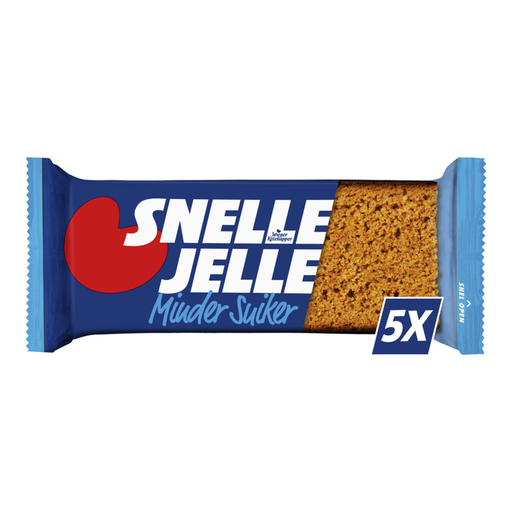 Image unavailable
An option if you’re looking for breakfast cake with less sugar rather than a biscuit for your journey.
The pack contains 250 g. Check the label for sugars per 100 g and any warnings; ‘less sugar’ doesn’t mean sugar-free.
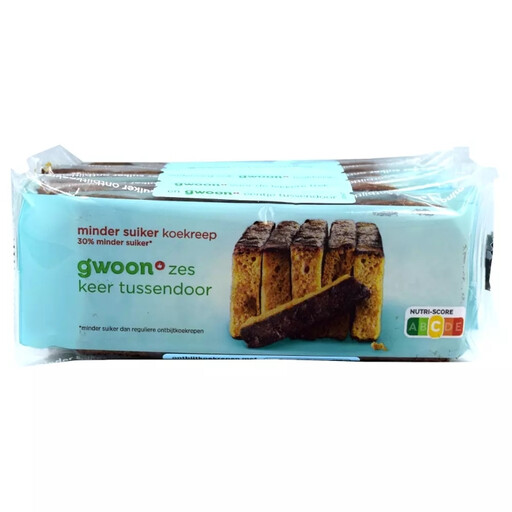 Image unavailable
A biscuit bar to consider if you want to take several with you and compare the sugar content on the label.
The pack contains six bars. Check the sugars per 100 g and see whether the bars are individually wrapped if that matters for your journey.
No, you can’t tell from the sugar content alone. Albert Heijn lists AH Digestive 0% sugar as containing 0.3 g of sugars and 465 kcal per 100 g; check both figures separately when comparing products.
No. Jumbo says Snelle Jelle Less Sugar contains 30% less sugar than the original, but it still has 24 g of sugars per 100 g. So check both what the claim is being compared with and the ‘of which sugars’ figure in the nutritional information.
Read the ingredients and any warning on the packaging before choosing portions for your journey. Products including AH Digestive 0% sugar and Céréal Sugar-Free Coconut carry a warning that excessive consumption may have a laxative effect.
Check the allergen information on the packaging of the product you’re taking with you. The Netherlands Food and Consumer Product Safety Authority explains that the relevant allergens must be clearly identifiable on the label of prepacked foods; also consider any warnings that are relevant to your circumstances.