
Night workers looking to keep sugars to a minimum
You’re planning a sweet snack and want to compare the amount of sugars, the sweeteners used and the portion size.


When choosing biscuits for your night shift, start by checking ‘of which sugars’ in the nutrition table and the portion you plan to take with you, rather than relying on ‘zero’ or ‘less sugar’ on the packaging. If you’re mainly comparing sugar content, a sugar-free option may suit you, but check the sweeteners and any warnings. A biscuit labelled as lower in sugar may still contain sugars; setting aside a portion in advance helps you decide how much to eat during your shift.
You’re planning a sweet snack and want to compare the amount of sugars, the sweeteners used and the portion size.
You don’t need a sugar-free option, but you want to know what a lower-sugar product is being compared with and how much sugar it contains itself.
You take biscuits to work and would rather decide in advance how many to pack than eat from a large packet during your break.
First decide whether the amount of sugars, the ingredients or a portion that’s easy to take with you matters most. Then compare the label of the biscuits you’re actually planning to buy.
| What to consider | What to check when buying | Who it matters to |
|---|---|---|
| Sugars and claims | Compare ‘of which sugars’ per 100 g and the portion you plan to eat. For ‘less sugar’ claims, check which product it’s being compared with. | I want to take biscuits to work on my night shift and know how much sugar my choice contains. For around 50% of consumers, sugar content is the main priority. |
| Sweeteners and tolerance | Check which sweeteners are listed in the ingredients and look for any warnings on the packaging. | If I choose biscuits with sweeteners, I want to know whether the ingredients suit me. For around 30% of consumers, tolerance is the most important factor. |
| Portions and taking biscuits with you | Check the number of biscuits in the packet and the allergen information on the label. | Packing a set number of biscuits in advance helps me plan my snack; if I have an allergy, I check the label too. For around 20% of consumers, planning portions is the top priority. |
A sugar-reduction claim compares products, but doesn’t tell you on its own how much sugar the biscuits contain. Albert Heijn states that its butter stroopwafels with less sugar contain 32% less sugar than the regular version, as well as 23 g of sugars per 100 g.
Alongside the claim, check the nutrition information per 100 g and the amount you plan to take with you.
A different sugar content may go hand in hand with the use of sweeteners. For AH Ontbijtkoek zero, Albert Heijn lists xylitol and warns that excessive consumption may have a laxative effect.
Check the ingredients and warnings, especially if you know you react to certain sweeteners.
How well you tolerate a higher-fibre product can matter during a shift. According to the Netherlands Nutrition Centre, a sudden switch to a high-fibre diet may initially cause wind.
Check the fibre information and choose a portion that suits what you’re used to eating.
Individually wrapped biscuits make it easy to keep track of how many you’re having, but they tell you nothing about the ingredients.
Even if the biscuits are individually wrapped, check the allergen information before packing them for your shift.
Céréal offers biscuit varieties marketed as ‘sugar-free’.
The own-brand range includes several biscuit-style products with a sugar-reduction claim.
Jumbo offers a less-sugar ontbijtkoek bar in a pack of six.
Goud Gebakken Koekhappers with less sugar are an option if you want biscuits that are individually wrapped and easy to take with you.
The speculoos varieties mentioned are regular biscuits, not established lower-sugar options.
These oat biscuits are worth considering if you want to check the amount of sugars for a planned snack. Check the sugar-free claim carefully before deciding.
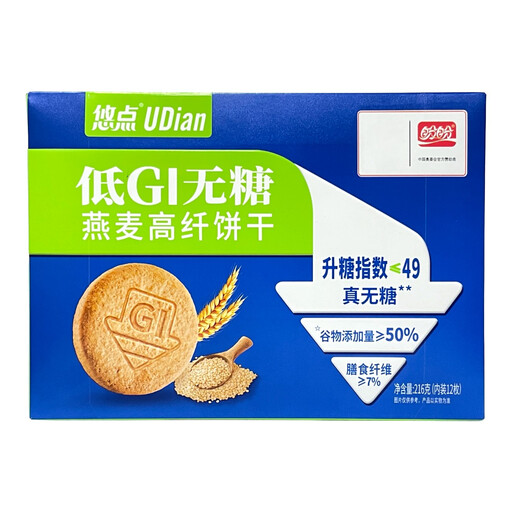 Image unavailable
If you’re planning a biscuit break during your night shift, the amount of sugars per 100 g is a useful starting point. The product title describes these biscuits as sugar-free, while the nutrition table provided lists 11,7 g of sugars per 100 g. So check the current label and decide how much you want to take with you.
No. The claim compares the biscuit with another product and doesn’t give the actual amount of sugars on its own. Albert Heijn states that its butter stroopwafels with less sugar contain 32% less sugar than the regular version, but also lists 23 g of sugars per 100 g. So check ‘of which sugars’ and the portion you plan to eat.
The sweetener used is listed in the ingredients, according to the Netherlands Nutrition Centre. Check the list if you want to avoid a particular sweetener; don’t rely only on ‘zero’ or ‘sugar-free’ on the front of the pack.
This type of warning may appear on products with added polyols. For AH Ontbijtkoek zero, Albert Heijn lists both xylitol and a warning that excessive consumption may have a laxative effect. Read the warning on the packaging of the product you choose.
Before buying, read the allergen information on the label of the specific pack. According to the Netherlands Food and Consumer Product Safety Authority, this information is shown on the label of prepacked foods. Check the label even if you’ve bought the same product before.