
The careful sugar comparer
Wants the lowest possible stated sugar content for coffee time, so checks the nutrition information per 100 g and per portion rather than relying on words such as ‘zero’.


If you want to serve as little sugar as possible with coffee, compare biscuits with a low stated sugar content. If you’d rather stick to a familiar treat, check what a claim such as ‘less sugar’ is being compared with and how much sugar the product still contains. ‘No added sugars’ doesn’t mean the same as ‘sugar-free’. Before serving your guests, also check the portion size, ingredients and allergens: a sugar claim doesn’t tell you the whole story.
Wants the lowest possible stated sugar content for coffee time, so checks the nutrition information per 100 g and per portion rather than relying on words such as ‘zero’.
Wants to serve a familiar treat with coffee, but looks for a product whose sugar claim makes a clear comparison with a standard alternative.
Looks beyond sugars to sweeteners and allergens. A plate of biscuits won’t automatically suit every guest, especially when their dietary requirements or allergies differ.
First decide whether your priority is the amount of sugar, a familiar treat or finding something suitable for your guests. Then compare the exact products on the packaging; a claim on the front doesn’t replace the nutrition information.
| What to consider | What should you check? | Who does this matter most to? |
|---|---|---|
| Amount of sugars | Compare ‘of which sugars’ per 100 g and per biscuit or portion. Check separately which sweeteners are listed in the ingredients. | If I mainly want to serve very little sugar, I want to know how much is in the portion on the table. For around 40% of consumers, the lowest possible stated sugar content comes first. |
| A familiar treat with less sugar | Check what the ‘less sugar’ claim is being compared with, then look at the remaining amount of sugars in the nutrition table. | When friends come round, I like to offer a familiar biscuit with coffee without mistaking a relative claim for ‘sugar-free’. Around 30% of consumers prioritise this combination of familiarity and reduced sugar. |
| Ingredients and allergens | Check the allergens in the exact product, the sweeteners used and any warnings on the packaging. | When friends have different allergies or preferences, I want to be able to find out who can have which product. For around 30% of consumers, suitability is the top priority. |
‘Less sugar’ compares one product with another; the product may still contain sugars. For example, Albert Heijn states that its butter stroopwafels with 32% less sugar contain 23 g of sugars per 100 g.
Use the claim as a starting point, then compare the ‘of which sugars’ figure per 100 g and per portion.
A low stated sugar content doesn’t tell you the full nutritional story. Albert Heijn states that AH Digestive 0% sugar contains 465 kcal per 100 g as well as 0,3 g of sugars.
Also check energy, fat and saturated fat, fibre and salt, and consider the portion size. The Voedingscentrum advises you not to rely only on the front of the pack.
Some sugar-free biscuits contain polyols. For AH Digestive 0% sugar, Albert Heijn includes a warning that excessive consumption may have a laxative effect.
Let guests check the ingredients and any warnings on the packaging, particularly if you’re serving several types of biscuit.
A sugar claim tells you nothing about allergens. For Céréal Speculoos with almond, Jumbo lists ingredients including almonds, barley, egg, milk, soya and wheat.
If necessary, ask about allergies in advance and check the allergen information for the exact product you’re buying.
Sugar-free biscuit options, including coconut and speculoos with almond.
Individual options across biscuits, stroopwafels and breakfast cake, with different sugar claims.
A range that includes both sugar-free products and products with a relative less-sugar claim.
Koek & Bakker’s zero breakfast cake and Goud Gebakken gingerbread bites in a reduced-sugar variety.
Lotus Bakeries presents Original Speculoos as a biscuit to enjoy with coffee.
This selection includes biscuit bars and breakfast cake that you could serve as a treat with coffee. They’re different types of product, so check the sugar claim and nutrition information for each one separately.
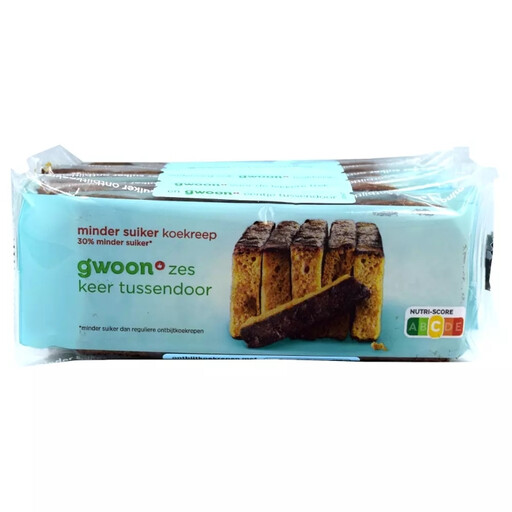 Image unavailable
Biscuit bars are a good option if you want to put out individual treats with coffee. The pack contains 6 bars; for the ‘Less Sugar’ claim, check what it’s being compared with and how much sugar each bar contains.
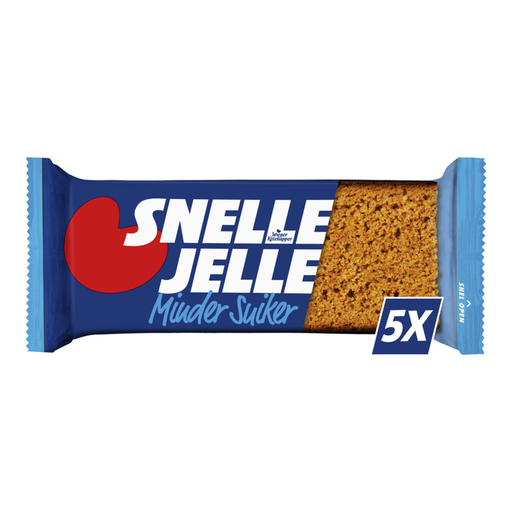 Image unavailable
This breakfast cake is a different kind of treat from a biscuit. The product is listed as 250 g; check the packaging to see exactly what the sugar claim is being compared with and what quantity the nutrition information applies to. Also check the allergens before serving it to guests.
No. ‘Less sugar’ compares the amount with that in another product. Albert Heijn states that its butter stroopwafels with 32% less sugar still contain 23 g of sugars per 100 g. So check both the comparison and the ‘of which sugars’ figure.
A statement about sugars doesn’t describe the full nutritional value. Albert Heijn states that AH Digestive 0% sugar contains 0,3 g of sugars, 465 kcal and 20 g of fat per 100 g. The Voedingscentrum advises checking the nutrition table and ingredients too.
This warning may be linked to polyols used as sweeteners. For AH Digestive 0% sugar, Albert Heijn states that excessive consumption may have a laxative effect. Check the ingredients and warnings for the product you choose, particularly if you’re serving several portions.
Check the current allergen information for each exact product and, if necessary, ask your guests in advance what they need to avoid. For Céréal Speculoos with almond, Jumbo lists ingredients including almonds, barley, egg, milk, soya and wheat; a claim about sugars tells you nothing about these ingredients.