
Recreational cyclist watching their sugar intake
You’re looking for a biscuit to enjoy on a leisurely ride or as an everyday snack, and mainly want to know what the sugar claim means for the portion you choose.


A lower-sugar biscuit can be a good choice for a snack when you’re watching your sugar intake, but it isn’t automatically suitable fuel for a long, intense bike ride. In that case, the carbohydrates per serving and what you drink along the way also matter. If a biscuit contains polyols, lots of fibre or fat, consider whether you’ll tolerate the serving comfortably, too.
You’re looking for a biscuit to enjoy on a leisurely ride or as an everyday snack, and mainly want to know what the sugar claim means for the portion you choose.
You want to know how many carbohydrates a biscuit actually provides during prolonged, intense cycling, alongside what else you eat and drink along the way.
You’re looking for a snack to take with you, but want to consider the portion size and ingredients such as polyols, fibre and fat in advance.
First decide whether the biscuit is an everyday snack or part of your food for a long ride. Then compare the nutritional information per 100 g and per serving: a sugar claim doesn’t tell you how many carbohydrates you’ll get from one biscuit.
| What to consider | What to check | Who it matters to |
|---|---|---|
| Carbohydrates on a long ride | Check the carbohydrates per serving and how that serving fits in with what else you eat and drink along the way. | On a long, intense ride, I want to know what one biscuit provides rather than relying on the word ‘zero’. Around 33% of consumers prioritise getting enough carbohydrates for their ride. |
| Sugar content | Compare sugars per 100 g and per serving. For ‘less sugar’ claims, also check which product is used as the comparison. | For an everyday snack, I want to be able to choose less sugar without giving up biscuits altogether. Around 27% of consumers prioritise this when choosing sugar. |
| How well it sits while cycling | Check the ingredients and nutritional information for polyols, fibre and fat, and pay attention to the serving size. | If I eat while cycling, I want to know in advance how a small serving will sit. Tolerability is the main concern for around 27% of consumers. |
| Dietary requirements and allergens | Check the latest ingredients and allergen information, and separately consider whether the size and packaging suit your route. | If an ingredient isn’t suitable for me, I need to be able to check the label before taking the biscuit with me. Around 13% of consumers give suitability top priority. |
For prolonged exercise, it’s not just the sugar content on the front of the pack that matters. A small biscuit may make only a limited contribution to what you eat during your ride.
Check the carbohydrates per serving you’ll actually eat, and consider the biscuit alongside your other food and drink. The Netherlands Nutrition Centre discusses carbohydrate intake mainly in relation to longer endurance exercise, not as a reason to take a special snack on every short ride.
The Netherlands Nutrition Centre says that large amounts of polyols can cause digestive problems. A low sugar content doesn’t tell you how well you’ll tolerate an unfamiliar serving while you’re out and about.
Read the ingredients and any warning on the packaging. If you want to take the biscuit cycling, try a small serving at a more relaxed time first.
‘Less sugar’ compares a product with another one; on its own, it tells you nothing about the amount of sugars, fat or carbohydrates in your serving. For example, Albert Heijn compares its lower-sugar butter syrup waffles with its own standard butter syrup waffles.
Alongside the claim, read the nutritional information per 100 g and per serving, and check which product is used as the basis for comparison.
The Netherlands Nutrition Centre advises against large portions and products high in fat or dietary fibre just before exercise. A biscuit’s ingredients can therefore matter just as much as its sugar claim.
Check the serving size and nutritional information. For an intense ride, it’s better to choose something you already know you can eat comfortably at that time.
Albert Heijn offers a range of own-brand products with sugar-related claims, including a digestive biscuit, a spiced cake bar and butter syrup waffles.
According to Albert Heijn’s product description, Verkade San Francisco zero is a biscuit with no added sugar.
Albert Heijn’s range of biscuits for people watching their sugar intake includes Céréal Chocolate chip cookie without sugars and Céréal Speculoos almond pieces without sugars.
This biscuit bar and these oat biscuits are worth considering if you’re looking for a snack with less sugar to enjoy around a bike ride. For a long, intense ride, assess each separately for carbohydrates per serving and any ingredients you’d prefer to avoid while cycling.
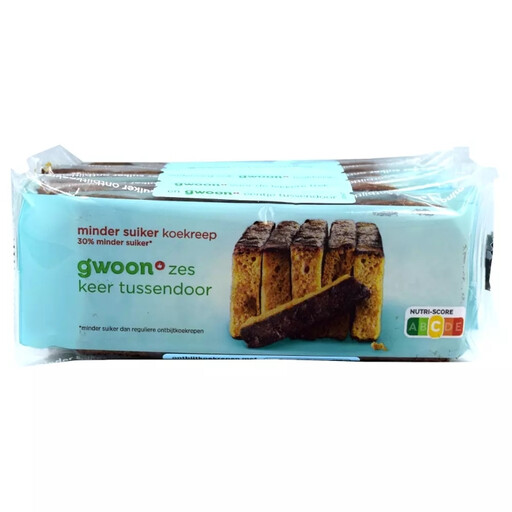 Image unavailable
A biscuit bar to compare as an everyday snack if you’re keeping an eye on sugar information.
The pack contains 6 pieces. Before choosing, check what ‘Less Sugar’ is being compared with and how many carbohydrates one bar contains, according to the latest label.
 Image unavailable
A biscuit to consider if you’re looking for a snack with less sugar, rather than an obvious source of carbohydrates for a long ride.
The pack is labelled as 216 g. Check the latest label to see what the ‘Sugar-Free’ claim means and compare it with the stated sugars. If you’re taking it cycling, also check the serving size and ingredients, including any polyols.
No, not necessarily. You don’t need to choose a special biscuit just because you’re going for a short ride. Simply consider whether you want an everyday snack and how much sugar and how many carbohydrates the serving contains.
It may be suitable if the carbohydrates per serving fit in with what else you eat and drink during the ride. The Netherlands Nutrition Centre discusses quickly absorbed carbohydrates for longer endurance exercise; the word ‘zero’ doesn’t tell you what one biscuit contributes.
This warning may be linked to added polyols. The Netherlands Nutrition Centre says that large amounts of polyols can cause digestive problems, so check the ingredients and try an unfamiliar biscuit in a small serving first.
No. ‘Less sugar’ compares the sugar content with another product and says nothing directly about fat. Albert Heijn compares its lower-sugar butter syrup waffles with its own standard version. You should also check the nutritional information on the pack you’re thinking of buying.