
Hosts looking to limit sugar
You want to serve biscuits with coffee, but also want to know how much sugar an alternative contains. That means checking both the nutritional information and what a claim such as ‘less sugar’ is being compared with.


First, decide what you mean by less sugar for your Christmas party: a familiar biscuit with less sugar than the standard version, or a product labelled sugar-free or no added sugars. Then compare the sugars per 100 g and per portion, and check the ingredients, allergens and any polyol warning for your guests. The claim alone doesn’t tell you whether a biscuit is suitable for everyone.
You want to serve biscuits with coffee, but also want to know how much sugar an alternative contains. That means checking both the nutritional information and what a claim such as ‘less sugar’ is being compared with.
You’re considering a sugar-free product or one with no added sugars, and want to check in advance whether it contains polyols and what warning appears on the packaging.
You’re looking for something easy to put out or hand round. You’ll also want to keep the packaging close by so guests can check the ingredients and allergens for themselves.
First, decide which sugar claim suits your needs. Then choose a portion and pack format for your party, and check the ingredients for the people who’ll be eating with you.
| What to consider | What to check when buying | Who it matters to |
|---|---|---|
| Sugars and claims | Compare ‘of which sugars’ per 100 g and per portion; for ‘less sugar’, also check which product it is being compared with. | If I want to serve less sugar, I want to compare the amount rather than rely on the front of the pack alone. For around 33% of consumers, a demonstrable reduction in sugar is the top priority. |
| Serving and sharing | Check the number of pieces, portion size and whether the pack suits a serving plate or pre-portioned servings. | For a Christmas party, I want something that’s easy to serve with coffee or tea and share among guests. Ease of serving matters most to around 27% of consumers. |
| Allergens and ingredients | Read the allergen information on the current packaging and keep it available at the buffet. | When guests need to avoid different ingredients, I want them to be able to see for themselves what’s in the biscuit. For around 20% of consumers, checking the ingredients is the main concern. |
| Sweeteners and polyols | Check the ingredients list for polyols such as maltitol or xylitol, and read any warning about excessive consumption. | When there are plenty of treats on the table, I want to know whether a sugar-conscious biscuit also contains sweeteners that guests may prefer to avoid. This is the top consideration for around 20% of consumers. |
Albert Heijn compares its Roomboter minder suiker stroopwafels with its standard AH-roomboterstroopwafels and states that they contain 32% less sugar. This is a comparison, not a claim that the stroopwafels contain no sugars.
As well as the reduction claim, read the nutritional information per 100 g and per portion so you know what you’re actually serving.
A product with no added sugars can still contain naturally occurring sugars. Albert Heijn makes this clear, for example, for Verkade San Francisco zero.
If a ‘sugar-free’ claim is essential to your choice, check that the packaging actually makes this claim and read the sugar content.
Some sugar-conscious biscuits use polyols as sweeteners. According to the Voedingscentrum, foods containing more than 10% added polyols carry a warning that excessive consumption may have a laxative effect.
Read the ingredients and warnings before putting the biscuits out, and leave the packaging available for guests who prefer to avoid these ingredients.
Ingredients and allergen information can change. This is especially important at a shared buffet when guests need to avoid specific ingredients.
Check the packaging of the product you’ve bought and keep it close at hand when serving.
Albert Heijn offers a range that includes sugar-free digestives, stroopwafels with less sugar and ontbijtkoek zero. Compare these products if you’re considering different kinds of treats.
At Jumbo, you can compare Céréal biscuits and several types of ontbijtkoek.
ALDI lists Goud Gebakken Koekhappers with less sugar and ontbijtkoek with no added sugars as different options for a snack.
Céréal Choco Delight is an option if you’re mainly looking to compare sugar content and the sweeteners used in a biscuit product.
Peijnenburg offers a wholegrain ontbijtkoek with no added sugars if you’d rather serve slices of ontbijtkoek than small biscuits.
Lotus Biscoff is a speculoos biscuit for anyone who wants to serve a classic biscuit with coffee or tea.
These products suit two ways of serving: cereal bars to share and ontbijtkoek as an alternative to small biscuits. For both, check what the sugar claim means for the product you’ve chosen and what portion you want to offer.
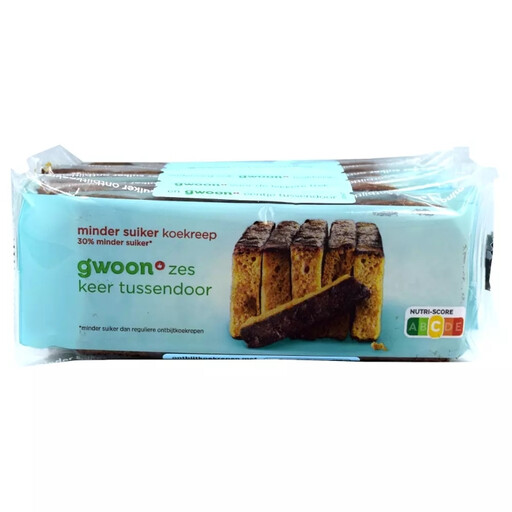 Image unavailable
Cereal bars for a Christmas table where you want to share treats. For the ‘Less Sugar’ claim, compare the sugars per 100 g and per bar on the packaging, and check the allergens before serving.
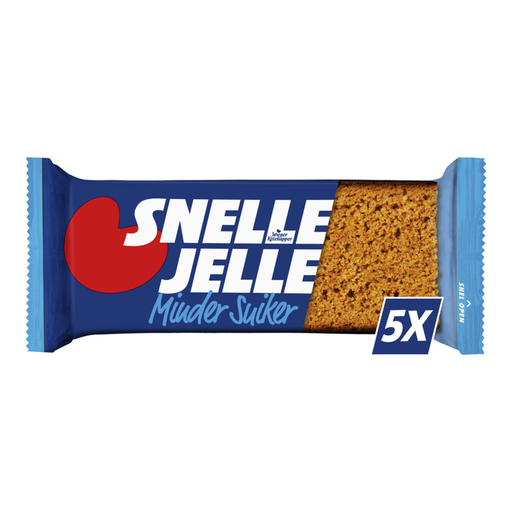 Image unavailable
Ontbijtkoek as an alternative to small biscuits at a buffet. Read the sugar content per 100 g and per portion, along with the allergens, on the current packaging. Don’t assume that ‘Less Sugar-Free’ in the product name tells you which sugar claim appears on the label.
These are different claims: ‘less sugar’ compares a product with another product, while in the European Union ‘sugar-free’ means no more than 0.5 g of sugars per 100 g or 100 ml. ‘No added sugars’ doesn’t rule out naturally occurring sugars. So check both the precise claim and the ‘of which sugars’ figure in the nutritional information.
Read the warning on the packaging and let guests know which sweeteners have been used. The Voedingscentrum states that foods containing more than 10% added polyols carry a warning about a possible laxative effect if consumed in excess.
No, the claim doesn’t automatically describe the rest of the nutritional information. For the products you’re considering, also compare portion sizes and the nutritional information per 100 g, including fat and fibre. Don’t judge the whole product on the basis of a single figure.
Check the allergen information on each current pack and keep it available at the buffet. This lets guests check for themselves whether a biscuit or ontbijtkoek is suitable for them and doesn’t contain ingredients they need to avoid.
Use the product page to compare options, but check the packaging of the product you buy. Albert Heijn points out that ingredients, nutritional values and allergen information can change.