What should you look for when choosing?
First, distinguish between the type of sugar claim and the flavour your recipe needs. Then check the label on the specific product and work out how much of the bake each child will get.
Biscuits with a ‘sugar-free’ claim
Best suited to: When that specific claim is your priority and, for example, you want to crumble the biscuits for a small test base.
Consider: Check the sweetener and allergens for each product; the claim doesn’t tell you about the full nutritional value or how it will bake.
Biscuits with less sugar
Best suited to: When reducing sugar is your goal, but a ‘sugar-free’ claim isn’t essential.
Consider: Less sugar doesn’t mean sugar-free. ALDI Netherlands lists a 30% less sugar claim for its Goud Gebakken Koekhappers product; also compare the nutritional information for the product you’re buying.
Classic flavour biscuit
Best suited to: When a recipe calls for a distinctive flavour, such as Lotus Biscoff, and reducing sugar isn’t your deciding factor.
Consider: A familiar flavour profile doesn’t in itself mean the product has a sugar-reduction claim. A replacement biscuit may also taste or crumble differently.
| What to consider |
What to check when buying |
Who it matters to |
| Sugars in the recipe |
Compare the exact claim and the sugars per 100 g. Work out how much biscuit you’ll use in the bake. |
If I want to cut down on sugar, I want to know how much the amount of biscuits I choose will add to my recipe. For around 36% of consumers, comparing sugar content comes first. |
| Ingredients and allergens |
Read the ingredients, highlighted allergens and any warnings on the current packaging; also check which sweetener has been used. |
If a child has a known allergy, I need to be able to judge whether this specific product is suitable. Allergens and ingredients are the first concern for around 29% of consumers. |
| Flavour and crumb texture |
Decide whether you’re making a base, topping or decoration, and try an unfamiliar biscuit in a small quantity first. |
For a recipe where the biscuit determines the flavour, I don’t want to risk all the ingredients on an untested replacement. Around 21% of consumers prioritise the baking result. |
| Practical shopping |
Check the exact product and packaging before you shop; don’t rely on the brand name alone. |
When I’m organising an afternoon of baking, I want to be able to buy the right biscuits without mixing up different products. For around 14% of consumers, convenience matters most. |
Products to compare
This Joybuy selection includes biscuits and cookie bars to consider for a baking session with children. A cookie bar isn’t automatically suitable for a crumb base: check the label and try it in the way you intend to use it on a small scale first.
 No image available
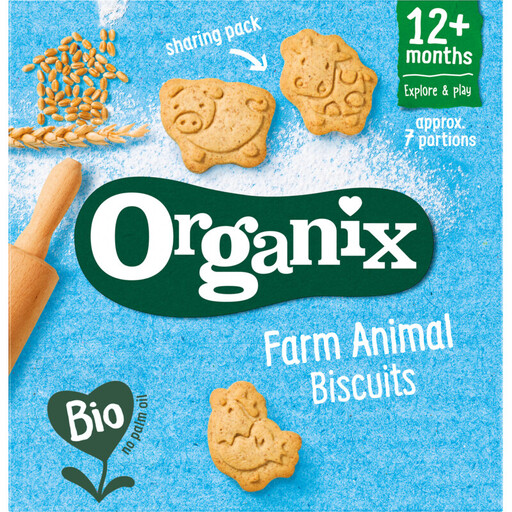
Organix Bio Farm Animal Biscuits – 100 g
A biscuit to consider if you want to use biscuits in a baking recipe. Check the sugars and allergens on the current packaging, and see if the crumbs work for your recipe by trying a small amount first.
Pack size: 100 g.
View at Joybuy
 No image available
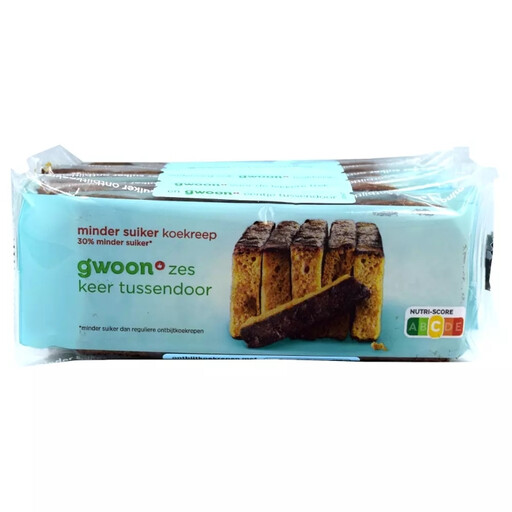
g'woon Cookie Bars Less Sugar – 6 pieces
A cookie bar with Less Sugar in the product name, which you can compare with biscuits. Check the sugars and allergens on the packaging, and try a small amount first to see whether the bars work in your recipe.
Pack size: 6 pieces.
View at Joybuy
Frequently asked questions
Does ‘less sugar’ mean the same as ‘sugar-free’?
No, these are different nutrition claims. For the biscuits you’re considering, compare the ‘of which sugars’ figure per 100 g and the amount you’ll use in the bake. The European Commission treats nutrition claims as specific claims about a product’s composition, not as a verdict on the product as a whole.
Is a sugar-free biscuit automatically a suitable everyday snack for children?
No, the claim doesn’t describe the full nutritional value or the portion size. The Netherlands Nutrition Centre recommends fruit and vegetables as snacks for children; when choosing biscuits for a baking session, consider their ingredients, nutritional information and how much you’ll serve.
Can children eat biscuits with sweeteners?
The Netherlands Nutrition Centre says children can consume sweeteners. Check which sweetener is listed on the label of the biscuit you choose, and how many biscuits will go into the recipe and each portion; a sugar claim alone doesn’t answer those questions.
How do I check allergens before baking with children?
Read the packaging for the exact product just before use, including highlighted allergens and any warnings. The Netherlands Food and Consumer Product Safety Authority requires allergens to be clearly listed on the labels of pre-packed foods; don’t rely on the product name or a product page you looked at earlier.


