
Budget-conscious snackers
You’re looking for a biscuit to enjoy on the go or with a cup of tea or coffee. Breakfast cake and biscuit bars are product types you can compare by pack size and number of portions.


Start by choosing the type of biscuit you want and checking what the sugar claim means. A ‘lower-sugar’ breakfast cake bar is not the same as a ‘0% sugar’ digestive biscuit. Compare the sugars per 100 g, serving size and ingredients before choosing between packs.
You’re looking for a biscuit to enjoy on the go or with a cup of tea or coffee. Breakfast cake and biscuit bars are product types you can compare by pack size and number of portions.
You focus on the ‘of which sugars’ line in the nutrition table and also check which sweeteners and ingredients the product contains.
Perhaps you want to keep enjoying stroopwafels or spiced biscuits, but are looking for an option in that category with a substantiated lower-sugar claim.
Start with the type of biscuit, then read the sugar claim alongside the nutrition table. Only then decide which pack best suits your needs.
| What to consider | What to check | Who it’s for |
|---|---|---|
| Pack size | Compare the net weight and number of biscuits in packs of the same type. | If I regularly take a biscuit with me, I want to know how many occasions one pack will cover. Around 36% of consumers prioritise this consideration. |
| Sugar content | Read the ‘of which sugars’ figure per 100 g and, for a ‘lower sugar’ claim, check which product it is being compared with. | I’m mainly looking for a low sugar content, so I don’t rely on the claim on the front of the pack alone. Around 29% of consumers put this first. |
| Portions and convenience | Check the number of biscuits, the grams per portion and whether they are individually wrapped. | A biscuit for the road needs to be easy for me to take with me. Around 21% of consumers prioritise this. |
| Ingredients and allergens | Check the ingredients, allergen information and any warning about polyols on the current packaging. | If I need to avoid certain ingredients or am sensitive to polyols, I read the label first. Around 14% of consumers put this check first. |
According to Jumbo, Jumbo Ontbijtkoek Minder Suiker contains 30% less sugar than its own plain breakfast cake bar, but still has 22.7 g of sugars per 100 g.
Check both the ‘of which sugars’ figure per 100 g and the product used for comparison in the claim.
The Netherlands Nutrition Centre states that consuming large amounts of polyols can cause bowel problems. Albert Heijn displays a warning about a laxative effect if consumed in excess on AH Ontbijtkoek zero and AH Digestive 0% suiker.
Check the ingredients and follow the warning on the packaging.
If you have an allergy or intolerance, the current packaging should guide your choice, as recipes can change.
Check the allergen information on the pack you’re actually buying.
Albert Heijn offers a range of products, including breakfast cake, spiced biscuit bars, digestive biscuits and stroopwafels, with different sugar claims.
Jumbo lists a breakfast cake bar with 30% less sugar than its own plain breakfast cake bar.
ALDI lists sliced Ontbijtkoek Zero with no added sugars, as well as Koekhappers in a lower-sugar option.
Céréal offers products including coconut, speculoos and chocolate varieties, with different claims about sugars.
This product selection features a biscuit bar with a lower-sugar claim. If you’re choosing on a budget, compare the pack size and current nutrition information too.
 No image available
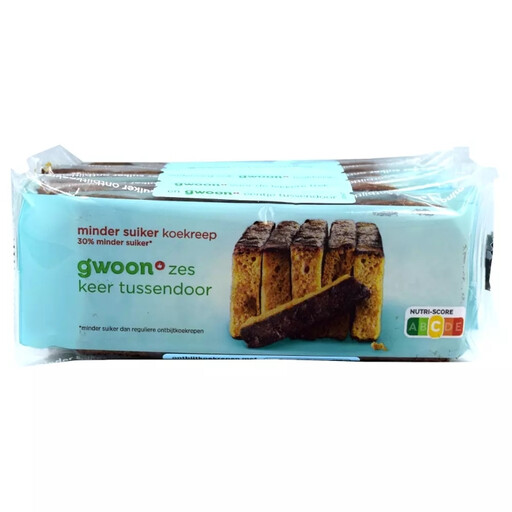
A pack of six biscuit bars for anyone looking for this type of snack. Alongside the ‘Less Sugar’ claim, check the ‘of which sugars’ figure per 100 g, as well as the ingredients and allergens on the packaging.
No. The claim compares the product with another product. Jumbo says its Ontbijtkoek Minder Suiker contains 30% less sugar than Jumbo plain breakfast cake bar, while the bar still contains 22.7 g of sugars per 100 g. So remember to check the nutrition table too.
No. Albert Heijn describes AH Digestive 0% suiker as a biscuit with sweeteners and lists 0.3 g of sugars per 100 g. ‘No added sugars’, as stated for ALDI Ontbijtkoek Zero, does not rule out naturally occurring sugars.
This warning may be related to added polyols. The Netherlands Nutrition Centre says that consuming large amounts of polyols can cause bowel problems. Check the ingredients and warning for the specific biscuit.
Lidl lists Ontbijtkoek zero as a 485 g in-store product. Check the packaging in store for sugars per 100 g, ingredients, sweeteners and allergens before comparing this option with other breakfast cakes.