
A host looking to compare sugar content
You want to serve biscuits with drinks and work out what ‘less sugar’ means. Compare the nutrition information per 100 g and per serving with that of a similar biscuit.


For your birthday get-together, first decide which distinction matters to you: a biscuit with less sugar than a comparable one, or a variety labelled ‘zero’ or ‘sugar-free’. Then compare the sugar content per 100 g and per serving, and check the ingredients, allergens and any warnings. The Netherlands Nutrition Centre says that ‘no added sugars’ does not automatically mean a product is sugar-free or low in calories.
You want to serve biscuits with drinks and work out what ‘less sugar’ means. Compare the nutrition information per 100 g and per serving with that of a similar biscuit.
You want to know which sweeteners a biscuit contains and whether the packaging carries a warning. This is especially relevant if you’re offering the biscuits to several guests.
You’re looking for biscuits that are easy to serve with coffee or tea. The number of biscuits, whether they’re individually wrapped and how they’re served all help determine what will work well for your get-together.
First decide which sugar claim you want to assess. Then check whether the ingredients and serving format suit your guests.
| What to consider | What to check | Who it matters to |
|---|---|---|
| Sugar content and claims | Compare the sugar content per 100 g and per serving with that of a similar biscuit; if the claim is ‘less sugar’, check what it is being compared with. | If I’m buying several packs, I want to know what the sugar reduction actually means rather than relying only on the front of the pack. Around 40% of consumers put this kind of verifiable comparison first. |
| Sweeteners and warnings | Read the ingredients list and check the packaging for any warnings about polyols. | Before offering biscuits to guests, I want to be able to check which sweeteners a zero variety contains and whether there’s a usage warning. For around 30% of consumers, checking the ingredients is the top priority. |
| Serving and availability | Check the number of biscuits, the packaging and serving format, and whether the product you’ve chosen is available. | I want to be able to serve the biscuits with coffee or tea without much preparation, but sliced breakfast cake is different to serve from individual biscuits. Around 30% of consumers prioritise how easy a product is to hand out. |
These claims don’t answer the same question. The Netherlands Nutrition Centre says a product with no added sugars is not automatically sugar-free or low in calories.
Read the full claim and compare the sugar content per 100 g and per serving with that of a similar product.
A biscuit may contain sweeteners or polyols. The Netherlands Nutrition Centre notes that products containing more than 10% added polyols carry a label warning about a possible laxative effect if consumed in excess.
Check the current packaging and, if needed, offer guests another biscuit option too.
Ingredients, nutrition values and allergen information can change. That’s why Albert Heijn recommends checking the information on the packaging.
Check the physical packaging again before serving biscuits to guests, especially if you need to take allergens into account.
Individually wrapped biscuits are handed out differently from pre-sliced breakfast cake. ALDI lists both product formats in its range.
Choose the format you want to serve, then check the number of pieces and availability at your chosen shop.
Jumbo lists Céréal biscuits with a speculoos flavour and almond pieces labelled ‘sugar-free’, as well as Choco Delight labelled ‘less sugar’.
Its own-brand range includes AH Digestive 0% sugar, butter syrup waffles labelled ‘less sugar’ and sliced zero breakfast cake.
Jumbo provides product information about Céréal biscuits labelled ‘sugar-free’ and ‘less sugar’.
ALDI describes Goud Gebakken Koekhappers as containing less sugar, and Koek & Bakker Gesneden Ontbijtkoek Zero as having no added sugars.
Lotus Bakeries describes Biscoff as a crunchy biscuit with a caramelised flavour, often enjoyed with coffee.
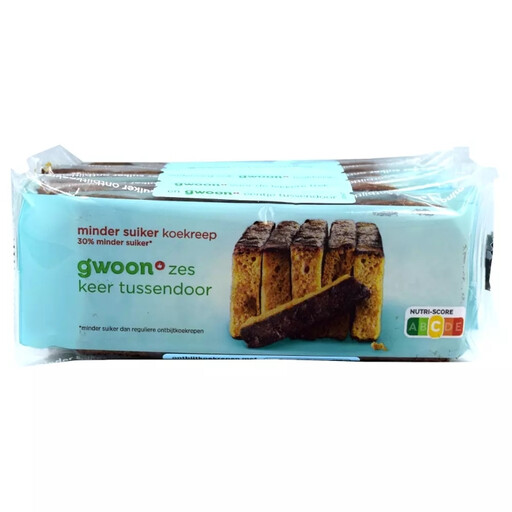
These biscuit bars may suit you if you’re looking for biscuits labelled ‘less sugar’ for a birthday get-together. Check the nutrition information on the packaging and compare the claim with that of a similar product.
 No image available
An option if you’re looking for biscuit bars labelled as lower in sugar for your get-together.
Compare the sugar content per 100 g with that of a similar biscuit, and check the ingredients and allergens on the packaging. If you want to hand them out individually, also check whether they’re individually wrapped.
No, that doesn’t follow from the claim. The Netherlands Nutrition Centre points out that ‘no added sugars’ doesn’t automatically mean a product is low in calories either. Check the sugar content in the nutrition information and read the ingredients.
Check which sweeteners are listed on the label and look for any warnings about polyols. According to the Netherlands Nutrition Centre, products containing more than 10% added polyols carry a warning about a possible laxative effect if consumed in excess.
No, the sugar claim doesn’t tell you which other ingredients or allergens may matter to your guests. So check the ingredients list and allergen information on the current packaging too.
Check the packaging before buying, then check it again before serving the biscuits if ingredients or allergens matter to your guests. Albert Heijn says product information can change, so the physical packaging is the best place to check.