
Party organiser with a strict sugar target
You’re looking for biscuits with as little sugar as possible, so you compare the nutritional information per 100 g and per portion. The ingredients, including any polyols, matter too.


For a birthday party, first decide whether you’re looking for biscuits with no sugars or whether a product with less sugar than a comparable biscuit will do. Then compare the sugars listed per 100 g and per portion: the claim on the front of the pack doesn’t tell you how much sugar a guest will consume. Check the allergens and ingredients too. The Netherlands Nutrition Centre advises that large amounts of polyols, used as sweeteners in some biscuits, can cause intestinal discomfort.
You’re looking for biscuits with as little sugar as possible, so you compare the nutritional information per 100 g and per portion. The ingredients, including any polyols, matter too.
You want to know in advance how many biscuits you’ll need for the group. Small portions or individually wrapped packs can make handing them out easier, but they don’t tell you how much sugar the biscuits contain.
You ask about allergies and dietary requirements in advance, and check the allergens, ingredients and any warnings for each biscuit variety.
Biscuits with no sugars, a reduced-sugar variety and an everyday party biscuit suit different needs. First decide which sugar target matters most for your party, then check whether the portions and ingredients are suitable for your guests.
A good choice when: a low listed sugar content matters more than a familiar biscuit flavour. Jumbo lists 0 g of sugars per 100 g for Céréal Coconut and 0.4 g for Céréal Almond Speculoos.
Things to consider: these varieties contain polyols; check the allergens for your chosen variety too.
A good choice when: a reduction compared with a reference product is enough and individually portioned packaging is convenient.
Things to consider: Jumbo compares its Reduced-Sugar Breakfast Cake with its own plain variety, but it still lists 22.7 g of sugars per 100 g.
A good choice when: flavour or a familiar treat matters more than reducing sugar.
Things to consider: Albert Heijn lists 38 g of sugars per 100 g for Lotus Biscoff XL Speculoos. So don’t treat this variety as a reduced-sugar biscuit.
| What to consider | What to check when buying | Who it matters to |
|---|---|---|
| Sugar content | Compare ‘of which sugars’ per 100 g and per biscuit; also check which product a ‘less sugar’ claim is comparing it with. | For my party, I mainly want to know how much sugar is actually in a biscuit, even if the pack says ‘less sugar’. This is the main priority for around 42% of consumers. |
| Portions and serving | Check how many biscuits there are, the portion size and whether they’re individually wrapped. | When I’m serving a group, I want to be able to work out in advance how many each person will get. For around 33% of consumers, portioning is the main concern. |
| Allergens and sweeteners | Read the allergen information and ingredients list for your chosen variety, including any polyols. | With a range of guests at the table, I want to know whether the ingredients and warnings are suitable for them. This check matters most to around 25% of consumers. |
The claim compares a product with a reference product; it doesn’t tell you how much sugar the product actually contains. Jumbo lists both a reduction compared with its own plain variety and 22.7 g of sugars per 100 g for its Reduced-Sugar Breakfast Cake.
Check ‘of which sugars’ per 100 g, then use the stated portion size to work out how much sugar is in each portion you serve.
The Céréal varieties reviewed contain polyols. The Netherlands Nutrition Centre advises that large amounts of polyols can cause intestinal discomfort.
Check the ingredients and warnings on the pack, especially if guests might have more than one biscuit.
A low sugar content doesn’t tell you anything about allergens. According to Jumbo, the Céréal Almond Speculoos reviewed contains, among other things, almonds, egg, milk, soya and wheat.
Ask about allergies in advance and check the label of every variety you plan to serve before buying.
Lotus Biscoff XL Speculoos is suitable for vegans and comes in small bags, according to Albert Heijn, but it contains 38 g of sugars per 100 g.
Choose these biscuits only if you specifically want regular speculoos, not as a substitute for a lower-sugar variety.
These examples show product ranges you can compare. The nutritional information and allergens apply to the specific variety mentioned, not to an entire brand or range.
Biscuit varieties for anyone who mainly wants to compare the stated sugar content.
A shopping option with a category for sugar-conscious biscuits, including Céréal varieties.
A shopping option for Céréal biscuits and Jumbo’s own reduced-sugar breakfast cake bar.
A regular speculoos option when flavour and individually wrapped treats matter more than reducing sugar.
ALDI own-brand cake biscuits, including a reduced-sugar variety.
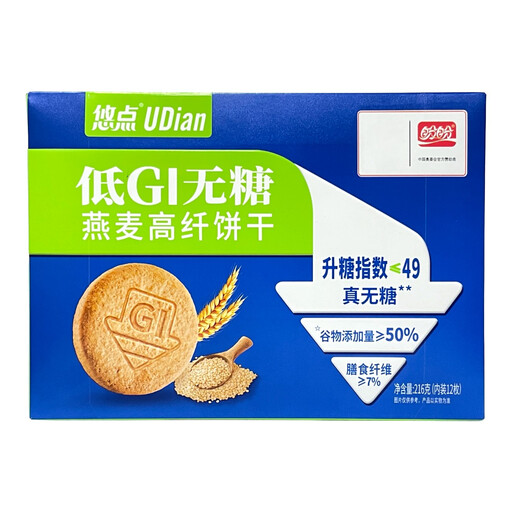
These oat biscuits are one option to assess for their stated sugar and sweetener content before serving them at a birthday party.
 No image available
Consider these biscuits only if the nutritional information on the pack matches your sugar target and your guests’ needs.
The product listing says ‘Sugar-Free’, while the nutritional information provided states 11.7 g of sugars per 100 g. So don’t rely on the product name alone. Also check the listed maltitol (E965), the allergens and the amount per biscuit before deciding on portions.
No. ‘Less sugar’ compares a product with a reference product. You should also check how much sugar the variety you choose contains per 100 g and per portion. Jumbo lists 22.7 g per 100 g for its Reduced-Sugar Breakfast Cake, compared with 0 g for Céréal Coconut and 0.4 g for Céréal Almond Speculoos.
Not without checking the ingredients. Biscuits with no sugars can still contain allergens; according to Jumbo, the Céréal Almond Speculoos mentioned contains, among other things, almonds, egg, milk, soya and wheat. Ask guests about allergies in advance and read the allergen information on the pack.
The warning may relate to polyols in the product. The Netherlands Nutrition Centre says that large amounts of polyols can cause intestinal discomfort. So read the ingredients and warnings for the variety you choose, and consider how many biscuits you’ll be serving.
Ask in advance about the children’s allergies and dietary requirements. The Netherlands Nutrition Centre also recommends taking into account foods that children may avoid for religious reasons when choosing party treats. Then check the packaging of the biscuits you plan to serve.