
Parents keeping an eye on sugar
You’re looking for a sweet snack for after school, but don’t want to rely solely on a claim such as ‘zero’. Compare the nutritional information per 100 g and per portion, and check which sweeteners have been used.


A lower-sugar biscuit is only a suitable choice for after school once you’ve checked the sugars per 100 g and per portion, as well as the ingredients and allergens. The Netherlands Nutrition Centre recommends fruit, vegetables and wholegrain products as more suitable everyday snacks for children aged 4 to 12. Keep sweet snacks small and serve them at a set time. A lower sugar figure doesn’t rule out polyols or allergens.
You’re looking for a sweet snack for after school, but don’t want to rely solely on a claim such as ‘zero’. Compare the nutritional information per 100 g and per portion, and check which sweeteners have been used.
An individually wrapped biscuit or a slice of pre-cut breakfast cake makes it easy to see how much you’re packing. Check the weight of each piece, too: the portion shown on the packaging isn’t necessarily right for every child.
If someone has an allergy or other dietary restriction, the ingredients and allergen information are crucial. The Netherlands Food and Consumer Product Safety Authority says allergens must be clearly stated on prepacked foods. Also check your school or after-school club’s rules.
Start with the nutritional information, decide how much you want to pack, then check the ingredients and any school or after-school club rules before you put it in the bag.
| What to consider | What to check when buying | Who it matters to |
|---|---|---|
| Sugars | Compare ‘of which sugars’ per 100 g and work out the amount in the portion you’ll pack. Check the ingredients list to see which sweeteners are included. | If reducing sugar is my main reason for choosing a different biscuit, I want to look beyond the wording on the front of the pack. For around 40% of consumers, this sugar comparison is the most important factor. |
| Portion | Check the weight of each biscuit or slice, and whether the product is pre-portioned. | A snack needs to be easy to pop into a bag, in an amount I can choose deliberately. A clearly defined portion is the top priority for around 40% of consumers. |
| Ingredients | Read the allergen information, check which sweeteners have been used and look for warnings on the packaging. If needed, ask about the rules at your school or after-school club. | If ingredients or a reaction to polyols determine my choice, I want to know before packing the biscuit. For around 20% of consumers, this check is their top priority. |
A product can contain sugars even if no sugars have been added. Jumbo’s product information lists 4.9 g of sugars per 100 g for Peijnenburg wholegrain breakfast cake with no added sugars.
Compare ‘of which sugars’ per 100 g and for the portion you’ll actually pack.
A biscuit that is low in sugars can still contain ingredients such as wheat, nuts, milk, egg or soya. The Netherlands Food and Consumer Product Safety Authority highlights the requirement to provide allergen information on prepacked foods.
Read the label on the current pack and ask your school or after-school club what rules apply to bringing in and sharing food.
The Netherlands Nutrition Centre says that large amounts of polyols can cause digestive problems. Jumbo’s product information states that the Céréal speculoos variant with almonds contains 29 g of polyols per 100 g.
Check which sweeteners have been used and read any warnings on the packaging, rather than comparing only the sugar figures.
Albert Heijn lists 38 g of sugars per 100 g for Lotus Biscoff speculoos biscuits. The Netherlands Nutrition Centre recommends keeping sweet snacks for children aged 4 to 12 small and serving them at set times.
Save an ordinary biscuit for a planned sweet treat, and choose fruit, vegetables or wholegrain products for everyday snacks too.
The speculoos variant with almonds we looked at shows why it’s worth checking sweeteners and allergens as well as sugars when choosing a lower-sugar biscuit.
The sliced wholegrain breakfast cake we looked at is a soft, pre-portioned alternative to a crunchy biscuit.
AH Ontbijtkoek zero gesneden is an example of a breakfast cake where the name doesn’t replace checking the nutritional information.
The speculoos biscuits we looked at are better suited to a small, planned treat than to a choice made primarily to reduce sugar.
These oat biscuits may be worth considering if you’re looking for an after-school snack and want to compare the nutritional information for yourself. Don’t rely on ‘Sugar-Free’ in the product name: check the sugars per 100 g and per portion on the packaging.
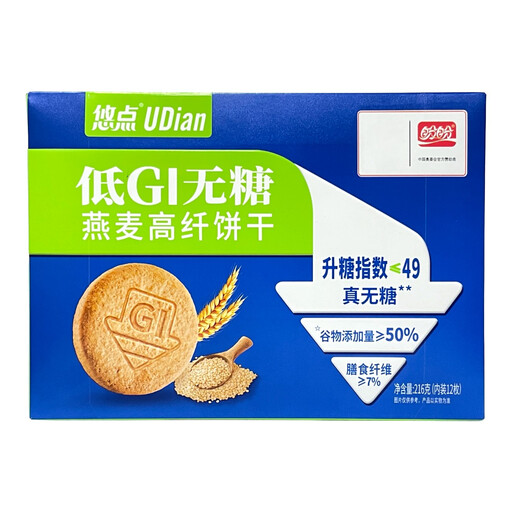 Image unavailable
An option to consider if you’re looking for a biscuit for an after-school snack.
Compare the sugars per 100 g and per portion, and check the sweeteners, allergens and any warnings on the current packaging. Don’t assume the biscuits contain no sugars based on the product name.
Not automatically: portion size, the other ingredients and the overall diet all matter. The Netherlands Nutrition Centre recommends fruit, vegetables and wholegrain products as everyday snacks for children aged 4 to 12, and advises keeping sweet snacks small and serving them at set times.
No. According to Jumbo’s product information, Peijnenburg wholegrain breakfast cake with no added sugars contains 4.9 g of sugars per 100 g. Check ‘of which sugars’ in the nutritional information and see how much a slice weighs.
Check the ingredients and allergen information on the current packaging. The Netherlands Food and Consumer Product Safety Authority says allergens must be clearly stated on prepacked foods. Also ask your school or after-school club about its rules for bringing in and sharing food.
Because large amounts of polyols can cause digestive problems, according to the Netherlands Nutrition Centre. Check which sweeteners have been used, how much you’ll pack and any warnings on the packaging. A low sugar figure doesn’t tell you how many polyols a product contains.